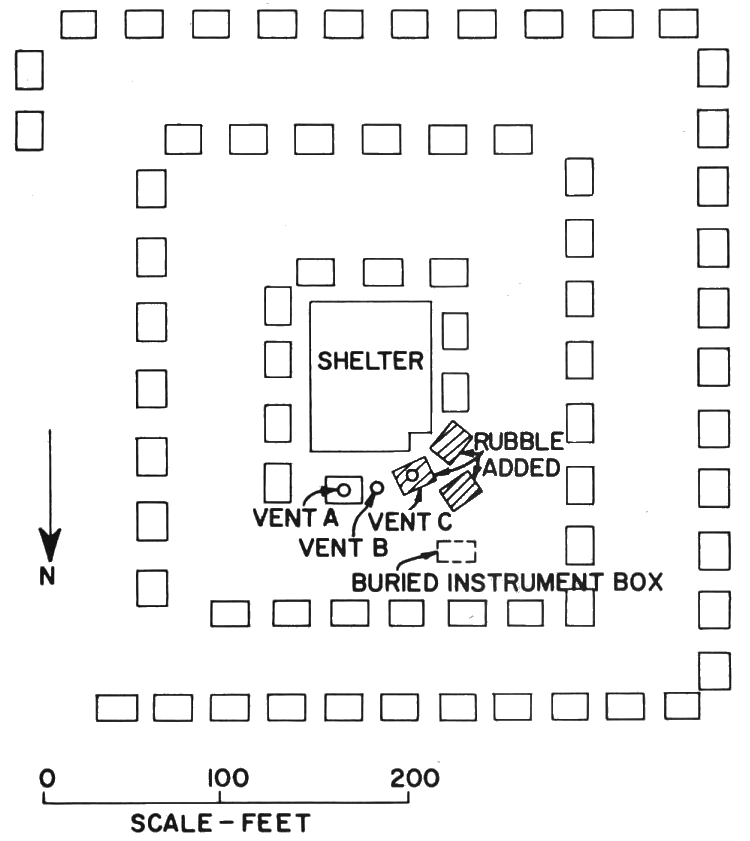
Figure 8. Diagram of fuel distribution about 100-man shelter at
Camp Parks.
|
OCR'ers NOTE: I've only chosen to HTMLize a single figure diagram from this document; look at the original PDF if you want to see all the images. |
Pacific Southwest Forest and Range Experiment
Station
U. S. Department of Agriculture, Forest Service
REPRINT FROM NFPA QUARTERLY -- OCTOBER 1961
– – – – – – – – – – – – – – – – – – – – – – – – – – – – – – – – – – – – – – – – – –
The work described in this paper was sponsored by the Office of Civil and Defense Mobilization and was in part presented at Palo Alto, California, in April 1960 to the Western States Section of the Combustion Institute. More detailed description of the fires is included in Technical Paper No. 50, the Pacific Southwest Forest and Range Experiment Station, entitled "Effects of Mass Fires on Personnel in Shelters."
– – – – – – – – – – – – – – – – – – – – – – – – – – – – – – – – – – – – – – – – – –
To study fire exposure to people in civil defense shelters, measurements of temperatures and oxygen and carbon monoxide concentrations were made in simulated shelter vents on a series of planned fires ranging in size from a single schoolroom to 900 tons of fuel spread over 9 acres. The results demonstrate that extreme carbon monoxide concentrations may be expected in large scale fires burning out of doors. However, they indicate that closure of the vent system to protect against fire effects will seldom, if ever, be necessary for more than an hour or two if the vents are located so that they will not be covered by rubble. If the vents are covered by rubble, closure for a period of days may be required.
Recommended civil defense shelters range from thick reinforced-concrete blast shelters down to makeshift fall-out shelters in individual residences. [1] Nuclear detonations are expected to produce large area fires, [2] and many situations may be expected in which certain shelters will survive the effects of the fire, while the shelter occupants will not survive unless precautions are taken to protect them against toxic gases and heat. The need for these precautions may continue for hours in situations where the fire smolders around or over such shelters.
Human tolerances of the various effects which may cause deaths in fire-resistive shelters have been determined in studies of fire fighting, submarine, and manned-rocket operations. [3,4, 5, 6, 7] Not so well established is the nature of the life hazard to be expected in shelters located in areas where there are severe ground-level fire exposures. Although a number of designs and types of shelters have been tested for blast and radiological protection, the fuel-free terrain in which these tests have taken place have offered no opportunity to study the effects of mass fires over and around the shelters.
In the mass fires resulting from air attack during World War II, many people lost their lives in shelters in fire areas.âチ¸,âチ¹ The greatest number of deaths occurred in basements or makeshift shelters. In many cases, positions of the corpses indicated that death came peacefully and unexpectedly. A frequent assumption is that death was due to carbon monoxide poisoning. However, cause of death has also been attributed to such effects as (a) asphyxiation resulting from the depletion of oxygen either through conversion to carbon dioxide or by suction created within the burning area, (b) the effects of inhaling hot blasts of air, and (c) roasting of the shelter occupants as a result of heat transfer into the shelter. The confusion which still exists concerning the sources of hazard is exemplified by the apparent inconsistency between reports of past experiences and present practice in Germany. Although most reports describing the great German fires of World War II list carbon monoxide as the principal cause of deaths, current shelter plans of the West German Government ignore carbon monoxide and call for sand filters to remove heat from the ventilation air. [10]
Just as the evidence obtained in wartime fires has proved to be too conflicting for unequivocal interpretation, so have data from past experimental fires led to conflicting interpretations. Thus, evidence for carbon monoxide poisoning as a possible explanation comes from a series of "burn-out" tests conducted in an experimental dwelling-room. [11] In these tests the production of toxic concentrations varied considerably, depending on the supply of air to the fire and its path through the room, but a maximum concentration of 13.8 per cent carbon monoxide was reached between the sixth and eleventh minutes in one of the fires. On large-scale outdoor fires, [12] on the other hand, attempts to measure carbon monoxide concentrations sufficiently high to produce death have not been successful.
The study reported here was undertaken in an attempt to resolve some of the existing conflicts. The scope of the study was dictated by limited manpower and a very limited budget. Funds allocated for the project did not permit construction of full-scale shelters or large-scale fires exclusively for project use. Practically all field testing was accomplished with simulated shelter vents on fires planned for other purposes.
The fires included a series of tests in structures being demolished in several California cities -- tests which were undertaken primarily to check out and calibrate instruments improvised from a variety of surplus military parts, but which served also to provide much interesting data. Five such fires were instrumented: two in one classroom of the Robert Louis Stevenson Junior High School, being demolished in Los Angeles, [*] two in buildings which had been turned over to the Richmond Fire Department for destruction in connection with a redevelopment project, and one in an El Cerrito municipal building which was being razed.
[* – This school was offered by the Los Angeles Board of Education to the Los Angeles Fire Department for the purpose of conducting fire tests to answer questions raised as a result of the tragic fire at the Our Lady of the Angels School, Chicago, Illinois, on December 1, 1958. The official report of those tests, entitled "Operation School Burning," was published in 1959 by the NFPA.]
In addition, the East Bay Municipal Utility District made a large-scale burn possible by requesting aid from the Experiment Station in clearing about 100 acres of wooded land for a reservoir site near Orinda, California. To clear the site, trees and brush were bulldozed into windrows for subsequent drying and burning. The fire instrumented for these studies consisted of 11 windrows covering a total of about 9 acres, with an estimated fuel loading of 900 tons oven-dry weight.
Finally, an invitation to participate in a U. S. Navy shelter design study permitted a proof test of previous assumptions and conclusions in a large area burn involving about 300 tons of fuel stacked in a 4-acre plot around a full-scale shelter at Camp Parks, Pleasanton, California.
Most of the measurements made during the course of this project can be grouped into two categories: temperature measurements and gas concentration measurements. Vacuum pumps (i.e., vacuum cleaners) were used to draw air first through vents instrumented for temperature measurements, then through a cooling bath to cool the gases before their entry into appropriate gas concentration measuring devices.
On the basis of discussions with engineering personnel of the U. S. Office of Civil and Defense Mobilization, simulated intake vents were made of 4-inch steel pipe 3 feet long, designed to extend 2 feet above grade, and equipped with a protective cap on the inlet end. For the preliminary calibration tests at the Stevenson Junior High School, the cap was removed and replaced by a 10-foot section of 4-inch inside-diameter galvanized sheet steel pipe. Individual tubes were run through the pipe to measurement locations at heights of 2, 6, and 10 feet above the floor. For all of the other experiments, air was drawn directly into the vent itself.
In addition to these stationary vents, a portable probe was used in several experiments to check temperatures and gas concentrations which could be expected if a vent were buried under the rubble smoldering after the flames had died down.
Through simple computation it may be shown that heat transfer through walls of a shelter 3 feet underground may usually be ignored as a mechanism for producing casualties to personnel therein. Therefore the only heat transfer mechanisms considered were the conduction of heat into the shelter through the walls of the shelter vents and the intake of hot gases through these vents. For measurements of pipe wall temperatures, chromel-alumel thermocouples were chosen because of their ability to measure temperatures up to 2,500°F. To keep the instrumentation simple, it was decided to mount identical thermocouples in the gas streams flowing through the vents and later to correct the thermocouple readings to true gas temperatures. [*] The corrections to true gas temperatures were made by considering the vent-thermocouple system as a large, shielded, aspirated thermocouple and using the procedure suggested by Fishenden and Saunders. [13]
[* – Since the actual temperatures experienced in a shelter which draws hot air through a vent would depend greatly upon the heat capacity of the shelter contents, no attempt was made to compute shelter temperatures which might result from the entering air. The importance of such heating is seen by comparison with the heat generated by shelter occupants. For example, in a five-man shelter drawing the recommended minimum ventilation rate of 5 cubic feet per minute per person, the heat output of the occupants would be 2,000 Btu per hour while ventilation air entering at a temperature of only 1,000°F would carry into the shelter a net heat of 28,000 Btu per hr.]
Except for the first two calibration runs, temperature measurements were made just beneath the vent cap, and at distances of 1, 2, and 3 feet below the cap. At each location, thermocouples were installed in the gas stream and in the pipe wall. Several vents had thermocouples installed at more than one point at the same height to investigate radial asymmetry of the temperature distribution.
Because most fires were to be limited to wood fuels, it was decided to limit continuous gas concentration measurements to oxygen and carbon monoxide. Continuous oxygen measurement was made with a Thermco Instrument Corporation Model P-9 Oxygen Analyzer modified for connection to recording equipment. This instrument utilizes the paramagnetic properties of oxygen for the analyses.
Continuous carbon monoxide measurements were made with instruments developed from surplus detectors which had previously been used as warning devices in aircraft. These detectors split the flow of a gas sample through two cells connected by a thermopile. One cell contains activated hopcalite which catalyzes the oxidation of carbon monoxide. The resulting temperature difference between the two cells is a function of the carbon monoxide concentration in the air being sampled.
In addition to the continuous gas analysis instruments, a gas sampling device was constructed which would handle six sampling bottles in sequence. Upon signal, the valves of one bottle open, a vacuum pump draws a gas sample into the bottle, the valves are automatically closed, and the unit positions itself to take the next sample. The bottled samples were analyzed using a Beckman IR-4 Infrared Spectrophotometer with a 10-meter-path length gas cell. [*]
[* – The analyses were carried out by Dr. Milton Feldstein, Laboratory Director, San Francisco Bay Area Air Pollution Control District.]
The two fires in the schoolroom were ignited in scrap lumber and permitted to burn until, in the opinion of the Los Angeles Fire Department, they were endangering the floor above. In each case they were extinguished before the fuel at the base of the vent (located in the center of the room) could be burned. Under these circumstances, measured temperatures were much higher at the ceiling than they were at the lower air intakes -- exceeding 1,800°F 7 minutes after the start of one of the fires. At the 2-foot intake on this same fire, the carbon monoxide concentrations reached lethal levels within 5 minutes (concentrations over 1 per cent cause immediate unconsciousness and death within 3 minutes [5]) and by the time extinguishment was started (at 12 minutes) the oxygen concentration had dropped to a dangerous level (10 per cent).
The first Richmond test (Figure 1) was conducted in a 2-story four-apartment building, measuring 50 feet by 28 feet, with stucco-covered exterior, sheetrock-covered interior, oak floors, and scrap lumber to simulate furnishings. The intake vent was located in the center of a 16-foot by 11-foot living room on the first floor. The building was ignited and permitted to burn to the ground.
The hottest measured temperatures occurred after the second story collapsed around the vent (at about 40 minutes). Gas temperatures exceeding 2,500°F were found for short periods; and under some circumstances, relatively cool air entering the vent was heated to high temperatures as a result of heating of the vent walls by radiation from the fire. (Heat transfer from the vent walls to the air stream is by convection to the air and by radiation to the entrained smoke particles.)
Lethal concentrations of carbon monoxide were reached as the apartment building began to collapse, the highest concentrations (greater than 3 per cent) occurring as the roaring fire began to die down and the building was reduced to a pile of rubble.
The second Richmond test consisted of two single-story wooden houses, one measuring 50 feet by 22 feet and the other 24 feet by 18 feet, 7 feet apart at their nearest corners. One vent was located in the living room of one house. The other was located outside between the two houses. During this fire, measured gas temperatures again exceeded 2,500°F, carbon monoxide concentrations exceeded 1 per cent, and oxygen concentrations dropped below 5 per cent for a brief period.
Razing of an old municipal building as a fire training exercise for the El Cerrito Fire Department provided an opportunity to investigate lingering effects in rubble. The building (Figure 2) had been the old firehouse, jail, and police station. The jail section had thick concrete walls, and the remainder of the building had stucco- and brick-covered walls.
After all unstable wall remnants had collapsed and the general area had cooled down sufficiently, probing of the rubble piles was begun. Temperatures, carbon monoxide concentrations, and oxygen concentrations were measured at various locations within the rubble (Figure 3) at intervals starting about 4 hours after ignition and ending about 22 hours after ignition, when earth-moving equipment was brought in to complete demolition. Nearly 24 hours after the start of the fire, temperatures of almost 1,900°F and carbon monoxide concentrations greater than 1 per cent could still be found.
The fuel distribution for the 9-acre Briones burn is shown in Figure 4 and a closeup of the fuel in Figure 5. For this burn, three simulated shelter air intakes were installed (Figure 6): vent A inside the fifth windrow, vent B just outside this windrow, and vent C midway between the fourth and fifth windrows. The gases drawn into these vents were conducted to a buried instrument box containing the gas sampling mechanism and gas detectors. The instruments in the box were remotely controlled from a bunker which also contained all recorders. The placement of the intake vents was designed to take advantage of uphill drafts anticipated as a result of the fire. Instead, westerly winds, with speeds ranging from 10 to 14 miles per hour and gusts up to 20 miles per hour, blew the flames downslope (Figure 7).
As might be expected, the highest temperatures were obtained at vent A, much cooler temperatures at vent B, and coolest temperatures at vent C. However, the wall temperatures at 1 foot below ground level were approximately the same for all three vents.
At vent A, the oxygen concentration dropped to practically zero (less than 2 per cent) at about 8 minutes. The carbon monoxide reading at this vent rapidly went off scale (greater than 2 per cent) and the detector burned out at 6 minutes. Spectral analysis of the gas bottle samples showed that, even in a fast-burning, rubble-free fire such as this, serious carbon monoxide and carbon dioxide effects can be found as late as 1½ hours after ignition (e.g., the sample taken 87 minutes after start contained 0.16 per cent CO and 5.8 per cent CO2).
At vent B, carbon monoxide concentrations gave off-scale readings within 5 minutes of ignition time although oxygen concentrations never fell much below 14 per cent. The carbon monoxide concentration dropped below 0.1 per cent in 10 minutes but still exceeded 0.02 per cent (sufficient to cause mild headaches) three hours later. The gas concentrations at vent C never reached toxic levels, but carbon monoxide concentrations of about 0.02 per cent were found for several hours.
To permit experimental verification of the conclusions of a shelter design study, the U. S. Naval Radiological Defense Laboratory (NRDL) constructed a 100-man prototype underground shelter at Camp Parks. [14] Since the shelter design included a "fire storm" protection capability, a cooperative program was undertaken. The very limited budgets of the two participating groups precluded the installation of extensive instrumentation. However, the availability of a considerable quantity of scrap lumber, some manpower to relocate the fuel and assist in the installation of instrumentation, and a competent fire department to provide necessary protection permitted the conduct of a minimum experiment.
Lumber was distributed to simulate fuel distribution in a densely populated area (about 30 per cent density) of single-story dwellings. The fuel was placed in piles measuring 20 feet by 15 feet, 7 feet high, and spaced 12 feet apart along three concentric rectangles with 50-foot spacing between rectangles (Figure 8). The three piles nearest the shelter entrance were increased to a height of 9 feet by including randomly throughout each pile an additional 2 feet of noncombustible rubble -- pieces of concrete, brick, and gypsum board.
Figure 8. Diagram of fuel distribution about 100-man shelter at
Camp Parks.
Limited instrumentation was installed in the entranceway and main room of the shelter. However, the principal measurements were made from three simulated air intake vents located near the shelter entrance -- vent A in a rubble-free wood pile, vent C in a pile containing rubble, and vent B midway between the other two.
To insure nearly simultaneous ignition of all the fuel, about 2,000 gallons of used crankcase oil were sprayed on the fuel piles, and they were ignited by a series of six ignition circuits -- two in each of the concentric rectangles. The successive circuits were closed at 30-second intervals and the fire grew rapidly. Less than 4 minutes after ignition of the first rectangle, strong indrafts from all sides were blowing the flames toward the center of the fire, with flames 50 feet high visible through the dense black smoke. By 6 minutes, the smoke began to clear, and, within another minute or two, there was a noticeable reduction in fire intensity. By 10 minutes after the first ignition, the merging flames had separated into a group of individually burning fires (Figure 9). Within another 10 minutes, some of the piles had been reduced to a bed of glowing coals and stopped flaming. An hour after the start, one could enter the fire area if he avoided still burning or smoldering fuels.
Temperatures in vent A rose rapidly, and all of the above-grade thermocouples burned out after recording temperatures as high as 2,600°F within the first 10 minutes. After an initial rise, gas temperatures of vent C, in the pile containing rubble, fluctuated between 800°F and 1,200°F for about an hour, fell gradually to 600°F at two hours, then rose smoothly back to 1,200°F during the next two hours, until, about 4 hours after ignition, the rubble pile began to collapse about the vent entrance. At this time temperatures again rose rapidly (reaching approximately 1,700°F at times) and remained high and irregular for about two more hours until the rubble settled to its final depth -- below the vent entrance.
The rubble remained hot for a long time after measurements were terminated. In fact, five days later, when the area was being cleared, freshly exposed fuel in the bulldozed rubble piles again burst into flames.
Relatively low temperatures (less than 660°F) were obtained by thermocouples not actually in one of the fuel piles. Thermocouples mounted on the inside of the uninsulated portion of the shelter entrance recorded 200° to 300°F for a short while, but most of the thermocouples in the entranceway and at other locations throughout the shelter, failed to show any significant increase in temperatures as a result of the fire.
The oxygen concentration at vent B did not drop significantly at any time. At vent C, the oxygen concentration began to decrease almost immediately (about a minute after ignition of the inner rectangle) and dropped almost to zero (less than 2 per cent). The oxygen concentration remained at a very low level until the vent began to emerge from the rubble pile as the pile collapsed around it some 3 to 4 hours after the start of the fire.
The carbon monoxide unit connected to vent A indicated an off-scale reading (greater than 2 per cent) about 1½ minutes after ignition of the inner "ring," the concentration dropping rapidly as the wood pile was consumed. The carbon monoxide analyzer attached to vent C indicated no reading until about 4 minutes after ignition of the first "ring"; then it rapidly shot off scale. Repeated attempts to obtain an on-scale reading soon filled the instrument with a large volume of liquid wood distillation products. Gas sampling showed concentrations as high as 7 per cent CO and 8 per cent CO2‚ remaining for 3 or 4 hours -- dropping to safe levels only after the rubble pile settled below the level of the vent entrance. The highest value of carbon monoxide observed in vent B was 0.08 per cent about 6 minutes after ignition of the first rectangle. The carbon monoxide analyzer in the shelter entrance showed no detectable concentration (less than 0.02 per cent) of carbon monoxide entering the shelter. Analysis of the gases in the main shelter room showed the highest carbon monoxide concentration observed to be only 0.001 per cent before opening the shelter door. After the shelter was opened and several groups of observers had passed through, the concentration rose to 0.02 per cent.
The conclusions listed below should be tempered by the limitations imposed by the restricted scope of this project. Thus, it is important to remember that the largest burn conducted in this series was much smaller than the minimum necessary to fall within the definition of a mass fire. [15] Also, since a large-scale fire is a highly variable and complex phenomenon, it is difficult to decide how “typical” these fires might be, that is, how often events observed during these fires would be found in other “similar” fires. As a matter of fact, it is necessary to use considerable caution in extrapolating the measurements made during these fires to other locations within the same fires. However, if a dangerous situation was encountered even once during these experiments, it is safe to assume that it will be encountered again in some future fire and that a feasible attempt to mitigate the consequences should be encouraged.
With the above precautions in mind, the major conclusions which appear from examination of the data obtained during this project may be listed as follows:
1. Extreme carbon monoxide concentrations are to be expected in large-scale fires burning out of doors.
2. Although oxygen depletion and high carbon dioxide concentrations may also occur, their effects will be of consequence only if some steps are taken to eliminate the carbon monoxide hazard.
3. Air temperatures in the fire may be expected to exceed 2,000°F, and conventional ventilation systems, if operated during the fire, may be expected to carry into the shelter much more heat than is generated by the shelter occupants.
4. If ventilation systems are to be operated during a fire, shielding of the intake vents from radiant heat should be considered since, under certain circumstances, cool intake gases may actually be heated in passing through the vents.
5. Smoldering rubble will maintain higher temperatures and toxic gas concentrations for longer periods than the more impressive flaming phase of a large fire. In fact, it appears that if shelter vents are located so that they will not be covered by rubble, closure for more than an hour or two will seldom, if ever, be necessary. Conversely, if the vents are covered by rubble, closure for a period of days may be required.
6. Placing a home shelter vent just outside of a residence may be of little value since high concentrations of toxic gases will sometimes be found in these locations.
7. Although fatal concentrations of carbon monoxide were found 5 feet from the fire -- and concentrations sufficiently high to cause headaches were found 25 feet from the nearest fuel -- during the Briones burn, no significant concentrations were found outside of the burning piles during the Camp Parks burn. What would occur in a much larger fire is impossible to predict, but a good rule to follow would seem to be: where possible, locate a shelter in a cleared area sufficiently large that the shelter will not be covered with rubble, and within that area locate the vent as far as possible from combustible materials.
1. U. S. Office of Civil and Defense Mobilization, "The National Plan for Civil Defense and Defense Mobilization," Annex. 10, National Shelter Plan, 1958, 7 pp.
2. Broido, A., and C. Trilling, "Thermal Vulnerability of Military Installations," U. S. Nav. Rad. Defense Lab. Report USNRDL-TR-101, 1955, 91 pp., illus.
3. Sollman, T., "Systematic Action of Gases," A Manual of Pharmacology, 7th ed., W. B. Saunders Co., Philadelphia, 1948, pp. 693-711.
4. NFPA Committee on Fire Gas Research, "Fire Gas Research Report," QUARTERLY OF THE NATIONAL FIRE PROTECTION ASSOCIATION, 1952, 45(3): 280-306, illus.
5. Claudy, W. D., "Carbon Monoxide in Fire Fighting," National Fire Protection Association Report No. F21-1, 1954, 11 pp.
6. U. S. Department of the Navy, "Submarine Medicine Practice," Bureau Medicine and Surgery NAVMED-P5054, 1956, 357 pp., illus.
7. Buettner, K., "Heat Transfer and Safe Exposure Time for Man in Extreme Thermal Environment," ASME Paper No. 57-SA-20, (Abstract in Symposium, Man and His Thermal Environment), Mechanical Engineering, 1957, 79(11):1029-1035.
8. Bond, Horatio, Fire and the Air War, National Fire Protection Association, Boston, 1946, 262 pp., illus.
9. Earp, Kathleen F., "Deaths From Fire in Large Scale Air Attack -- With Special Reference to the Hamburg Fire Storm," Home Office Report CD/SA-28, Scientific Advisory Branch, Whitehall, S. W. 1, 1953, 30 pp.
10. Leutz, Herrmann, "Results of Tests on Continuously Occupied Shelters," Presented at the National Academy of Sciences -- National Research Council Meeting on Environmental Engineering in Protective Shelters (February 8-10, 1960).
11. Bruce, H. D., "Experimental Dwelling-Room Fires," U. S. Forest Service, Forest Products Lab., Report No. D1941, 1953, 22 pp., illus.
12. Vehrencamp, John E., "An Investigation of Fire Behavior in a Natural Environment," University of California (Los Angeles) Department of Engineering Report No. 55-50 (Oper. Firestop Tech. Report No. 1), 1955, 85 pp., illus.
13. Fishenden, M., and O. A. Saunders, "The Errors in Gas Temperature Measurement and Their Calculations," J. Inst. Fuel. (London), 1939, 12(6): S 5-S 15, illus.
14. Strope, W. E., L. G. Porteous, and A. L. Greig, "Specifications and Costs of a Standardized Series of Fallout Shelters," U. S. Nav. Rad. Def. Lab. Report USNRDL-TR-366, 1959, 129 pp., illus.
15. U. S. Federal Civil Defense Administration, "Civil Defense Urban Analysis," Fed. Civ. Def. Admin. Tech. Manual TM-8-1, 1953, 85 pp., illus.