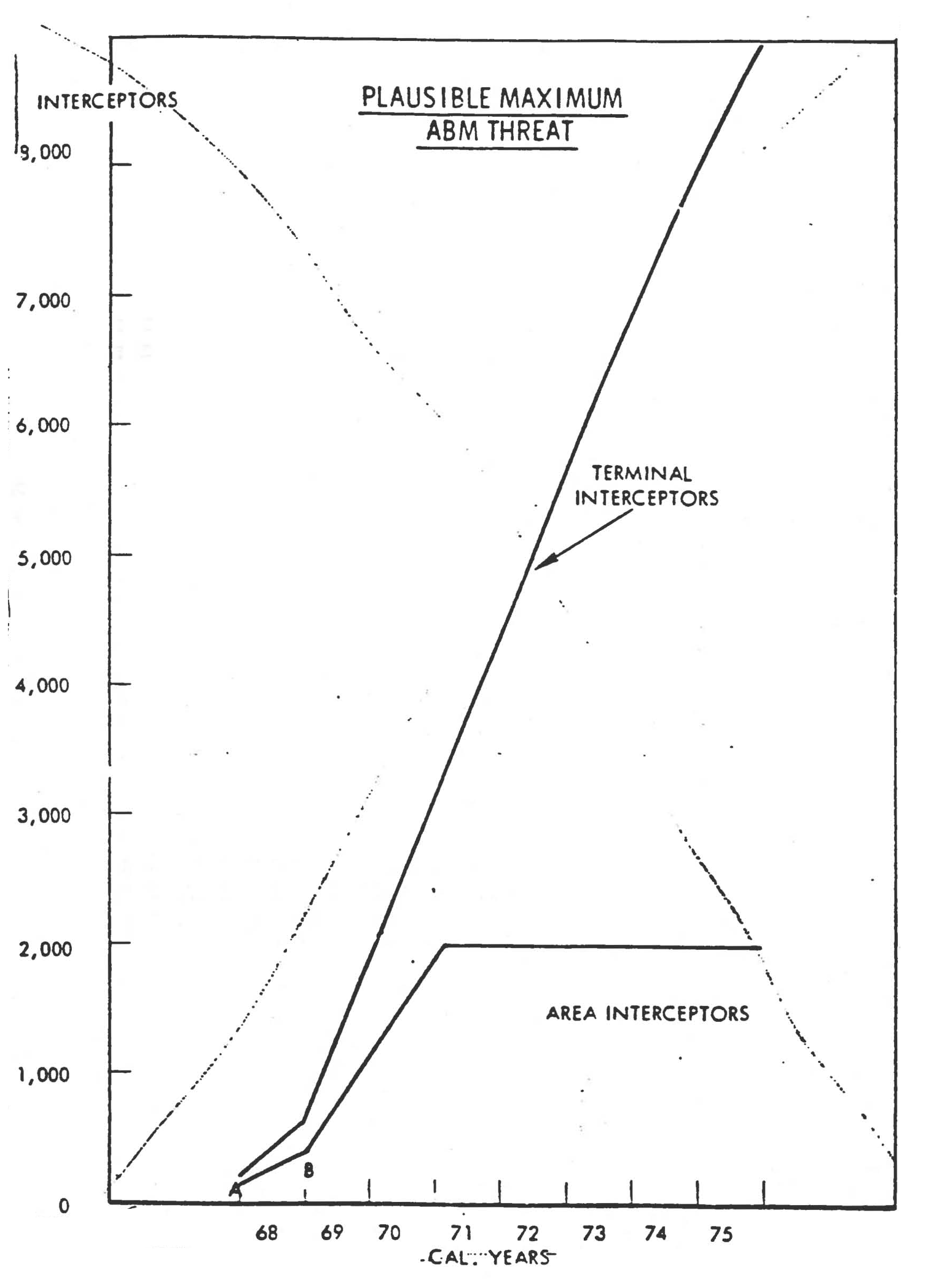
Figure 27-1. Projected maximum Soviet ABM threat. (U)
[ILLEGIBLE] LIVERMORE CLASSIFICATION OFFICE - 1995 MAR 13 A 9:52
DEPARTMENT OF ENERGY DECLASSIFICATION REVIEW
1ST REVIEW: 5/18/99
2ND REVIEW: 5/18/99
– – – – – – – – – – – – – – – – – – – – – – – – – – – –
LAWRENCE LIVERMORE LABORATORY
University of
California Livermore, California 94550
COVD-1571
SECRET
– – – – – – – – – – – – – – – – – – – – – – – – – – – –
SPECIAL
PROJECTS
COVD-1571
This document consists of 151 pages,
No. 1 of 1
copies, Series COK.
Classified by: William J. Hogan Associate Division Leader
MIRV:
A BRIEF HISTORY OF MINUTEMAN AND MULTIPLE
REENTRY VEHICLES (U)
Daniel Ruchonnet
February 1976
-------------------------------------------------------------CRITICAL
NUCLEAR WEAPON DESIGN INFORMATION
DOD DIRECTIVE 5210-2
APPLIES
-------------------------------------------------------------
SECRET
– – – – – – – – – – – – – – – – – – – – – – – – – – – –
Abstract (U)
I. PREFACE (U)
II. SUMMARY AND CONCLUSIONS (U)
A. The requirement for more warheads (U)
B. The requirement to penetrate ABM defenses (U)
C. MIRV is more cost-effective than ABM to strengthen the strategic posture (U)
D. The increased flexibility and economy afforded by use of technological progress (U)
III. DIGEST OF MINUTEMAN MIRV HISTORY (U)
IV. MINUTEMAN MIRV HISTORY (U)
A. Pre-MIRV history (U)
B. The MIRV concept (U)
C. MINUTEMAN III missile and reentry system (U)
V. APPENDIX (U)
NOTE 1 (U)
NOTE 2 (U)
NOTE 3 (U)
NOTE 4 (U)
NOTE 5
(U)
NOTE 6 (U)
NOTE 7 (U)
NOTE 8 (U)
NOTE 9 (U)
NOTE
10 (U)
NOTE 11 (U)
NOTE 12 (U)
NOTE 13 (U)
NOTE 14
(U)
NOTE 15 (U)
NOTE 16 (U)
NOTE 17 (U)
NOTE 18 (U)
NOTE
19 (U)
NOTE 20 (U)
NOTE 21 (U)
NOTE 22 (U)
NOTE 23
(U)
NOTE 24 (U)
NOTE 25 (U)
NOTE 26 (U)
NOTE 27 (U)
NOTE
28 (U)
NOTE 29 (U)
NOTE 30 (U)
NOTE 31 (U)
NOTE 32
(U)
NOTE 33 (U)
NOTE 34 (U)
References (U)
Glossary (U)
– – – – – – – – – – – – – – – – – – – – – – – – – – – –
Abstract (U)
The Soviet deployment of MIRV systems on the new strategic missiles (SS-17, -18, and -19) raises the question of motivation behind these developments. In particular at this time, without the threat of extensive ABM defenses in the U.S. and China, are the advantages provided by MIRV sufficient to justify the expenditure? (U)
A useful step toward shedding some light on the decision-making process is to review some of the technological milestones in the history of MIRV in the U.S. (U)
This document is a compilation of the technological events which, over a decade and a half, reflect the climate, the conditions, the constraints, and the requirements surrounding the concepts and developments associated with MINUTEMAN MIRV. (U)
The history clearly demonstrates that the two principal reasons which prompted the U.S. to adopt MIRV systems for IRBM and ICBM forces were the requirements for the penetrability of ABM defenses and for the expansion of the number of warheads in response to the increasing number of targets. (U)
– – – – – – – – – – – – – – – – – – – – – – – – – – – –
The deployment of MIRV systems in the United States has been one of the major technological steps taken in the incessant search for improving the performance of strategic missile systems. (U)
The improvements were motivated by a concern for the penetration of antiballistic missile defenses and the need for an increasingly large number of warheads to match the growing list of targets. During the decade which preceded the deployment of MIRV systems, the single RV system of MINUTEMAN was subjected to numerous modifications. These improvements were very modest compared to the complex and expensive solutions suggested by numerous studies made during the late 50's and throughout the 60's. In the interim, significant technological breakthroughs occurred in the fields of rocketry, guidance and control, radar design and nuclear weapons design. Concurrently, sophisticated intelligence-gathering methods provided the substantive data regarding the expansion in enemy military power. (U)
It is this environment, characterized by the proliferation of advanced Soviet systems, which generated a sustained pressure to maintain the capability of MINUTEMAN. The force was mandated to inflict, regardless of circumstances, a certain level of damage which had been deemed adequate to constitute a credible deterrence. As a consequence of the self-imposed limitation on the number of missiles as a result of DOD Secretary McNamara "cost-effectiveness" criterion, most of the pressure for upgrading our land-based systems was applied toward changing the configuration of the payload. The small throw weight of the missile did severely restrict the ability to implement the various schemes suggested to remedy the deficiencies of the system as they became known. The missile was modified on two occasions in order to increase the throw weight. (U)
The main objective of this report is to present a chronicle of the technological developments which led to the concept and the implementation of MIRV for MINUTEMAN. However, one must bear in mind that the history of the technological development of large weapon systems such as MINUTEMAN is intimately associated with a great variety of issues entering the decision-making process at the highest levels of government. (U)
The forces which, over the last decades, shaped the configuration of the presently deployed MARK-12 MIRV reentry system were exerted through an intricate network of channels. These forces were generated simultaneously within a large number of organizational entities whose relative power shifted with time, depending upon the domestic as well as global conditions and to a large extent upon the views, prejudices and convictions of the policy-making individuals. Most of the evidence in this category was not recorded. (U)
In this country the principal sources of influence which generate the variables controlling the decision-making process associated with large weapon development may be divided into types: institutional and non-institutional. These two general types can, in turn, be subdivided into broad categories which are themselves highly structured. The institutional organizations comprise mainly: the Defense Department, in association with the military-industrial complex, the other departments and agencies of the Executive Branch, and, finally, the Congress. Among the non-institutional sources of influence, quasi-independent of the government, are: the threat, the state of the economy, and the state of the art of technology. (U)
Ultimately, the course of action taken is the end result of a long decision-making process grounded not necessarily on "reality" per se but rather on the "perceived reality" based upon available facts and their interpretation. Furthermore decisions must also account for future progress by extrapolating to expected conditions several years hence. (U)
MRV and MIRV reentry systems are among the major steps taken in the arms race. They were, in part, a response to the development of ABM defenses. Reciprocally, as a penetration aid, they stimulated the growth and complexity of the U.S. ABM and possibly also influenced the design of the Soviet ABM system. At the same time their expected effectiveness in defeating ABMs constituted the ground upon which, in the U.S., the detractors of ABM systems rested their technological arguments. It has been speculated that the cost-effectiveness of MIRV compared to that of defensive countermeasures lead to the agreement of SALT I. (U)
In the domain of international politics MIRV was the center of major controversies at the highest levels of the U.S. government. Its deployment was viewed by some as having a stabilizing effect on the balance of power between the U.S. and the USSR. On the other hand, others perceived its import on the existing strategic equation as a destabilizing development. Insofar as the U.S. MIRV systems were perceived by the Soviets as strengthening the U.S. counterforce capability (high accuracy of low yields) and improving the U.S. first-strike capability (larger number of warheads) they probably contributed to an escalation in the arms race. (U)
Since the SALT I and preliminary SALT II agreements, the efforts to increase the capability and flexibility of the U.S. MIRV systems continues. The principal areas of investigation are: precision navigation (highly sophisticated G & C systems such as stellar update), increased yield, maneuverability of RV's during reentry into the atmosphere, daily update of weather conditions at the target and mobile deployment (either land or airborne). (S)
– – – – – – – – – – – – – – – – – – – – – – – – – – – –
In the United States, MIRV provided the solution to the problem of maintaining the effectiveness of the land- and sea-based ICBM forces. This updating had to be accomplished within the economic constraints while taking full advantage of the most recent technological advances. (U)
For a decade the threat of Soviet ABM systems and the list of targets had been growing steadily, thus rendering the mission more difficult to accomplish. In this environment, beginning in the mid-50's, the requirements were generated for the features afforded by MIRV. (U)
By 1962 the MIRV concept was widely discussed in the scientific community. Initially the system was not without opponents who would have preferred to increase the number of missiles. Their objections were directed mainly at the small yield resulting from the fractionation of the MINUTEMAN payload. There was some justification for their arguments since, at the time multiple warheads were proposed, the MINUTEMAN III missile had not yet been approved, the reliability was unproven, the location of point targets was not accurate and the hardness of hard targets was increasing and ill defined. With the passing of time though, some of these problems were resolved and the self-imposed ceiling on the total number of missiles left no alternative. (U)
MIRV development was finally authorized in 1965 and the deployment of the MARK-12 MIRV Reentry System occurred in 1970. (U)
From the time of its inception, MIRV was designed therefore to fulfill the U.S. requirements for enhanced penetrability and increased capability to attack a larger number of targets. Although the avowed intent was the preservation of the U.S. deterrent capability, the issue of first strike capability was raised and widely discussed. How this development was perceived by potential adversaries is not known, but the fact that the Soviets are presently implementing the system is tangible evidence that they are convinced of its value. (U)
Throughout the history of MINUTEMAN one can discern four fundamental reasons underlying the motivation to develop a MIRV reentry system. All these reasons are closely interrelated. (U)
A. The requirement for more warheads (U)
The purpose of MINUTEMAN has always been one of deterrence. Originally all ICBM targets were soft and most were urban-industrial centers. Thereafter, the number of military targets kept increasing and the hardness of some of them began to increase. As a consequence, a larger number of warheads became necessary, a diversity in delivered yield was desired as well as a greater accuracy. (U)
B. The requirement to penetrate ABM defenses (U)
In the late 1950's the Soviets were postulated to be developing anti-ICBM defenses as was the U.S. The fact was confirmed in 1960. As a consequence of the growing ABM threat the characteristics of existing reentry systems had to be redesigned and new ones developed in order to ensure the penetrability of the U.S. reentry vehicles. (U)
C. MIRV is more cost-effective than ABM to strengthen the strategic posture (U)
In the process of balancing the power equation for attack or deterrent purposes, the investment of resources into strengthening the strategic missile forces by using MIRV is a more cost-effective avenue than building an ABM system. In addition, by effectively overwhelming ABM defenses for a comparatively small expenditure, MIRV afforded a powerful political argument against the large deployment of ABMs. (U)
D. The increased flexibility and economy afforded by use of technological progress (U)
Every development made in the technological fields associated with ballistic missile weaponry suggests methods to accomplish the mission more effectively and reliably. Among the main advantages afforded by MIRV in that regard are:
1) the acquisition of flexibility through payload fractionation and footprint availability;
2) an economy of silo, missiles and logistics;
3) a more optimum utilization of nuclear materials by reducing the waste inherent to an arsenal made up exclusively of large-yield weapons, thus allowing a more appropriate distribution of nuclear materials over a large number of targets; and
4) a reduction of collateral damage when not desired. (U)
In summary we conclude that the development of MIRV has been and still is fully justifiable on the basis of two entirely independent reasons: penetration of defensive systems and the large number of strategic targets. If both of these reasons exist simultaneously with the present state of space technology, the deployment of MIRV becomes imperative. (U)
The advantages afforded by MIRV are:
Saturation of the defensive system through high arrival rate of threat objects.
Exhaustion of individual defensive units.
Widening of the threat tube by approaching the same target along different trajectories originating from a single missile and/or by cross targeting with several missiles.
Causing an increase in the complexity and cost of the defensive systems by presenting an overwhelmingly confusing and unpredictable threat train. This is achieved by including masking or empty chaff clouds and by adding decoys.
The enhancement of a first-strike capability and of a reserve capability.
A higher probability of retaining a second-strike capability.
An economical way of increasing the number of warheads in the arsenal.
An increased reliability of destruction of prime targets through cross targeting.
An increased efficiency in the utilization of missile throw weight and nuclear materials.
A reduction of collateral damage by matching the yield to the target.
A reduction in maintenance expenditures by requiring fewer silos and missiles for a given force capability. (U)
The inherent disadvantage of MIRV is the reduction in number of hard targets to draw enemy fire. This weakness of the concept is not without remedies such as the deployment of a mobile force on rails, on roads, in water or in the air. All of these concepts have been under constant study since the mid 50's. Rail mobile deployment has been implemented and abandoned already whereas other mobile concepts are under current investigation. (U)
– – – – – – – – – – – – – – – – – – – – – – – – – – – –
In the next few pages two different formats have been used to summarize the content of the more detailed history presented in Section IV. One of them is a "chronology" of the most relevant events which provides the reader with a quick reference of the milestones. The second method is a "dialogue" of important questions and answers in the development of MINUTEMAN MIRV. (U)
CHRONOLOGY (U)
1955 – Proposals of the early concepts for penetration aids (decoys and fragmentation of the booster). (U)
1957 – Proposal for multiple warheads. (U)
1957 Oct. – Soviets place the first artificial satellite in orbit. (U)
1958 Spring – Report of the Reentry Body Identification Group issued. (A comprehensive listing of penetration aids including multiple warheads.) (U)
1958 Aug. – MINUTEMAN Weapon System requirements are issued (determined the dimensions and payload capability of MINUTEMAN for a long time to come). (U)
1958 Oct. – LOGAN Event (underground exposure of materials to [DELETED] (S)
1959 Aug. – Report of Navy's Re-entry Body Committee (a proposal for the POLARIS A-3 MRV reentry system). (U)
1960 Apr. – ABLE-STAR deploys several satellites from a single platform (MIRV predecessor). (U)
1960 – Evidence of Soviet ABM development at Sary Shagan. (S)
1960 Oct. – First MINUTEMAN I production missile. (U)
1961 Oct. – Soviet ABM-related high altitude nuclear tests. (S)
Statement by Soviet official announcing successful intercept of RV. (U)
1961 Early study by BSD of multiple RV for MINUTEMAN (MK-12), TITAN II (MK-13), ATLAS/TITAN I (MK-14). (U)
1962 Sino-Soviet targets in the mission were soft. Soviet ABM were assumed to be terminal defenses consisting of upgraded SA-2 and SA-4. (S)
1962 June MARSHMALLOW underground nuclear effects test [DELETED] (SRD)
1962 Development of the concept of MIRV. (U)
1962 Aug. MK-12 Phase I Study single RVs: MK-12 (light) with [DELETED] yield and MK-12 (heavy) with [DELETED] yield, hardening and penetration aid requirements. (S)
1962 Oct. Begin development of MK-11A (hardening). (U)
1962 Oct. First operational MINUTEMAN I flight. (U)
1962 Oct. Further Soviet ABM-related high altitude nuclear tests. (S)
1962 Dec. DDR&E redirect MK-12 program MK-12(L) weight reduced to [DELETED] [DELETED] for use as multiple in a MRV configuration. (SRD)
1963 April MK-12 Phase II completed. (U)
1964 June MK-12 Phase III authorization (MK-12 is still a MRV system for MINUTEMAN II). (U)
1964 June MK-12, MCS and STS issued. (U)
1964 Sept. Development of MK-11B (hardening). (U)
1964 Sept. First MINUTEMAN II flight. (U)
1965 Jan. Study of MK-18 (Seven 150 lb (68 kg) RVs without decoys on MINUTEMAN II). (U)
1965 Apr. GUMDROP underground nuclear effects test [DELETED] (S)
1965 Spring PEN-X reports issued. (U)
1965 Apr. MINUTEMAN II MIRV requirements. (U)
1966 Feb. PLAID underground nuclear effects test [DELETED] (S)
1966 Mar. MINUTEMAN III authorized. (U)
1966 Delays due to aerodynamics problems specific to small ablating RVs with high ballistic coefficient. (S)
1966 Mar. Development of MK-11C [DELETED] (S)
1967 Mar. MK-12 Phase IV authorization (production engineering). (U)
1970 Apr. First production unit. (U)
1970 June MINUTEMAN III operational. (U)
Q - When did the concept of multiple warheads originate? (U)
A - In the middle 1950's. (U)
Q - When did the concept of MIRV originate? (U)
A - During 1962. (U)
Q - Why is the payload of MINUTEMAN so small? (U)
A - In 1956 solid-propellant engines of the MINUTEMAN size were representative of the frontier of technology of the day. Funds were never authorized to enlarge the missile and silo. (U)
"The results of these programs clearly demonstrated that the development and production of large solid-propellant engines for ballistic weapon systems, while demanding of the state of the art, could be achieved." (S)
Q - Why was a MRV configuration never deployed on MINUTE-MAN? (U)
A - An influential element of the Air Force favored large yields to accomplish its mission and was reluctant to fractionate the payload to increase penetrability. Decoys were the preferred method to increase the number of reentering objects. By the time the multiple RV configuration (MRV) was adopted in 1963, the MIRV concept had already been under consideration for a year in the government and the aerospace industry. The decision to MIRV MINUTEMAN II came in the middle of 1964 before any significant progress had been made on the Air Force MRV system. (U)
Q - Why was MINUTEMAN II not MIRVed? (U)
A - The throw-weight was too small to allow the design of a viable system which could fulfill the requirements in range, number of warheads, yield, penetration aids, and footprint. This inadequacy provided the impetus to enlarge the third stage of the missile and thus create MINUTEMAN III. (U)
Q - Why was MIRV finally chosen? (U)
A - MIRV, with its improved guidance and control subsystem and maneuverable bus, was a solution to the three most important problems which had arisen since the deployment of ICBMs. These problems were: 1) penetrability of defensive systems, 2) the increasingly large number of targets and 3) the increasing hardness of some military targets. (U)
By providing greater accuracy, a footprint capability and the flexibility to tailor the attack configuration for each target, it afforded the most economical approach for maintaining effectiveness. (U)
Q - Would the U.S. have adopted MIRV for the sole purpose of improving penetrability? (U)
A - The answer is probably yes. (U)
As history has shown, the U.S. has demonstrated since the late 1950's a will to upgrade the penetrability of MINUTEMAN against all aspects of the ABM threat. (Beginning in 1962 three hardened versions of the MK-11 were deployed. Chaff penetration aid was added to the last version. Penetration aids, preferably decoys, were required for each of the three main configurations adopted successively for the MK-12 reentry system (singles, MRV, MIRV). As a response to the deployment of ABM systems, MIRV was more cost-effective than adding new silos and missiles with a single warhead. (U)
Q - Would the U.S. have adopted MIRV for the sole purpose of increasing the number of warheads? (U)
A - The answer is probably yes. (U)
To retain its credibility as a deterrent force MINUTEMAN must be assured a second strike retaliatory capability. There are four ways to increase the number of warheads surviving a first strike:
1) increase the hardness of the silos,
2) increase the number of silos,
3) increase the number of warheads per missile,
4) keep the launch pad on the move.
These methods can be implemented singly or simultaneously. The decision was made to stabilize the number of missiles and use the other methods. It should be noted, however, that even though a MRV system increases the number of warheads, the system is too primitive a concept to effectively fulfill the required mission. Its advantage is limited to drawing more interceptors and, perhaps in some cases, to overloading the enemy capability to act. A MIRV system on the other hand, with its footprint capability combined with retargetability, truly provides the potential for a credible retaliation on a large number of targets. (U)
Thus, assuming that the number/yield/accuracy trade-offs are satisfied, the MIRV system has been the cheapest way to keep up with the mission and threat requirements. However, this approach presents a drawback. In the process of reducing the number of silo/missiles, the number of enemy warheads drawn is equally reduced. (U)
Q - What are the main reasons which caused delay in the deployment of MINUTEMAN MIRV? (U)
A:
1) The reluctance by an important faction in the Air Force to reduce warhead yield. (U)
2) The development in the U.S. of nuclear weapons with a great variety of radiated output spectra brought forth, by virtue of the concept of "mirror-technology" threat estimation, a whole series of kill mechanisms to protect against. This expanding diversity in threat characteristics caused several design changes to eliminate newly discovered weaknesses. This upgrading effort caused numerous delays. (S)
3) Although the go-ahead for MIRV was given in April 1965 it was not until 1966 that the decision was made to increase the throw-weight available by enlarging the missile third stage. It is on that date that the design of the present MK-12 MIRV configuration really began. (U)
4) Grave roll-resonance difficulties were encountered during the early flight tests of the RV. The determination of the appropriate corrective measures caused significant delays...(S)
Q - Why was the MK-17 cancelled? (U)
A - The [DELETED] yield of the W67 compared to the [DELETED] MK-11 was not significant enough to justify its deployment. The force mix now consists of MK-11C and MK-12. (SRD)
[-------------------DELETED LINE-----------------] (S)
[-------------------DELETED LINE-----------------] (S)
[-------------------DELETED LINE-----------------] (S)
Q - Why did the Navy become involved in the MK-12 program and then drop out? (U)
A - The concept of communality of components was highly favored under the leadership of DOD Secretary McNamara. It was part of the quest for cost-effective approaches to R&D and deployments. In 1961, at the instigation of DDRE, the Navy and the Air Force agreed to a joint management of the MK-12 program in order to integrate into the design the requirements for both sea-launched IRBM and silo-launched ICBM. Such a hybrid reentry system would inevitably possess all the features necessary for both applications, thus reducing the effectiveness of either individually. In the meantime the AEC had begun a program for the development of very small nuclear warheads. As early as Sept. 1964 a Navy-AEC study group was formed by DDRE. This effort lead eventually to the design of a new reentry system, the MK-3 prototype, for the POSEIDON missile system. In Oct. 1967 DDRE formally terminated the requirement for compatibility of the MK-12 for FBM systems since the MK-3 reentry system had been chosen to equip the C-3 missile. (U)
Q - Were there any technical arguments against the concept of MIRV? (U)
A - No records were found to indicate that any existed. Most of the early opposition came from a faction in the Air Force who favored a higher yield on an expanded missile force and correctly viewed MIRV as an alternative to an increase in the number of MINUTEMAN missiles. Finally, during the last stages of development, argument of a political nature were advanced by members of the U.S. Congress. (U)
Q - Why were the MK-13 and MK-14 never authorized? (U)
A - These systems never went beyond the stage of studies. This writer was unable to find any details regarding these proposals. It is the opinion of individuals involved with new systems evaluation in 1961 that:
a) Atlas and Titan I had already reached obsolescence and were in the process of being replaced by MINUTEMAN; and
b) there were not enough TITAN II missiles to warrant an entirely new system. However the possibility of putting multiple warheads on TITAN II was not completely abandoned then. In 1964 the "MK-12 Re-entry System Design Criteria" states a potential use for the RV on TITAN II. (U)
Q - Why was the MK-18 never deployed? (U)
A - The reason why the MK-18 program was not authorized to go into phase III has not been stated explicitly in technical memoranda. It was replaced instead by further studies, the ABC and PAVE PEPPER programs, to continue the development of small RVs which could accomplish the Air Force mission of "assured destruction and damage limiting." Until now the capability of such payloads has not been judged adequate to fulfill the mission and displace the MK-12. (U)
The events which preceded the advent of the MIRV concept in 1962 constitute what might be called the pre-MIRV history. These few years are highly significant and can be regarded as the gestation period during which the fundamental requirements evolved, the mission underwent a constant transformation and technology progressed rapidly on all fronts, especially in space systems, electronics and nuclear weapons. In order to account for most of the crucial factors which led to the concept of MIRV and to demonstrate the continuity of purpose in the part of the U.S. throughout this evolutionary process, the pre-MIRV history is considered here an integral part of the subject. (U)
Generally speaking, the U.S. deployment of strategic missiles carrying multiple reentry vehicles with nuclear warheads took two major technological steps, the MRV system, and the more complex MIRV system. (U)
With a MRV system the missile is aimed at the center of the target and the reentry vehicles are dispersed in a simple pattern over the area. The Navy adopted MRV in 1959 for the POLARIS A-3 but the MINUTEMAN weapon system was never equipped with it, although it was studied for many years. (U)
A MIRV system affords excellent targeting flexibility but is more costly than MRV and requires the attainment of definite levels in each of the technologies involved. The RVs are ejected from a single missile but can be aimed at separate targets or can approach the same target on quite different trajectories. MIRV reentry systems were deployed by both the Navy (POSEIDON) and the Air Force (MINUTEMAN III). (U)
Both MRV and MIRV reentry systems (R/S) are capable of dispensing penetration aids with the RVs. (U)
Throughout the history the reader will find references to numbered "notes." These notes are collected in the Appendix to provide added details or some examples associated with the subject under discussion. (U)
The MINUTEMAN weapon system requirements were issued in August 1958. The basic objective of the program was the development of a "simple, economical ICBM system capable of surviving a nuclear attack and of striking back." The use of solid propellant engines which permitted [DELETED] was itself one of the major technological breakthroughs which transformed the U.S. strategic missile forces. Both hardened silo housing and rail mobile configurations were initially deployed, (see Note 1) but the mobile system was later abandoned. A renewed interest in the concept is presently demonstrated by programs investigating air mobile and road mobile systems. (U)
The original decision made regarding the size of the missile, that is its small throw weight capability, was to have a tremendous import in later years on the options available in the design of future payloads, notably MIRV, and on the delays in deploying a suitable MIRV system. (U)
Simultaneous with the development of ICBM systems, substantial efforts were devoted to counter the Soviet missile threat. The approach to ABM design which prevailed at the time in the U.S. was the upgrading of the Nike-Hercules SAM system (Nike-Zeus, Nike-X). Similarly the model of Soviet ABM defenses was for some time assumed to be an improved SA-4 SAM system. (S)
As a consequence of the postulated existence of widespread and effective ABMs in the future, inquiries were undertaken into the means for reducing the vulnerability of offensive systems. The concept of penetration aids, in particular decoys, and the advantage of fragmenting the last stage of the booster before reentry had been recognized by 1955 (see Note 2) and the possibility of putting several warheads or decoys on the ATLAS missile was considered by engineers at Convair in 1957. [3] (U)
At the time of the MINUTEMAN development the idea of dividing the payload of an ICBM was seriously discussed in the U.S. It was shortly after the Soviets had placed their first artificial satellite into orbit in October 1957. The Reentry Body Identification Group (Bradley Committee) had been formed by the Office of the Secretary of Defense. Its objective was to determine whether or not the designers of offensive ballistic missiles should consider seriously the possibility of a threat from anti-ICBM defenses. In early 1958 the committee reported that missile defenses should be given consideration and described a number of countermeasures available to the offense. Most of the countermeasures proposed were intended to confuse the radars and are known as penetration aids. Included in the proposal was the use of multiple warheads to overload the defensive system and exhaust its interceptors. (U)
The concept of a workable anti-missile defense weapon system had been in the development stage for quite some time in the U.S. As can be expected, the understanding of kill mechanisms was fundamental to the justification for such systems. (U)
The first American large-scale experiment designed to explore the effectiveness of nuclear weapons as a means of destroying ICBM reentry vehicles was conducted by the AEC (now ERDA) at the Nevada Test Site.
[-------------DELETED PARAGRAPH------------]
The result of this early and serious concern for the survivability of reentry systems was soon to appear in hardware design. The decision to ensure penetrability by using one of the concepts mentioned by the Bradley Committee was made for application on the POLARIS submarine. In August 1959 the Navy published the findings of the Reentry Body Committee regarding the design concept for the A-3 reentry system of the second generation POLARIS. One of the justifications for the choice of multiple reentry bodies states that [---------DELETED---------] (See Note 3.) (S)
By the year 1960, the threat of Soviet anti-ICBM defense began to materialize. [-------------DELETED---------------] However, the capability of the systems which would eventually be deployed could not be established on the basis of the intelligence information. For lack of data, the effectiveness of the U.S. strategic force was still evaluated against postulated upgraded Soviet anti-aircraft missile systems and the designs of the NIKE-ZEUS, the Army's first generation ABM. (S)
It is significant that the ABM models used, in particular NIKE-ZEUS, could easily be defeated by the known countermeasure techniques. At that time the requests for funds necessary to deploy the U.S. ABM were being denied. One of the major arguments against its deployment was the ease with which it could be overwhelmed by a multitude of targets under the form of penaids and/or multiple warheads. In Congressional testimony in May 1960, Jack Ruina, Assistant Director of DDR&E for Air Defense, and previously a member of the Bradley Committee, listed among the reasons why NIKE-ZEUS should not be deployed "the probability that the enemy can, without prohibitive cost to himself, provide for nearly simultaneous arrival of multiple targets, either decoys or perhaps even true warheads. Then it is clear that in its present design the NIKE-ZEUS firepower can be rather easily saturated." [3] (U)
The poor definition of the Soviet ABM threat was noted in 1961 by the President's Science Advisory Committee:
"One problem is that in the absence of more conclusive technical intelligence on the USSR AICBM, the model of the Soviet threat used in considering the vulnerability of the U.S. missiles is based on the capabilities of the U.S. NIKE-ZEUS system." [2] (S)
[DELETED LINE]
The success of the experiments were announced publicly by Soviet government leaders a few days later (Note 4). (S)
It is in this uncertain threat environment that the first generation MINUTEMAN became operational in October 1962. None of the features known to increase penetrability of even simple AICBM defenses were included in the design of the reentry system. The single RV had a large nose-on cross section (0.5 m2) and [-----DELETED PARAGRAPH-----] were provided.
The short time allocated to field the system had not permitted the incorporation of any of these features into the first payload, which was to be limited to Wing I only. However an awareness of the desirability of incorporating some of these features is evident in the plans formulated in 1960 under the title of "Re-entry Vehicle Product Improvement Program." Among the items proposed for the next generation were a sphere-cone RV, penetration aids, orientation of the RV, and hardening of the structure against blast and x-ray effects. (See Note 5.) (S)
As the MINUTEMAN force began to go into production the concern for its effectiveness in a few years hence was the object of intensive studies at the highest level of the Department of Defense. The only potential threat to the performance of the strategic forces in the mid-60's (i.e., to the credibility of the U.S. deterrence) was seen to reside in the postulated effectiveness of the Soviet ABM systems. A paper entitled "Missile Penetration Study" was prepared in August 1961 by the Office of the Director of Research and Engineering. It forecasted the disastrous degradation which upgraded SAM SA-2 and SA-4 could inflict on our offensive warheads if these ABMs were to acquire the same effectiveness against single RVs as our own NIKE-ZEUS was believed to possess. [---DELETED LINE----] (See Note 6.) (S)
A number of other concepts for deceiving and overloading the defense were developed in the "Report by the Ad Hoc Panel on Warhead Vulnerability to the President's Science Advisory Committee" of June 1961. Proposed solutions to the problem of penetration include [---DELETED LINE----] (See Note 7.) (S)
It is noteworthy that all the schemes known today for increasing penetrability of ABM defenses had been conceived before 1960. Not only were the techniques well developed, but the multiplicity of problems to be encountered were clearly foreseen. In particular [---DELETED PARAGRAPH----] (See Note 8.) (S)
In following the history of the MINUTEMAN reentry system it is evident today that MIRV provided the optimum solution to the growing number of requirements imposed on a missile force with a fixed number of missiles. The mission assigned to MINUTEMAN and the conditions under which this mission had to be accomplished kept fostering demands upon the system. The task of maintaining MINUTEMAN's effectiveness led to a large number of MK-11 modifications and revisions in the MK-12 design until technology allowed MIRV to be implemented. (U)
Thus, until 1961, in spite of all the known techniques to offset defensive countermeasures, only one had been funded in the U.S. It was the Navy's MRV A-3 reentry system. (U)
When the go-ahead was given for the development of the RV for MINUTEMAN II [---DELETED----] some of the improvements suggested in the "MINUTEMAN Development Plan" of 1960 were included in the requirements. The design phase began in June 1961 and ended in June 1962 with an IOC of November 1963.
[---DELETED PARAGRAPH----]
The dilemma associated with the design of payloads for a strategic missile force which can provide the flexibility necessary to deal with a great variety of attack situations is treated with great thoroughness in the DDR&E "Missile Penetration Study," 1961, (see Note 9), and the "Report of the Ad Hoc Panel," 1961, (see Note 7). The "wish list" was always larger than what could be accommodated within the throw weight available.
Furthermore, the technological state of the art did not permit swift modifications or short design time schedules. (U)
During 1961 the Ballistic Systems Division (BSD) of the Air Force Systems Command was studying a series of new reentry vehicles for use in the "multiple mode". They were called the MK-12 for MINUTEMAN, the MK-13 for TITAN II and MARK 14 for ATLAS/TITAN I. Several mechanisms were considered for releasing the reentry vehicles, such as individual rockets to propel each RV or a spinning platform. The MARK 13 and 14 were never authorized. An example of the type of studies conducted at the time is the report entitled "The Penetration and Target Damage Effectiveness of Single and Multiple Reentry Vehicle Systems
Against an Active Terminal Defense." (See Note 10.) Two types of deployment schemes were investigated: a spin deployment and an in-line deployment. The effectiveness of several payload configurations varying in the number of RV and decoys was determined for three missile systems. The major conclusions indicate: 1) [---DELETED LINE----]
In 1962 the targets assigned to the MINUTEMAN system were mainly Soviet. [---DELETED LINE----]
Some of the point targets were expected to be hardened in the future. Most Soviet targets were assumed to be defended in the future by terminal ABMs such as upgraded SA-2 or SA-4. (See Note 11.) (S)
The concept of maneuvering reentry vehicles (MaRV) as a means to evade interception was also seriously investigated in the early 60's. For instance, a design study and a study of the effectiveness of MaRVs against terminal defenses were conducted in 1962 by AVCO with emphasis on defense of hard targets [---DELETED LINE----] (See note 12.) (S)
The first of a series of DOD experiments intended to investigate [---DELETED----] was the MARSHMALLOW Event of June 1962. A large exposure area was provided at the end of an evacuated pipe. [---DELETED LINE----]
In the years to follow many devices were designed whose characteristic radiation resembled blackbody radiators [---DELETED LINE----] (SRD)
Paralleling the development of various [---DELETED----] sources with higher radiating temperatures, advances in nuclear technology produced devices with enhanced neutron and gamma outputs. These changes caused several redesigns of the MK-12 reentry vehicle and warhead, thus causing delays of the IOC date. (SRD)
Despite the numerous studies indicating a keen interest on the part of DDR&E and the Air Force Systems Command in the fractionation of the payload into multiple RVs, the first proposal for a MK-12 configuration still included two different "single" reentry vehicles, the so-called "Twin-RVs". (U)
The MK 12 Phase I study was published in August 1962. It described the reentry system for MINUTEMAN II Wing VI. Authorization was given for the development of a diversified payload within a throw-weight of 1100 lb (500 kg). (U)
Each missile would carry a single RV with or without P/A, depending on mission and target:
[---DELETED PARAGRAPH----]
A great number of design requirements were included in the proposal, all directed at improving the penetrability of future defenses:
[---DELETED PARAGRAPH----] (S)
The ABM system assumed to be a threat to MINUTEMAN three to four years hence, i.e., for the time period 1965-1968 was still the SA-4. Because of the SA-4 relatively low altitude capability it was expected that [---DELETED LINE----] (S)
4) Penetration aids could include
a) Decoys, or
b) chaff, or
c) ECM. (See Note 13.) (S)
A couple of months after the publication of this Phase 1 document, in October of 1962, the Soviets conducted their second series of high-yield [---DELETED LINE----]
Despite the issuance of the MK-12 Phase I Study (the Twin-RV concept) and the request by BSD for proposals from industry, the interest in multiple RV reentry systems had not waned. In December 1962, the month that DDR&E interrupted the MK-12 bidding and redirected the program, an interoffice memorandum of the Aerospace Corporation titled "MK-12 Optimization Studies" discussed at length a multiple RV configuration. It contains warhead data furnished by the AEC (ERDA) which served as the basis for defining the characteristic of the RVs to be used in a multiple mode. The proposed RVs represent a drastic departure from the Phase I instruction of a few months earlier. Interestingly enough, the optimized weight and yield are essentially those of the present MK-12 RV. (S)
In part, the conclusion states:
[---DELETED PARAGRAPH----]
In December 1962 also, DDR&E requested the AEC to cooperate with DOD in a joint Phase 2 Study for the MK-12 Re-entry System. There were still two different warheads under consideration. However, the weight and application of the MK-12(L) had changed. The RV was to be used for single and/or multiple (clusters, i.e., MRV) application in the optimized penetration reentry system. The yield was now unspecified but "consistent" with an RV weight of [DELETED] (S) and a warhead weight of approximately [DELETED]. The [DELETED] "heavy" remained unchanged. The achievement of a high level of invulnerability of the warhead and the reentry system was particularly emphasized without specific goals being defined. (See Note 15.) The "Twin-RVs" concept had thus been changed to a "Twin-Configurations," one being a MRV payload and the other a single large single RV. (S)
Following the action of DDR&E in December, a revision of the August 1962 Phase I Study for the MK-12 Re-entry System was prepared by the Air Force Special Weapons Center and issued in January 1963. (U)
Difficulties in meeting the requirement for a [---------DELETED LINE---------] with a beta of 1400 lb/ft2 (6835 kg/m2) (S)
The yield requirement for the [---------DELETED LINE---------] warhead. (SRD/CNWDI)
[---------DELETED PARAGRAPH---------] (See Note 16.) At this time also, DDR&E reported that the Department of the Navy "desires to participate as an observer" in the development of the MK-12. (S)
This was the first MRV configuration authorized for the MINUTEMAN reentry system. [---------DELETED PARAGRAPH---------]
The need for off-loading RVs in order to reach the most distant targets indicate clearly that the relatively small throw-weight and small diameter of the missile third stage had become stumbling blocks in the design of the MRV and, later on, of the MIRV reentry systems. This fact became more evident within the next few years. The components and configurations required to ensure the effectiveness of the system at all ranges against hard, soft, defended or undefended targets were not compatible within the existing constraints. The difficulties were not resolved until a new third stage was introduced in 1966 (MINUTEMAN III). (U)
The MK-12 program passed the next milestone in April 1963 when the "Report of the Phase 2 Feasibility Study of the Warheads for the MINUTEMAN/MK-12 ICBM" was released by DASA Field Command (now DNA). Three warhead designs, varying in hardness, weight and yield were proposed for MK-12(L). The enhancement in yield afforded by [DELETED] was also given. The requirement for [DELETED] for the MK-12(H) was stated to be "not technically feasible". Two W/Hs were considered possible, however: [----DELETED LINE----] (SRD/CNWDI)
Until 1962 a vast amount of theoretical knowledge had been accumulated on the subject of the countermeasures and tactics available to the offense to ensure better performance in an hostile reentry environment. In practice, the adaptation of the conceptual designs to real hardware lagged significantly. Until a hardened MK-12 could be deployed, the U.S. was determined to reduce the vulnerability of the existing RVs in the force. This was done piecemeal by hardening three versions of the MK-11 to successively more stringent requirements against X-Rays, EMP, and blast. A chaff penetration aids subsystem was added to the last version (MK-11C). The series of improvements brought to the MK-11 reentry system began in October 1962 for the MK-11A and ended in 1966 for MK-11C. (See Note 17.) (S)
The concept of MIRV is purported to have evolved during the period of late 1962 and early 1963. Several independent "inventors" are credited with important contributions to the idea. The need for a MIRV-type system had arisen from the growing number of ever more numerous and complex requirements which had sprung up during the few preceeding years. Technology had progressed on many fronts; the time was at hand to pool the opportunities presented by the results of research and to synthesize new means to fill the needs. (U)
The major areas where innovations and developments brought about results useful to the implementation of the bus concept were in propulsion systems (restartable rockets), guidance and control (gyro design, on-board computers, stellar update), reentry vehicle design and materials, and warhead design. (U)
In the early 1960's, fallout gained from several space programs, not all associated with military applications, was a series of developments directly adaptable to the realization of maneuverable platforms for ICBM use. Two such programs, ABLE-STAR and TRANTSTAGE, are direct predecessors of the MIRV bus. Both involved space vehicles designed to place successively several satellites on different orbits. (See Note 18.) (U)
Simultaneously, at the Nuclear Weapons Laboratories, research programs were directed toward the design of small thermonuclear warheads and AFF packages. The success of these programs contributed the prime component necessary for the production of RVs of a size required by MINUTEMAN MRV and MIRV systems and by POSEIDON MIRV system. (U)
An area of R & D which offered an alternative to multiple warheads, or at least had the potential for reducing the number of warheads on the bus, was the design of decoys.
Throughout the development of penetration aids for the MK-11 and MK-12 reentry systems, the Air Force showed great interest in the use of low altitude decoys in order to overload terminal defense systems. The efforts proved fruitless, in the end, for decoys could never be designed to the specifications desired. None have yet become operational. One of the most severe constraints was the small weight allocation. Studies had already shown in 1963 that unless the terminal ABM is capable of intercepting a very large number of objects, multiple warheads are of greater benefit to the offense than decoys, even if they are [---------DELETED LINE---------] (For an example, see Note 19.) (S)
As we have pointed out in the preface, the mission, the extent of deployment, the expense outlays and the other aspects of key weapon systems such as SAFEGUARD and MINUTEMAN, which have a major impact on international politics and national security, sometimes generate controversies at the highest levels of the decision-making hierarchy. (U)
It is not our charter to analyze this particular subject; however, it is worthwhile to mention one of the important arguments advanced at one time against MIRV at the higher echelons of the Air Force. Its impact on the early phases of development of the MK-12 program is manifested by the inclusion of a MK-12(H) (heavy) until the cancellation of the MK-17 program in 1968. (U)
Within the Air Force there seems to have been a faction resisting the MRV idea until the mid 1960s. The main reason for this opposition was a preference for large, rather than small warheads, particularly by the Strategic Air Command Chiefs of Staff Le May and McConnell, and by Assistant Secretary of the Air Force McMillan. In part, this preference was a legacy from the massive retaliation strategy of the 1950s. The Soviet development and testing of very large weapons in the early 60s could have also reinforced this preference. Given the Air Force mission to destroy counterforce hard targets, another reason for the opposition to low yield warheads was perhaps a reluctance to rely on the complex and unproved mechanisms necessary to fulfill the yield/accuracy trade-offs. In addition the location of point targets was not known with the necessary accuracy. (U)
The retaliatory mission of the MINUTEMAN force in 1963-1964 still consisted largely in the destruction of soft urban-industrial and military targets. The 222 major cities situated within a 5500 nmi (10,200 km) range represented one-quarter of the population and sixty percent of the industry of the USSR. Among the growing list of military targets, most of the locations were poorly defined. As a matter of fact, of the 70 ICBM launch pads known then, only about ten percent had coordinates within [------------DELETED LINE-----------] as soon as satellite surveillance systems became operational. Furthermore, the available information intelligence did not provide adequate data to assess satisfactorily the hardness level of new military sites which were "expected to be hardened" in the future. (See Notes 20 and 21.) (S)
There was also a feeling within the Air Staff that to support MIRV would have hurt the Air Force's case for a larger MINUTEMAN force commensurate with the increased list of targets. Acceptance of MIRV and the resultant increase in warheads would have weakened the case for more missiles. This is precisely the advantage that Secretary of Defense McNamara saw in MIRV and the view which prevailed ultimately, MIRV, in his opinion, offered the least costly means to increase the number of warheads. Furthermore, MIRV constituted one of the measures which could be taken to discourage the deployment of ABMs, the effectiveness of which he doubted seriously. (See Note 22.) (U)
The desire to equip MINUTEMAN with multiple RVs was in favor within the Ballistic Systems Command of the Air Force. At the end of March 1964, just before the release of the MK-12 Military Characteristics (MCs), the General Electric Company, under contract to BSD, published a "Multiple Re-entry Vehicle System Study". The constraints were relaxed for this investigation to permit the design of two vehicles lighter than the MK-12 "Prime," i.e. the MK-12(L) as defined in the Revision of Phase I Study.
[------DELETED PARAGRAPH------]
[------DELETED PARAGRAPH------]
[------DELETED PARAGRAPH------]
[------DELETED PARAGRAPH------]
...such an increase was proposed by STL and Aerospace. (S)
In October 1963, the Director of Defense Research and Engineering requested the Assistant Secretaries (R&D) of the Navy, and the Air Force to initiate a study to determine the practicality of dual application of the MK-12. As a result, a joint management agreement between the two services was issued on January 1964. The MK-12 RV was to be used without modification on MINUTEMAN and POLARIS missiles. (U)
The immediate effect of the joint effort entailed the adoption of common vulnerability requirements. The vulnerability criteria required by the Navy were significantly higher than those originally set for the Air Force system. The neutron flux requirement, for instance, [---DELETED LINE---] It was adopted in December of 1963 for the proposed MK-12 Military Characteristics. (SRD)
The final go-ahead for the MK-12 MRV reentry system was given in June 1964 with the issuance of the Military Characteristics and the authorization for Phase III of the W62 warhead. In the same month the Stockpile-To-Target Sequence was also distributed. (U)
A month later (July 1964) BSD published the "MK-12 Re-entry System Design Criteria". [21] (U)
The stated potential uses for the RV were:
1) as a single RV with or without penetration aids on MINUTEMAN II (LGM-30F missile) and,
2) as multiple RVs mated with the deployment module
(a) on the same LGM-30F missile,
(b) on the Advanced POLARIS Missile System and
(c) on the TITAN II (LGM-25C missile). (S)
The reentry vehicle specifications had not changed substantially [-----DELETED PARAGRAPH----] (S)
During the summer of 1964 a review of the MINUTEMAN II scheduling and the delays in the MK-12 program led to the decision to deploy the missile with the old MK-11 reentry vehicle as a stop-gap measure during the development of a MK-12 MRV system for MINUTEMAN II and with a larger version of the Navy B-3 (later renamed POSEIDON C3) which would also carry a MRV front end. At the same time a revised version of the MK-12 heavy, called the MK-17, was also funded for design development. It was intended for use on both MINUTEMAN II and POSEIDON in a mixed force of MK-12's and MK-17's. (S)
In the meantime the MIRV concept had gained wide acceptance. To make the deployment of the MK-12 MIRV possible, the Military Liaison Committee changed the MCs on November 24, 1964.
[-----DELETED PARAGRAPH----]
Finally in early Spring 1965 the decision was made by DDR&E and Secretary McNamara to fund in FY 1966 the MK-12 MIRV for retrofit onto MINUTEMAN II. [3] Studies began immediately to evaluate the effectiveness of various configurations of the MIRV payload which could be accommodated on a bus [-----DELETED PARAGRAPH----] (S)
"The major issue still undecided about the MINUTEMAN MIRV in early 1965 was the precise design of the missile that would carry it. The authorized program called for the Mark 12 MIRV and the Mark 17 to be retrofitted onto the MINUTEMAN II booster. But there were problems with this approach. Although the Mark 12 had originally been sized so that a Minuteman II could carry three of them to full range, it was soon recognized that weight increases would reduce the missile's range and that an undesirable hammerhead design would be required. One of the MINUTEMAN engine contractors had been trying for years to sell the Air Force a wider and more powerful third stage which would have eliminated both these problems. Although the utilization of this new stage had long been recommended, the development program as approved for FY 1966 did not include it. Instead, probably to recover some of the original range, only two Mark 12 reentry vehicles were planned. Through 1965 the advantages of a more powerful third stage became increasingly evident. These included, besides the ability to carry three reentry vehicles and eliminating the hammerhead, room for more penaids and more propellant for the bus." (U)
The expanding knowledge about the output of nuclear weapons was also interacting with the design of the MK-12 RV. In November 1964 the Navy suggested a change in the x-ray vulnerability requirement from the original [---DELETED LINE---] The change was adopted on December 1964. On 11 December the Air Force proposed another change which reduced the flux to [---DELETED LINE---] The final requirement adopted for the MK-12 is [---DELETED LINE---] For a brief summary of the impact of these changes in requirements on the warhead design program, see Note 24. (SRD)
The second major [DELETED] experiment sponsored by the DOD, the GUMDROP Event, was fired on 21 April 1965. The source was again [DELETED] (S)
[OCRER'S NOTE: 20 KT shot using KINGLET technology (W55 SUBROC, W47Y2 Mod 3 Polaris A1/A2 and W58 Polaris A-3) ]
Since the U.S. technology is assumed to be available also to potential enemies each achievement realized in this country is a new feature added to the threat model. The enhancement of the neutron output remained largely an area of concern for the ERDA components (warhead and AFF). However, the increase in temperature of the radiating sources affected every item of a reentry vehicle and penetration aids. It also created a lethal environment at very low flux levels for the missile components during ascent and aggravated the pin-down problem. An immense effort was devoted, beginning in 1966, toward acquiring the basic data necessary to harden missile systems, offensive and defensive, against a wide range of possible characteristics of the nuclear environment. The main thrust of the activity, involving the exposure of sample and hardware to the radiation from nuclear explosions, was directed toward the collection of raw data, the development of mathematical models and the proof testing of designed hardware. (S)
The first [DELETED] test was conducted by the AEC (ERDA) in a vertical hole with a few small material samples located near the ground level. [----DELETED LINE----] Subsequent large scale experiments which bear on the development of the MK-12 are reported in Note 24. They were conducted mostly under the auspices of DNA. Structures and whole reentry vehicles were exposed at various flux levels underground in horizontal tunnels and at the ground level above vertical holes. A wealth of information was acquired through these programs. [----DELETED LINE----] (SRD)
In 1964 an intensive seven months study, the PEN-X Study, was conducted for the office of the Director, Defense Research and Engineering to review the technological base for planning payloads for U.S. strategic missiles during the next ten years. Consideration was to be given to the possible Russian BMD systems. The products of the review were the PEN-X Papers, a series of more than 80 reports representing specialized, ad hoc studies performed and written by the members of the PEN-X staff which was composed of IDA staff members, IDA consultants, defense contractors under contract with ARPA, BSD (AF), Special Projects Office (USN) and the AEC..(U)
The timing of this comprehensive study, whose reports were issued in 1965, is significant to the history of MIRV as well as MINUTEMAN. It represents all the expertise which the nation could muster immediately before the decision was made to increase the throw-weight of MINUTEMAN. To what extent the results of the PEN-X study influenced the final configuration of the MK-12 reentry system is difficult to ascertain. (U)
A few examples of the type of research conducted during this period are mentioned below and their content outlined. For further details the reader is referred to the PEN-X publications. (U)
1. PEN-X Paper 39 - "Stage Disposal Capability of Strategic Missile Systems" (U) [24]
Several techniques were investigated to obtain significant random separation between the reentry vehicle(s) and the spent terminal booster stage or post-boost-vehicle. The various methods analyzed in this study were:
a) Retrorockets
b) Reentry vehicles ejection
c) Post boost control system
d) Booster impulse
e) Explosive fragmentation (S)
2. PEN-X Paper 49 - "Ballistic Missile Weapon Delivery Accuracy: Present and Future" (U) [25]
The report reviews the accuracy of MINUTEMAN I based on error analysis, R&D-ETR firings and Operational-WTR firings. MINUTEMAN II error analysis is reported to predict a [DELETED] However, several improvements proposed by Autonetics were expected to reduce the guidance and control [DELETED] The comments related to future MIRV systems on MINUTEMAN II are the following: (S)
"Although the three MK-12 reentry vehicle payload is primarily useful against soft targets, predicted improvements in inertial guidance system technology, if realized, also can give MINUTEMAN II MIRV a hard target capability in the early 1970's." (S)
In 1964, BSD and the Aerospace Corporation estimates for weapon delivery accuracy of a bus system was [DELETED] (S)
Advanced systems such as SABRE (Self-Aligning, Boost and Reentry inertial guidance system) and maneuvering vehicles are also discussed. In part the conclusion states: (S)
"If the design objectives for instrument performance are realized, then a whole new set of options becomes available to the strategic force in warhead design, in multiple independently-targeted reentry vehicles, and in reentry maneuvering tactics". (S)
3. The study of concepts for future systems is summarized in PEN-X Paper 58 entitled "USAF Advanced ICBM Concepts". Four systems are proposed:
[--------DELETED
PARAGRAPH--------]
The guidance and control system of each of these weapon systems was expected to be considerably improved, including the use of versatile general purpose Airborne Digital computers. Excerpts and figures from the section on payload description for ICBM-X are reproduced in Note 25. (S)
The general conclusions of the PEN-X Study were presented in Report 112. They are reproduced in Note 26. (U)
As the design of the MK-12 passed through one version after another, the perceived threat loomed more and more effective and extensive. Intelligence information indicated a fast rate of interceptor deployment by the Soviets. Maximum plausible projections, made in January 1965, postulated an ABM threat of 2000 area interceptors by 1971 and 8000 terminal interceptors by the year 1975. (See Note 27.) (S)
The prospect of a very strongly defended Soviet Russia during the service of the MK-12 reentry system of MINUTEMAN II prompted the study of interim solutions to maintain the U.S. "Assured Destruction" capability which was defined as the delivery of [----DELETED-----]
The new payload under study was the MK-18 reentry system. This was the Air Force designation for a generic class of RVs weighing between [DELETED] with yields [DELETED] The program was variously called HALBERD, CRESS or MK-100. The study was conducted for DDR&E by the Systems Review and Analysis Group of the Office of the Deputy Director for Strategic and Space Systems. A comprehensive report was issued in February 1965. The principal configurations examined as potential payloads for the LGM-30F missile of Minuteman II included five RVs. [-------DELETED LINE-------] The main goal of the study was the determination of the effectiveness of various MK-18 reentry system configurations and deployments in place of the planned [-------DELETED LINE-------] The use of reactor products [*] was suggested in order to increase to [DELETED] the yield of the [DELETED] allocated to the warhead. A new third stage for the missile was discussed. (S)
[* – OCRers Note: I think they're discussing the use of a depleted uranium tamper here.]
The MK-18 program was never authorized. However, a new study program of small reentry vehicles begun in June 1970. It was the ABC program (Advanced Ballistic Concepts) which lasted until the middle of 1973. The RV still weighed [DELETED] with a [DELETED] The vulnerability requirements called for a hardness level of [DELETED] in an attack configuration considered more realistic, i.e., for defensive detonations occurring on the leading and trailing RVs. The program included a few flight tests. At the end of 1973 a new program for the development of a seven RV capability for MINUTE-MAN III was initiated and is still going on at this time. It is the PAVE PEPPER program. (SRD)
In the late '60s and early '70s the Air Force considered an ICBM version of the Navy MK-3 called MK-3A as a backup system. (S)
In February 1966 the "Mark-12 Reentry Vehicle Design Criteria" dated 10 July 1964 were superseded by BSD Exhibit 65-59A. The MINUTEMAN III had not yet been formally authorized and the requirements were still for use with the MINUTEMAN II LGM-30F missile and the Advanced POLARIS Missile system. Of particular interest to this history of MINUTEMAN MIRV are two major changes: fuzing options were spelled out in greater detail and the vulnerability to x-ray at reentry had been lowered [DELETED] against the desires of the Navy. (See Note 28.) (SRD)
In March 1966, the MINUTEMAN III was officially authorized for development. A new third stage was the major change in the design. On April 25, 1966, BSD issued the new "Re-entry System Design Criteria" revising BSD Exhibit 62-59 dated 15 June 1965. The R/S was to be designed for common use with the MK-12, MK-17 and MK-18 reentry vehicles and their associated Pen-Aids. The document contains a detailed set of requirements for the PBV (bus) and the various configurations of its payloads which included MK-12 RVs, chaff and decoys. Requirements for the MK-17 and 18 systems were not defined since these two systems had not yet been authorized for deployment (and never were thereafter). (S)
Following is a summary of the principal requirements of interest. (U)
Performance: [DELETED]
Lofting: [DELETED]
Missions: capability of attacking
a) undefended targets
b) target(s) defended by an area defense only
c) target(s) defended by an area and terminal defense. (S)
Configurations designed to fulfill these missions.
Configuration Name Components
[DELETED TABLE]
The lift-off weights associated with these payloads vary from [DELETED] (S)
For more details see Note 29. (U)
After an extended period of planning, a development contract for the MK-17 was awarded in April 1966. The W-67 warhead design goal included a [DELETED] and the highest practical output temperature within a weight of [DELETED] Only one partial nuclear test [DELETED] was fired. The follow-on test was never shot and the program was cancelled in January 1968. (See Note 30 for a schematic of the device.) (SRD)
On 1 June 1966, the W62 FPU date (First Production Unit) was changed from October 1968 to April 1969 to support an IOC (Initial Operational Capability) date of July 1969 (MINUTEMAN III weapon system with the MK-12 reentry system). (S)
However, during 1966 serious problems were encountered during the test flight of the MK-12 reentry vehicle. Unexpected phenomena associated with small ablating RVs, notably extremely high rates of spin, led to the breakup of some RVs in the atmosphere. The understanding of the causes and the discovery of the remedial measures [DELETED] delayed the program considerably. (S)
In order to provide the existing MINUTEMAN system, in the interim, with a capability against high altitude area defense (GALOSH), the proposals which had been made in 1965 to harden the MK-11 were authorized. The development of an x-ray hardened MK-11C RV to [-----DELETED LINE----] began in March 1966. At the same time the design of a P/A chaff system (the MK-1 P/A) was initiated. The MK-11C became operational in June 1967 with the addition of the penetration aids in January 1968. (SRD)
In October 1967, DDR&E ordered the termination of all compatability requirements of the MK-12 for the Fleet Ballistic Missiles Systems. (U)
Decoys capable of simulating reentry vehicles down to very low altitudes have been a part of most of the Air Force penetration packages since they were suggested in the late 1950's. The questionable value of allocating weight to decoys instead of additional RVs, even against high capability ABMs, had been demonstrated in the mid 60's through numerous studies. (S)
In spite of these conclusions the development of decoys was pursued throughout the MK-12 program. Great technical difficulties were encountered during the development of the decoys for the MINUTEMAN III in order to achieve a near perfect match to RV characteristics. This goal was never satisfactorily accomplished and decoys are not included in the MK-12 P/A package. The list of constraints which must be fulfilled in order to obtain an object which will fool the defense's discriminating techniques is impressive. The requirements placed on the Mk-12 decoys are shown in Note 31. (S)
The first group of ten MINUTEMAN III became operational in June 1970. The system is deployed without decoys and there is no planned procurement for the operational force. (S)
Four different configurations of the reentry system are available. The number of RVs is either two or three, with or without chaff. One, two or three targets can be attacked depending on the configuration. The accessible range (2000-7000 nmi) is a function of the payload, thus, a function of the configuration and the launch angle (20°-40°). (S)
Note 32 is a drawing of the W-62 warhead and Note 33 is a cut-away of the RV showing most of the internal components. (U)
Detailed characteristics of the reentry system, reentry vehicle, post-boost vehicle, chaff, etc., are given in Reference 32. Figures 34-1 through 34-5 in Note 34 show: a) the MK-12 reentry system, b) one of its separation sequences, and c) two different attack patterns. (U)
The MINUTEMAN weapon system consists now of a mixed force of [--------DELETED LINE---------] (S)
– – – – – – – – – – – – – – – – – – – – – – – – – – – – – – – – – – – – – – – –
Excerpt from "MINUTEMAN Ballistic Missile Development Plan" (Sept. 1960) (Ref. 1):
"WEAPON SYSTEM OBJECTIVES AND PHILOSOPHY (U)
A. GENERAL (U)
The basic objective of the MINUTEMAN program is the development of a single, economical [*] ICBM Weapon System capable of surviving nuclear attack and striking back. The desired deterrent effect is provided by convincing an enemy that any attack of his will surely result in a retaliatory strike which will destroy his industrial centers, government centers and other strategic targets. (S)
The nominal missile design maximum range is 5500 N.M. (10,200 km). The first Wing of the Hardened and Dispersed Force, deployed near Malmstrom Air Force Base, Montana, will be supplied with missiles having a range capability of from 4600 to 5000 N.M. (8500 to 9150 km) and equipped with warheads [DELETED] yield. Anticipated performance gains due to propulsive system improvements, and the incorporation of the lighter, higher yield warhead for which the system was designed will provide specification missile performance in the second and subsequent Wings. The Hardened and Dispersed Force is designed to achieve a CEP of [DELETED]under optimum conditions. (S)
The MINUTEMAN Weapon System has been conceived under a philosophy of greatest cost effectiveness. This requires a weapon system that is inexpensive to build and install, is simple to operate with minimum personnel, has a low obsolescence rate, can be produced at high rate, and is effective with respect to striking power and invulnerability to attack. (S)
MINUTEMAN gains a dramatic advantage over present ICBM systems by the use of solid-propellant engines. This single feature permits the missile to be capable of launching within [DELETED] of command and to be rugged, flexible, simple, and economical in operation. The development philosophy of MINUTEMAN is to exploit this advantage to the fullest extent through a well-integrated design of all elements of the system." (S)
* – Writer's emphasis.
– – – – – – – – – – – – – – – – – – – – – – – – – – – – – – – – – – – – – – – –
Quote from the "Report of the Ad Hoc Panel on Warhead Vulnerability to the President's Science Advisory Committee: (Time 1961) (Ref. 2)
"The potential desirability of decoys was recognized as early as 1955 but the development work on decoys did not begin seriously until 1959. Development of decoys for the MK-3 [*] and MK-4 [**] RV and some experiments of ATLAS booster comprised most of the penetration aids program through 1960." (U)
* – On ATLAS
** – On ATLAS and TITAN I
– – – – – – – – – – – – – – – – – – – – – – – – – – – – – – – – – – – – – – – –
Excerpt from the "Final Report POLARIS MARK 2 Re-Entry Body" (Aug. 1959) (Ref. 4)
"(3) [------------------DELETED LINE------------------] (S)
“.....It was concluded that ballistic missile countermeasure systems should be capable of inflicting significant attrition to the reentry body system by 1963-1965. While no practical selection of design variables for the reentry body proper is foreseeable that can prevent timely detection and tracking, saturation of enemy defenses is feasible by the use of effective decoys, multiple warheads, and salvo fire, used singly or in combination."(S)
* – CCM = Counter-countermeasure.
– – – – – – – – – – – – – – – – – – – – – – – – – – – – – – – – – – – – – – – –
Excerpt from "Evolution of Threat Technology" (U) Ref. 5)
"1961 to 1964 Antimissile Defense and Orbital Rockets
The first public statement on the Soviet development of a missile defense was made by Khrushchev in an interview on 5 September 1961:
'I can only tell you that at the same time we told our scientists and engineers to develop intercontinental rockets, we told another group to work out means to combat such rockets. We expressed our great satisfaction with the work of the experts who produced the intercontinental ballistic missile. At the same time we remain very satisfied with the work of those who produced the means for combating such rockets.' (U)
Khrushchev's assertion and the theoretical studies published as early as 1957 in the open literature of Soviet scientists make it evident that the USSR had been actively engaged for some time in developing a missile defense system. It appears that the first field experiments involving nuclear bursts as well as the weapon systems developed by both the offense and defense design groups occurred at Sary Shagan on 21 October and 27 October 1961. On 23 October 1961 at the 22nd CPSU Congress Marshal Malinovskiy proclaimed that: (S)
'The problem of destroying rockets in flight has also been successfully solved.' " (U)
– – – – – – – – – – – – – – – – – – – – – – – – – – – – – – – – – – – – – – – –
Excerpt from "MINUTEMAN Ballistic Missile Development Plan" (Sept. 1960)(Ref. 1)
"d. Reentry Vehicle Product Improvement Program
(1) When it recently became known that the improved warhead suitable for use in the MINUTEMAN system might be authorized for development, studies were conducted to optimize a reentry vehicle for the XW-56X1 warhead configuration. The optimized reentry vehicle is a sphere-cone configuration estimated to weigh [----DELETED LINE----] It has a W/CDA of [DELETED] minimize weight and insure terminal velocity at all fuzing altitudes. This design may preclude the use of a....
[DELETED PARAGRAPH]
(3) An advanced reentry vehicle for the XW-56X1 warhead can be delivered for the Block II missiles if timely authorization for use of the warhead is received." (S)
* – Writer's emphasis.
– – – – – – – – – – – – – – – – – – – – – – – – – – – – – – – – – – – – – – – –
A "Missile Penetration Study" (Ref. 6) prepared by DDRE reflected the uncertainty regarding the effectiveness of the American strategic forces, during the early 60's, facing an unknown terminal defense. (U)
"If one assumes no enemy defense capability in mid-1964, the force [the U.S. ICBM force of about 1140 ATLAS, TITAN, MINUTEMAN and POLARIS (Ed. note)] is an imposing one. If one assumes a defense capability to detect and destroy single objects with cross-section greater than [DELETED] then the value of the force is seriously degraded. (Such a capability might conceivably be obtained by the Russians by upgrading the already deployed SA-2 system.) In fact, without tank separation for the MK-11 MINUTEMAN, the entire MINUTEMAN and POLARIS (A-1 and A-2) force with the reentry systems presently programmed could be virtually ineffective. Hence, disposal of the MINUTEMAN third stage tank is an urgent requirement. Even this action, however, does not give a high assurance that the strategic deterrent force is safe from catastrophic degradation. A NIKE-ZEUS type system can be effective against the MK-11 reentry vehicle, and there is no real assurance that the Russians cannot have a system of equivalent capability deployed by mid-1964. The SA-4 system, which may fit in this category, could conceivably be deployed even earlier. The effectiveness of the MINUTEMAN and POLARIS portion of the strategic deterrent force, then, depends upon the correctness of two assumptions: the Air Force assumption that the Russians cannot detect and successfully attack a 0.004 m2 target in mid-1964, and the Navy assumption that the Russians will not have a deployed AICBM system before mid-1964. Both of these assumptions may well be correct. Both, however, are subject to very reasonable doubt. If they should prove wrong, the result may be disastrous . . . ." (S)
– – – – – – – – – – – – – – – – – – – – – – – – – – – – – – – – – – – – – – – –
Excerpt from the "Report by the Ad Hoc Panel on Warhead Vulnerability to the President's Science Advisory Committee" (June 1961) (Ref. 2)
[----DELETED LINE----]
"Penetration concepts and devices of interest include:
(1) Very Low Radar Cross Section Reentry Vehicles
(2) Disguised Reentry Vehicles
The idea is to confront the defense not only with 'matched' reentry vehicles and decoys, but also with a 'mixed bag' of reentry vehicles. One objective is to prevent the defense from learning to recognize reentry vehicles through intelligence or through experience. (U)
(3) Methods of Overloading a Defense
These include means both to exhaust and to saturate the defense system. Successful decoys and clustered reentry vehicles fit into this category. Another possibility is by simultaneous arrival of reentry vehicles from diverse directions, i.e., by enlarging the 'threat tube' which the defense system must cover. The tactic of overloading the angular coverage would require more sophisticated guidance and perhaps maneuvering reentry vehicles." (U)
– – – – – – – – – – – – – – – – – – – – – – – – – – – – – – – – – – – – – – – –
Excerpt from the "Report of the Ad Hoc Panel on Warhead Vulnerability to the President's Science Advisory Committee" (June 1961) (Ref. 2)
"Reduction of vulnerability of U.S. ICBM warheads against possible enemy AICBM action clearly involves consideration of penetration requirements as part of the total ICBM system design. Decoys, multiple warheads, ECM, reduction of radar reflection, shielding of the warhead against neutrons, strengthening the structure to resist X-Ray shock, armoring against non-nuclear attack, compete with each other. It is expected that all or most of these will be found technically practical as isolated designs. But when one tries to fit them into particular missile systems, no doubt many will be found to interfere with other necessary features--guidance accuracy or warhead size, for examples--while others would perform as expected but could not all be used for reason of weight limitation. This points up the importance of analyzing the missile penetration problem, or more exactly, the 'retaliatory missile weapons system problem' as a whole." (U)
– – – – – – – – – – – – – – – – – – – – – – – – – – – – – – – – – – – – – – – –
Excerpt from Appendix B of "Missile Penetration Study" (Aug. 1961)(Ref.6).
"2. Characteristics Which Might be Varied Among Reentry Vehicle Types
Some of the characteristics which could be altered in different reentry vehicles are the following:
a. Warhead yield
b. Number of warheads
c. Radar cross section
d. Number and types of decoys
e. Degree of hardening
f. Aerodynamic properties (such as W/CDA, moments of inertia, etc.) (U)
Generally speaking, an improvement in any of the above characteristics involves an increase in weight, which must be balanced by accepting degradation in one or more of the remaining characteristics or by accepting a decrease in range capability. There are, of course, complex interrelations between the above characteristics which must be considered in detail in reentry vehicle design. However, there is no single optimum combination best for all defenses; if there is no defense, a large yield warhead may be the best choice. Against a defense which relies on precision attack of individual targets, the use of multiple warheads or of reduced radar cross-section and decoys may be attractive. Against a barrage type defense, hardening may be an effective countermeasure. There is, in principle at least, the possibility of designing for a single missile system a variety of reentry vehicles which differ markedly from each other in their penetration capability. Since a single optimum design cannot be found, this approach has certain attraction." (U)
– – – – – – – – – – – – – – – – – – – – – – – – – – – – – – – – – – – – – – – –
Excerpts from "The Penetration and Target Damage Effectiveness of Single and Multiple Reentry Vehicle Systems Against an Active Terminal Defense" (Aug. 1962)(Ref. 7)
A summary of the payload characteristics is given in Fig. 10-1. Figures 10-2 and 10-3 show concepts for two platforms used to obtain in-line and spin deployments. (U)
Weight trade-off between decoys [-------------DELETED LINE--------------] on. Figs. 10-4, 10-5, and 10-6.
The major conclusions of this study which appear to be least affected by the defense capabilities indicate that:
1. The relative effectiveness of multiple reentry vehicle systems as compared to a single reentry vehicle system increases with increasing payload.
[ENTIRE
TABLE DELETED]
Figure 10-1. In-line deployment
systems -- estimated weight summary. (U)
[ENTIRE
IMAGE DELETED]
Figure 10-2. In-line deployment
scheme. (U)
[ENTIRE
IMAGE DELETED]
Figure
10-3. Spin deployment scheme. (U)
[ENTIRE
TABLE DELETED]
Figure 10-4 Cluster Weight
Tradeoff [DELETED]
[ENTIRE
TABLE DELETED]
Figure 10-5. Cluster weight
tradeoff estimate [DELETED]
[ENTIRE
TABLE DELETED]
Figure
10-6. Cluster weight tradeoff [DELETED]
2. Multiple reentry vehicle systems delivered in-line display an effectiveness against defended point and area targets." (S)
In this study the target destruction criterion was the following
Effectiveness curves are given on Fig. 10-7 for the in-line case against a point target. (S)
[ENTIRE
IMAGE DELETED]
Figure 10-7. In-line
offense point target. (U)
– – – – – – – – – – – – – – – – – – – – – – – – – – – – – – – – – – – – – – – –
Excerpt from "The Penetration and Target Damage Effectiveness of Single and Multiple Reentry Vehicle Systems Against an Active Terminal Defense" (Aug. 1962)(Ref. 7)
"1. Soviet Target Parameters
Strategic targets against which potential offensive action may be considered include the following:
a. Targets that include those facilities and equipment related to the enemy's offensive and defensive airpower, such as air and missile bases, air control and logistic centers, and special weapon storage sites.
b. Targets related to Soviet and naval operations, such as massive troop concentrations, naval bases, and support depots.
c. Targets that include industrial centers, research and development centers, missile launch and test facilities.
d. Targets for which an attack will result in severe casualties to the civilian populace." (S)
|
CURRENT SOVIET TARGETS |
|||
|---|---|---|---|
|
Area Targets |
Point Targets |
||
|
Diameters (nm) |
Percentage of Targets |
Overpressures Required for Destruction (psi) |
Percentage of Targets |
|
5 or more |
8 |
100 or more |
0 |
|
4 to 5 |
16 |
50 to 100 |
3 |
|
3 to 4 |
15 |
25 to 50 |
28 |
|
2 to 3 |
30 |
25 or less |
69 |
|
2 or less |
21 |
|
|
– – – – – – – – – – – – – – – – – – – – – – – – – – – – – – – – – – – – – – – –
Excerpt from AVCO reports "Preliminary Design Study for Maneuvering Re-Entry Vehicles" (U) and "Penetration Capability of a Maneuvering Re-Entry Vehicle" (U). (References 8 and 9.)
"IV. MANEUVERING RE-ENTRY VEHICLE
The re-entry vehicle selected for the study is a high-performance vehicle designed on the Terminal Guidance Project for an advanced Minuteman. It is a cone-cylinder-flare configuration capable of delivering a...
[DELETED PARAGRAPH]
Low radar cross section is achieved with 20-inch (0.5 m) blending radii at the extremities of the cylinder and the 7.38-inch (0.18 m) radius at the base of the flare. The weight of the re-entry vehicle is a function of the desired sophistication. The penalty in weight for the ability to maneuver may be best shown by the Table I below.
|
TABLE I |
||
|
|
Increment (lbs) |
Re-entry Vehicle Weight (lbs) |
|
Minuteman (Mark 5) |
[DELETED] |
[DELETED] |
|
High Penetration (HP) Minuteman |
[DELETED] |
[DELETED] |
|
HP 'Maneuvering Minuteman |
[DELETED] |
[DELETED] |
|
HP Terminally Guided Minuteman |
[DELETED] |
[DELETED] |
Thus the ability to carry out a maneuver using an inertial navigator for guidance requires [-----DELETED LINE-----] If this inertial guidance package were used for boost guidance as well, it could result in the removal of [DELETED] of boost guidance system equipment. If it is further desired to have a vehicle capable of a position fix prior to a terminal maneuver, then the complete terminal guidance system could be obtained at the cost of [-----DELETED LINE-----]
The W/CDA of this advanced Minuteman vehicle is 2500 lbs/ft2 (12,205 kg/m2), and it has the capability of carrying out a 60 g normal acceleration turn. Although this study utilized the advanced Minuteman, a Titan II re-entry vehicle was designed on the Terminal Guidance Project which has the same W/CDA and turn capability. This entire investigation could thus apply to a Titan II vehicle.
The particular group of maneuvers considered are low-altitude maneuvers against a hard-point target. If it is assumed that the re-entry vehicle will have decoy coverage upon re-entry, any maneuver by the re-entry vehicle would immediately reveal its identity relative to the non-maneuvering decoys. It is thus desirable from an offensive point of view to delay the commencement of a maneuver until the re-entry vehicle is below the survival altitude of the decoys. Further, when considering hard-point targets, the decoys must survive to fairly low altitudes to be effective, since commitment of the interceptor can be delayed until the re-entry vehicle reaches altitudes as low as 50,000 feet (15.24 km). Consequently, the maneuvers considered in this investigation began at 50,000 feet (15.24 km) or below.
The terminal maneuvers start when the re-entry vehicle reaches a descent altitude of 50,000 feet (15.24 km) along a nominal ballistic trajectory. The particular ballistic trajectory selected for the study follows a minimum energy path for a range of 6200 nautical miles (11,470 km). However, the terminal maneuver capability is not a strong function of the ballistic range so the results are generally applicable. Figure 2 shows some of the variations in maneuvers attainable. The extended range or lob maneuver was designed to yield a steep impact angle with a range extension of roughly 100 nautical miles (185 km).
It is possible to get a much larger range extension, if desired, by simply delaying the start of the 60 g pulldown. The range decrease or tuck maneuver yields the greatest range shortening and is probably the most difficult to intercept since the time from the 50,000-foot (15.24 km) altitude to impact is the smallest. Initially, the study is based on consideration only of variations of the tuck maneuver.
These can be seen in figure 3 which shows 60 g pulldown maneuvers from various altitudes along the ballistic trajectory below an altitude of 50,000 feet (15.24 km). Lateral maneuvers are not considered in this portion of the study.
* – Ed. note: not reproduced here.
[IMAGE
DELETED]
Figure 12-1. Typical maneuvering
re-entry vehicle configuration. (U)
– – – – – – – – – – – – – – – – – – – – – – – – – – – – – – – – – – – – – – – –
Excerpts from "Phase I Study of the MARK-12 Reentry System for MINUTEMAN" (Aug. 1962)(Ref. 10)
"III. OPERATIONAL CONCEPTS
A. Tactics
1. By 1965 it will be even more necessary to use the entire ballistic missile arsenal and selected manned aircraft in a totally integrated fashion. It will probably be found appropriate to equip some weapon systems with relatively simple reentry systems thereby maximizing the attainable range and yield capabilities. Other weapon systems with more sophisticated reentry systems will be needed to penetrate defended targets. In view of the MINUTEMAN force size it is considered appropriate to provide this weapon system with a mix of reentry systems capable of attacking various types of targets. (S)
2. The tactics that will be appropriate for MINUTEMAN will depend largely on the characteristics of the MK-12 reentry system and the overall strategy under which MINUTEMAN is employed. In any event, the following tactics will probably be used:
a. Time saturation of the enemy's defenses by warheads and decoys. Missiles from different sites, located at widely different geographic positions, may be programmed against major targets to aggravate the defense problem.
b. Disposal of final booster stage to prevent the defense from using it as an aid in locating incoming objects.
c. Use of broadest practical variations in trajectories (lofting, etc.) to expand threat tubes and confuse the enemy.
d. Option of using either air burst or ground burst, depending on desired effect.
e. Use of yield option depending on target hardness. (S)
3. The merits of other techniques such as use of "nuclear blackout" option and a salvage option (using the effect of an enemy attack to detonate the weapon before it is dudded by the attack) need further study before a decision is reached as to whether such options would provide increased system effectiveness. These options could provide a greater degree of flexibility to the MINUTEMAN force and could further compound the enemy's defense difficulties. (S)
B. Deployment
1. The MK-12 reentry system will be used at Wing VI MINUTEMAN sites at widely dispersed locations. The schedule for retrofitting the earlier MINUTEMAN sites with Wing VI MINUTEMAN will be determined at a later date. (S)
2. The requirements dictated by the National Strategic Target List will govern the specific targeting. (S)
IX. REENTRY SYSTEM DESIGN CONSIDERATIONS
A. Reentry System Description
1. General
a. Several requirements have been established to provide the MINUTEMAN force with a sophisticated penetration system, targeting flexibility, high yield capability, and coverage of the Sino-Soviet target complex. It is an impossible task to design a single reentry vehicle for Wing VI MINUTEMAN which would meet all of these requirements. After considerable analysis it was determined that the MK-12 reentry system would consist of two reentry vehicles. Accordingly, authorization has been given to start the development of the MK-12 twin reentry system. (S)
b. The two reentry systems will be designed with similar reentry characteristics. This design approach will provide significant targeting flexibility and penetration enhancement since the W/CDA, radar cross-section, and shape of the two vehicles will be nearly identical. The number of flight tests required to verify operational capability of the MK-12 system will be reduced as compared to a flight program required for two dissimilar vehicles.
[DELETED PARAGRAPH]
[DELETED PARAGRAPH] (SRD)
– – – – – – – – – – – – – – – – – – – – – – – – – – – – – – – – – – – – – – – –
Excerpt from "MK-12 Optimization Studies" (Dec. 1962)
"For undecoyed multiple reentry vehicle configurations, a reentry vehicle weight of [DELETED] is optimum for Wings II-V with a design target range of 5500 n.m. (10,200 km). This vehicle weight is reasonably close to optimum for use as a single vehicle with decoys. However, for the same design target range
[DELETED PARAGRAPH]
[DELETED PARAGRAPH]
The estimated yield-to-warhead weight relationship expected by the AEC to represent the nuclear technology in the 1965-1970 time period was furnished by LRL (now LLL) to the DOD. It is reproduced on Fig. 14-1. The relationship between RV weight and yield derived from it by Aerospace is shown on Fig. 14-2. (S)
[DELETED
IMAGE]
Figure 14-1. Warhead yield to weight
curves. (U)
[DELETED
IMAGE]
Figure 14-2. RV yield to weight curves.
(U)
– – – – – – – – – – – – – – – – – – – – – – – – – – – – – – – – – – – – – – – –
Excerpt from a TXW from DASA (DNA) Headquarters Washington to the Livermore Branch of DASA Field Command. (No date available.)
"WARHEAD 1.
WEIGHT AND YIELD [DELETED]
DIMENSIONS: [DELETED]
FIRST FLIGHT [DELETED]
WARHEAD REQUIRED: MARCH 1964
FPU REQUIRED: 30 JUNE 1965 ASTERISK
WARHEAD 2. (FOR USE IN THE MK-12(H) REENTRY SYSTEM)
WEIGHT: [DELETED]
YIELD: [DELETED]
DIMENSIONS: COMPATIBLE WITH MK-12 (H) REENTRY VEHICLE (U)
FIRST-FLIGHT TEST
WARHEAD REQUIRED: MARCH 1964
FPU REQUIRED: 30 JUNE 1965 ASTERISK
ASTERISK PRESENT OPERATIONAL SCHEDULE: FIRST WING VI MISSILE 1 JULY 1965, AND FIRST 10 MISSILES BY 30 SEPTEMBER 1965. (U)
IN DEVELOPMENT OF THE MK-12 REENTRY SYSTEM, STRONG EMPHASIS IS BEING PLACED ON ACHIEVING A HIGH LEVEL OF INVULNERABILITY [*] TO ENEMY DEFENSES. INFORMATION REGARDING THE CAPABILITY OF THE WARHEAD TO WITHSTAND ENEMY DEFENSIVE ENVIRONMENTS [*] WILL BE NEEDED TO ESTABLISH A FIRM REENTRY SYSTEM DESIGN: ACCORDINGLY, A VERY CLOSE RELATIONSHIP BETWEEN THE AEC AND THE AIR FORCE WILL BE REQUIRED TO INSURE ATTAINMENT OF THE DESIRED LEVEL OF VULNERABILITY, SIMILAR CLOSE COORDINATION WILL BE REQUIRED TO OBTAIN MAXIMUM YIELD TO WEIGHT RATIOS FOR THE OVERALL REENTRY SYSTEMS." (S)
* – Writer's emphasis.
– – – – – – – – – – – – – – – – – – – – – – – – – – – – – – – – – – – – – – – –
Excerpts from "Revision to Phase I Study of MARK-12 Reentry System for MINUTEMAN" (Ref. 12)
"It is an impossible task to design a single reentry vehicle for MINUTEMAN which would meet all of these requirements. After considerable analysis it was determined that the MK-12 reentry system would consist of two reentry vehicles:
(1) MK-12 (L) - A reentry system optimized for the attack of defended targets, primarily urban industrial complexes.
(3) MK-12 (H) - A reentry system optimized for the attack of undefended hard targets, and designed for lofted employment against defended targets. (S)
b. The MK-12 (L) reentry system will be a moderate yield vehicle which will be designed to provide an optimum penetration capability against projected Soviet defenses. It will be designed for primary compatibility with Wing II-V missiles but will also be compatible with Wing VI missiles. The MK-12 (L) is planned in a multiple configuration on Wings II-VI missiles (two MK-12 (L) RVs on Wings II-V missiles and three MK-12 (L) RVs on Wing VI missiles). It is also important to note that the MK-12 (L) is being considered in a multiple configuration for TITAN II. The MK-12 (H) will be a high yield vehicle designed for maximum effectiveness on Wing VI missiles against undefended hard targets." (S)
– – – – – – – – – – – – – – – – – – – – – – – – – – – – – – – – – – – – – – – –
Brief History of the MK-11A, 11B, and 11C hardening (Refs. 13, 14 and 15).
The "Report of Phase I Study of the MARK 12 Reentry System" was issued in Aug. 1962. Also in mid-1962 the need for hardening the MK-11 RV to withstand nuclear effects became mandatory. The MK-11A RV, the second of four MK-11 versions, was developed during the period of Oct. 1962 to June 1963 (IOC Nov 1964). The design requirements called for survival of a terminal defense environment:
1) A hardened MK-11 structure (130 g's)
2) A hardened A & F
3) An integrated W/H - RV (S)
The development of the MK-11B was started in Sept. 1964.
The principal additional requirements consisted in RF shielding for EMP protection and launch-phase hardness [---DELETED LINE---] (SRD/CNWDI)
The last RV of the 11 Series was intended to provide MINUTEMAN with an early capability against high altitude intercept. Improvement concepts were proposed in late 1965 and work began in 1966. (GALOSH was first observed in May 1965.)
The RV itself was designed an [---DELETED LINE---] during re-entry. [---DELETED LINE---] (SRD/CNWDI)
|
Missile Nomenclature |
||
|
Missile |
Model |
RV |
|---|---|---|
|
MM I |
LGM-30A |
MK-5 |
|
MM I |
LGM-30B |
MK-11 |
|
MM II |
LGM-30F |
MK-11A, B, C |
|
MM III |
LGM-30G |
MK-12 |
– – – – – – – – – – – – – – – – – – – – – – – – – – – – – – – – – – – – – – – –
Excerpt from "Multiple Warhead Missiles: (Nov. 1973)(Ref. 16)
"A quite unrelated development whose basic technology was later adapted to MIRV's was the Able-Star, a second-stage vehicle designed to be used with the Thor booster. It was the first spacecraft where the main propulsion rocket could be shut off and later restarted. The Able-Star used hypergolic propellants (substances that ignite on contact) and incorporated restart, guidance and control devices, a programmer and an accelerometer--all necessary to the operation of MIRVS. (U)
The Able-Star was first tested in space in April of 1960. Two months later it was used in the first multiple satellite launch, in which a Transit II-A satellite and a Naval Research Laboratory solar radiation satellite were placed in near-circular orbits 500 miles (925 km) above the earth. Once the Able-Star achieved the proper orbit the satellites were detached and separated by a compressed spring, giving the smaller satellite an additional velocity of 1.5 feet per second (0.457 m/s). (U)
In a subsequent launch the Able-Star was used to place three satellites in similar orbits, although the procedure was only partly successful. In 1963 the Atlas-Agena rocket was used in a more difficult maneuver: placing a pair of satellites in very different orbits. Later versions of the Agena second stage, like the Able-Star, could be stopped and restarted during flight. The satellites, called Vela, were used to monitor compliance with the Limited Test-Ban Treaty of 1963. They were placed 180 degrees apart in orbits from 62,000 to 72,000 miles high (115,000 to 133,500 km) (U)
The immediate technological ancestor of the Air Force version of MIRV was Transtage, a highly flexible post-boost control system. It was crucial in the development of the components and techniques used in MIRV's, yet it was devised for reasons unrelated to the effort to improve missiles and missile warheads. (U)
Transtage was used with Titan III, which in the early 1960's was the largest of the U.S. booster rockets. Transtage had a propulsion system capable of coasting and restarting, like the Able-Star and the Agena, but it carried a larger payload and was capable of more complex and more extensive maneuvers. It was conceived without a specific mission in mind, and it was first used to launch a series of defense communication satellites called IDCSP (for initial defense communication satellite program). (U)
The special requirements of defense communication demanded that the satellites be many and that their orbits be quite high. On June 16, 1966, a Titan III-C and Transtage placed eight 100 pound (45.5 kg) satellites in eight different equatorial orbits, all at an altitude of about 21,000 miles (38,900 km). (U)
The operation of Transtage was comparable in almost all respects to that of the MIRV bus. Using its ability to coast and restart, it first achieved a near-circular orbit at the proper altitude with a period of 1,334.2 minutes. It gently nudged off one of the subsatellites with compressed springs. Then, with four vernier motors of 50 pounds (22.7 kg) thrust (whose main purpose was controlling pitch and yaw), it added a small increment of velocity and ejected a second satellite. (U)
This one would orbit at essentially the same altitude, but with a period of 1,223.7 minutes. The maneuver was repeated for each satellite, until the last was dropped off three minutes after the first in an orbit with a period of 1,347.6 minutes." (U)
– – – – – – – – – – – – – – – – – – – – – – – – – – – – – – – – – – – – – – – –
Excerpt-from "MINUTEMAN Payloads Against Defended Urban Targets" (U) (Aug. 1963)(Ref. 17)
SUMMARY
Over the past few years the concept of ICBM penetration aids in the form of passive and reentering decoys has become generally accepted as a pertinent and valuable adjunct to ICBM payloads in the event of a penetration problem against a terminal AICBM defense. In this view, a great deal of emphasis is placed on the lightest possible weight for useful decoys. (S)
The analysis in this study addresses itself to the question: How important is decoy weight with respect to overall ICBM system costs when a fixed, high level of destruction of defended urban targets is required of an ICBM striking force? (S)
The possibly surprising result obtained shows that decoy weight is in fact of relatively limited importance, over a significantly wide range of AICBM strength deployed. Given that an AICBM penetration problem exists, the analysis suggests that greatest benefit accrues to the offensive ICBM force through the use of multiple warheads, and that AICBM strengths corresponding to the capability to intercept many hundreds to perhaps thousands of reentering objects must be manifest before decoys as light as even 25 to 30 percent of a reentry vehicle (with warhead) become more attractive." (S)
– – – – – – – – – – – – – – – – – – – – – – – – – – – – – – – – – – – – – – – –
By 1964 the target list had become considerably longer.
However, the hardness of the targets had not increased. As part of the MARK 12 Penetration Study, General Electric Company submitted (in Jan. 1964) a "Target System Characteristics--Final Report (U)" which listed all known targets in the USSR classified according to types.(18) (S)
Under the title "ICBM and IRBM Sites":
"Although few confirmed launch sites are known to exist in the USSR, those known encompass some 70 reported launch sites..." (S)
"These sites are to be considered soft sites..." (S)
Of great import to the decision to MIRV MINUTEMAN, thereby entailing a yield reduction of each detonation, was the question of accuracy, since the contribution of the precision with which the target coordinates are known is a large contribution to the CEP of the system. In 1963 the estimates in this regard were stated as:
"Of known locations [Ed. note: ICBM sites] 10 percent will be known to 800 to 2000 ft or 0.075 to 0.3 nmi (244 to 610 m) accuracy, the remainder to 2000 ft to one nautical mile accuracy or 0.3 to 1 nm (0.61 to 1.85 km)." (S)
The dispersal of the various facilities constituting an ICBM launch site (launch pads, warhead storage, assembly building and fuel storage) suggested the following statement:
[DELETED PARAGRAPH]
Also included in the list of potential targets are 86 airfields and facilities believed to be associated with Soviet long-range attacks. (S)
Among the U-I targets the list is broken down as: Capitals of the sixteen republics, the largest and most strategically important capitals of the political subdivision of the republics (53 capitals in all). (S)
Under the heading of transportation centers are listed: 25 rail lines and hubs, 7 major air transport centers, 11 port facilities. (S)
Finally, the industrial sector includes a short list of locations of strategic mineral resources and processing areas, and 148 cities supporting the industrial output of the Soviet Union. (S)
The accuracy with which the coordinate of the strategic target was known was probably a crucial factor in the decision making process concerning MIRV, although we have found no hard evidence to that effect. The yield/accuracy trade-offs certainly figured prominently in the arguments pro and con. Projected improvement in the U.S. knowledge of this important contributor to the CEP are mentioned in the document of reference 18. (S)
"It is noted that a U.S. satellite type surveillance system may be able to provide data which would lead to positional accuracies of ±750 ft (230 m)." (S)
Thus, until the CEP was reduced, the mission of the MK-12 was limited temporarily to soft targets. (S)
"Even though it is reasonable to expect that additional Soviet missile sites to be constructed may be hardened, it is to be noted that because of ranging accuracy relationships, this will not be a target for the MARK 12 Vehicle System." (S)
– – – – – – – – – – – – – – – – – – – – – – – – – – – – – – – – – – – – – – – –
Excerpts from "MK-12 Penetration System Study, MISSION PAYLOAD REQUIREMENTS (U)" (31 March 1964) (Ref. 19).
"The effectiveness of the MINUTEMAN was calculated against U-I targets by GE. The primary target system considered in the analysis are the largest 222 cities in the USSR. It was estimated that these cities represented, in 1964, approximately one-quarter of the total population or one-half of the urban population and sixty percent of the industry of the USSR. (S)
The measure of effectiveness of the study was defined as to whether or not a given target city was within the given payload from the given launch site." (S)
Figure 21-1 shows the range distribution of the 222 target cities. Target coverage as a function of payload and loft angle is shown in Fig. 21-2. (S)
[DELETED TABLES]
– – – – – – – – – – – – – – – – – – – – – – – – – – – – – – – – – – – – – – – –
Excerpts from "Multiple Warhead Missiles" (Nov. 1973) (Ref. 16)
"Secretary McNamara had other, primarily political motives for the deployment of MIRV's. Multiple warheads, he contended, offered a less costly way than the addition of more missiles to expand the strategic force and maintain at least some counterforce capability against growing Russian forces. Thus the potential powers of MIRV's were invoked in the arguments of McNamara and his staff against strategic-force expansion. (U)
McNamara also mentioned MIRV's in arguing against deployment of missile defenses. He doubted that the proposed anti-ballistic-missile network would work and believed it might bring on a new cycle in the arms race. He opposed its deployment in the U.S. and tried to persuade Premier Kosygin (at the conference in Glassboro, N.J.) that the USSR also should forgo antimissile systems. A U.S. commitment to deploy MIRV's was among his arguments, since MIRV's represent a relatively inexpensive means of overcoming any conceivable antimissile system. Thus, from the point of view of McNamara and some of his immediate associates in the Office of the Secretary of Defense, the deployment of MIRV's could benefit the cause of arms control." (U)
– – – – – – – – – – – – – – – – – – – – – – – – – – – – – – – – – – – – – – – –
In March 1964 just prior to the issuance of the MC's the General Electric Co. completed a lengthy study of the Multiple Reentry System(20) for BMD. Three RV designs were considered:
1) The MK-12 "Prime" RV with its stringent reentry system requirements: low radar cross section, high ballistic coefficient (β = 2000 lb/ft2 or 9754 kg/m2 reentry attitude control, blast hardening and penetration aids.
2) Two lighter-weight RV designs were investigated to increase the number of RV's. Penetration was predicated on "leak through" and/or "saturation." The reentry vehicles were called
"Hi-β" (1400 lb/ft2 or 6835 kg/m2) vehicle, and
"Lo-β" (320 lb/ft2 or 1562 kg/m2) vehicle. (S)
The major part of the effort was devoted to an analysis of the MINUTEMAN system. Some aspects of the TITAN multiple system were also studied. (S)
The MRV optimum impact pattern for 3 RVs was found to be an equilateral triangle centered at the center of an area target. (S)
An example of the "Multiple system configuration arrangements" are shown on Fig. 23-1. Only the sketches of Table 5-1, ref. 20, are shown. (U)
[DELETED
IMAGE / TABLE]
Figure 23-1. RV arrange
[ILLEGIBLE]
for MINUTEMAN II. (U)
– – – – – – – – – – – – – – – – – – – – – – – – – – – – – – – – – – – – – – – –
Resume from "History of the MK-12/W62 Warhead" (18 May 1965)(Ref. 22)
Warheads in the yield class...
[DELETED PARAGRAPH]
(SRD/CNWDI)
Initially (Aug. 1962) the twin-RV concept of the MK-12 (light and heavy) program was intended for the Air Force use only. In October of 1963, DDRE directed the Navy to use the MK-12 for POLARIS. Until that date, the neutron flux requirement set by the AF had been [DELETED LINES] After several AEC/AF/Navy meetings the new requirements of [DELETED] was firmly established on 20 Dec. 1963.
[DELETED LINES]
After renewed resistance on the part of the Air Force, both services finally signed the proposed MC's on 20 Feb. 1964. On 2 June the Military Liaison Committee approved these MC's. (SRD/CNWDI)
The next major perturbation to the primary design was produced by a change in the x-ray requirements. The original AF requirement regarding x rays had been [DELETED] blackbody spectrum. This was changed to [DELETED] upon request of the Navy for the joint RV program. The Navy's requirement was more severe because of the shorter deployment spacing. (SRD/CNWDI)
On 12 Nov. 1964 the Navy suggested a change to [DELETED] blackbody. According to their calculations [DELETED] was a better characterization of the x-ray output of a typical fission weapon. This was adopted for the MK-12 STS on 1 Dec. 1964. (SRD/CNWDI)
On 11 Dec. 1964 the AF proposed a higher radiating temperature requirement in the MK-12 [DELETED] from any temperature between [DELETED] (SRD/CNWDI)
On 24 March 1965 LRL (LLL) announced another change in primary from...
[DELETED PARAGRAPH]
A saving of 10-15 lb (4.55-6.82 kg) in warhead weight was expected and all MK-12 vulnerability and safety requirements were expected to be met. (SRD/CNWDI)
Evolution of the MK-12 Secondary (SRD/CNWDI)
The secondary proposed by the AEC (ERDA) in the Phase 2 study (Feb. 1963) was a conventional design producing [DELETED]
In July 1964 LRL (LLL) proposed [DELETED] to permit a more forward placement of the W/H in the RV for the purpose of saving weight. Toward that end LRL also suggested the use [DELETED]
In September 1964 the first test [DELETED] was completed successfully. By December 1964 the AEC was committed [DELETED]
A parallel backup design using [DELETED] was then abandoned. (SRD/CNWDI)
The development of the W-62 warhead required numerous underground nuclear tests between 1963 and 1968. The purposes of these tests were associated with primary design, one-point safety, [DELETED] (SRD/CNWDI)
The evaluation of the hardness of the W-62 to various nuclear effects was obtained by participating along with the whole MK-12 community in several types of vulnerability tests.
[DELETED LINE]
These were conducted at the Nevada Test Site by the DOD and the AEC. (SRD/CNWDI)
– – – – – – – – – – – – – – – – – – – – – – – – – – – – – – – – – – – – – – – –
Excerpt from "USAF Advanced ICBM Concepts (U)" (1965) (Ref. 24)
"E. PAYLOAD DESCRIPTION
1. MIRV Bus
[DELETED]
[DELETED]
3. Reentry Vehicle
DOE
b(3)
The current concept of ICBM-X reentry vehicle is illustrated in Fig. 25-2. This reentry vehicle includes a [DELETED] warhead, airburst, surface, and impact fuzing, structure and heat shield, and spin stabilization system. (SRD)
The TITAN II improvement proposal includes several MIRV configurations:
1) 6 MARK-17 reentry vehicles
2) Two buses each carrying 8 MARK 12 [DELETED]
3) Five buses each with 6 MARK 100 [DELETED] advanced technology reentry vehicles. (SRD)
The 1965 hardening requirements specified were for cold x ray only [DELETED] radiating temperature. (SRD)
DELETED
IMAGE
Figure 25-2. ICBM-X reentry vehicle
concept. (U)
– – – – – – – – – – – – – – – – – – – – – – – – – – – – – – – – – – – – – – – –
Conclusions from the PEN-X study entitled "The PEN-X Report" (Aug. 1965)(Ref. 27)
1.9 CONCLUSIONS
General conclusions are presented here in condensed form. Some conclusions have been inferred from effectiveness tables such as Table 1.8-A; others derive from review of intelligence information, and some are primarily judgments.
THREAT
|
The possibility that the Soviets are deploying active missile defense must be taken seriously. Ballistic missile defense might be scheduled for an initial capability as early as 1966 or 1967. Such a deployment could be long-range (area) defense or terminal defense or a combination of the two. |
|
The effect of area BMD on present US missile force capability may be substantial, even at low levels of defense. The concern over the possible effects of area defense on the present force reflects the highly defense-favorable target prices and cost ratios exacted by first generation area defenses against present U.S. missile systems. This conclusion also underlines the fact that a modest level of area defense can provide substantial defense of a few -- perhaps crucial -- military targets by (unpredictable) preferential defense. |
PENETRATION
|
Neglecting considerations of preferential defense, it is feasible to achieve a counter to area defense, by using decoys and warheads which must be individually intercepted, that will result in a cost ratio substantially favoring the offense, regardless of the level or details of the defense. This results from the judgment (based only on theoretical analyses) that reasonably light, hardened, exo-atmospheric decoys can be made to be indiscriminable from reentry vehicles, regardless of defense sophistication. It can be seen that fully defense-insensitive payload options such as Option 15 provide substantially offense favorable cost ratios. However, the effects of preferential defense are not accounted for in these cost ratios. |
|
It is feasible to achieve a counter to terminal defense by the use of multiple small reentry vehicles, at a cost ratio somewhat favorable to the offense, regardless of the details of the defense. Larger reentry vehicles used with reentry decoys are competitive in cost but involve some risk. These points are illustrated by payloads such as Option 16 and Option 9, respectively. Note that each of these include exochaff to counter area defense. If they were designed against terminal defense only, the cost ratios would be slightly more favorable to the offense. |
|
Techniques have been identified which can provide cost ratios more favorable to the offense. Their effectiveness, however, depends more on the details of the defenses. Good examples of this are Option 25 and Option 37. Effectiveness against both area and terminal defense is quite good. By use of a short skip maneuver, maneuvering reentry vehicles can prevent preferential defense by area defenses. |
|
While there are other penetration techniques which could be even more efficient, they reduce the price of penetration significantly only if the defense is generally poor or has specific weaknesses which can be exploited. These techniques make use of defense-sensitive modes of penetration and are not included in the list of payload options. The relative effectiveness of such payloads was studied, and sensitivity to defense details was found to be extreme |
|
Penetration aids presently ready for the force would not contribute to penetrating area defense and cannot be relied upon to be effective against early terminal defense. Present penetration aids are not designed to operate at the frequency (VHF) of likely radars for area defense. Moreover, inter-object spacing is too small to prevent multiple kills from area defense interceptor bursts. The effectiveness against terminal defense depends upon the defenses' reaction time and discrimination capability. Since the reentry vehicles are all blunt (Mark 2, 6, 11A) and the defense would have ample warning from nearby tankage, decoy effectiveness in drawing fire is likely to be very limited. |
|
By 1967 or 1968 accelerated programs could add chaff and decoy packages to POLARIS A-3, and MINUTEMAN-II, which then would yield cost ratios favoring the offense when used against first generation area defense. This conclusion refers to Options 4 and [illegible]. As has been explained, there are significant engineering problems to be solved before these payloads can be achieved. |
|
By 1969, and possibly earlier, the MINUTEMAN-II PBCS can be used to deploy Mark-12 reentry vehicles, heavy decoys, and chaff. Such penetration systems can exact somewhat favorable cost ratios from terminal defense, and substantially favorable cost ratios from area defense. The target price against defense-in-depth is about the sum of the prices exacted by the area and terminal defenses individually. By 1970 or 1971 POSEIDON could have similar payloads. This is illustrated by Option 9. |
|
Continued vigorous RDT&E on a wide variety of penetration aids will serve to hedge against errors in analysis and planning, to press the defense planner to increase complexity and cost, and to provide a ready-capability to exploit defense weaknesses if they become known. This conclusion is obviously a statement of judgments, and is stated to emphasize that the PEN-X study reinforces such judgments. It is clear, for example, that studies such as this can be misleading and therefore the subject must be reexamined periodically. It is also clear that a strong and broad R&D program is the price of admission to the game of responsive payload options. |
(SRD)
– – – – – – – – – – – – – – – – – – – – – – – – – – – – – – – – – – – – – – – –
Excerpt from "A Study of MINUTEMAN MARK 18 Requirement and Configuration" (Feb. 1965)(Ref. 23)
"A postulated threat for use in exercising an Assured Destruction capability should intentionally be estimated on the high side. Such an estimate, intended to be a 'plausible maximum' threat is presented in Fig. 27-1. The rationale for its selection and justification as a plausible upper bound is as follows:
1) Reasonably firm intelligence exists only in the region on the figure between points A and B. Recent new intelligence has tended to corroborate that deployments of defense interceptors are continuing to maintain at least the rate shown in the A-B segment. Beyond point B the projection must be based upon assumptions of Soviet intentions... (S)
2) Even in the range from A to B, where some specific indicators are available, it is necessary to assume that the Soviets are developing ABM's and not long range aircraft interceptors, and that individual launch locations can be interpreted as multiple launchers. (S)
3) The ratio of area defense to terminal defense interceptors is assumed to remain constant 60 percent to 40 percent up to the point where 2000 area defense interceptors are deployed. The rationale for a selection of 2000 is based upon NIKE-X experience which indicated that the marginal effectiveness of such area interceptors decreased rapidly at about that level. (S)
4) As another basis for comparison of the deployment rates, a proposed accelerated NIKE-X deployment schedule from the Army DEPEX study, dated 1 October 1965, is presented. For the sake of a direct overlay comparison, the proposed Army schedule has been moved up three years. Note that the decrease in rate after the third year is not a fundamental limitation but is due to planned phasing of deployment. Both in the early phase and in the late time period, build up rates are similar." (S)
Figure 27-1. Projected maximum Soviet ABM threat.
(U)
– – – – – – – – – – – – – – – – – – – – – – – – – – – – – – – – – – – – – – – –
Excerpts from BSD Exhibit 62-59A "MARK 12 Reentry Vehicle Design Criteria" (U) (Feb. 1966)(Ref. 28)
"Fuzing
The fuzing system shall be capable of providing the warhead with either surface burst or air burst signals. The option shall be capable of being remotely selected prior to launch with surface burst fuzing as back-up for the air burst fuzing. (S)
Surface Fuze
The surface fuze shall cause warhead detonation from 0-50 ft (15.2 m) above ground impact. The surface fuze shall provide a warhead firing signal a minimum of 100 microseconds prior to warhead deformation. (S)
Air Burst
The airburst fuze shall detonate the warhead at a pre-set height above the target within the specified accuracy limits. (S)
The height of burst shall be remotely settable prior to launch between 1000 and 10,500 ft (305 and 3200 m) above mean sea level. The targets of concern will be at altitudes between sea level and 4500 feet (1372 m) above sea level [i.e., maximum height above terrain is 6000 ft (1830 m)]. It is assumed that the standard deviation of target altitude above sea level does not exceed 75 ft. (S)
Nuclear Radiation
The reentry vehicle shall be capable of withstanding, without degradation, the following reentry environments due to enemy countermeasures. (U)
Neutron Flux
[DELETED] critical altitude from a [DELETED] spectrum (SRD/CNWDI)
Gamma
Total Dose of [DELETED] (SRD)
Unarmed – Prompt rate of [ILLEGIBLE x 1011 rad/sec (Si) in 10-8 sec (SRD)
Armed – Prompt Rate of [DELETED] (SRD/CNWDI)
X-Ray
The design requirement shall be to survive exposure to an integrated flux of [DELETED] from blackbody sources having temperatures [ILLEGIBLE] range [DELETED] (SRD/CNWDI)
* – The Navy requested requirement was for a higher X-Ray level. Weight and other constraints dictate a design approach to meet a [DELETED] level. The capability to meet a higher level will be considered during the development program. (SRD/CNWDI)
– – – – – – – – – – – – – – – – – – – – – – – – – – – – – – – – – – – – – – – –
Excerpts from "BSD Exhibit 66-10, "MINUTEMAN III Reentry System Design Criteria (U)" (25 April 1966)(Ref. 29)
"3.5 MARK 12 Mission Requirements - The MINUTEMAN RS configured for MARK 12 payloads shall be capable of attacking:
a) Undefended target(s)(paragraph 3.5.1)
b) Target(s) defended by an area and terminal defense (paragraph 3.5.3). (S)
3.5.1 – [DELETED]
3.5.1.1 – [DELETED]
3.5.1.2 – [DELETED]
3.5.2 – [DELETED]
3.5.2.1 – [DELETED]
3.5.2.2 – [DELETED]
3.5.2.3 – [DELETED]
3.5.3 – [DELETED]
3.5.3.1 – [DELETED]
3.5.3.2 – [DELETED]
4.1.4 – [DELETED]
– – – – – – – – – – – – – – – – – – – – – – – – – – – – – – – – – – – – – – – –
Excerpt from "Atomic Weapons, Special Development Report (U)", Defense Atomic Support Agency, Mar. 1968, Issue 6 (Document classified Top Secret).
[DELETED PARAGRAPHS]
[DELETED
IMAGE]
Figure 30-1. XW-67 design. (U)
– – – – – – – – – – – – – – – – – – – – – – – – – – – – – – – – – – – – – – – –
Excerpt from "BSD Exhibit 66-11, MARK 12 Penetration Aids Subsystem Design Criteria (U) (25 April 1966)(Ref. 30)
|
TABLE II |
|
|
Parameter |
Requirements |
|---|---|
|
Simulation Altitude |
From 200 nautical miles (370 km) slant range from impact point down to 50 K ft. (15.25 km) |
|
Survival Altitude |
Through reentry down to 30 K ft. (9.25 km) |
|
X-ray Vulnerability |
Any decoy in the train shall be able to survive [DELETED LINE] |
|
Blast Hardness |
150 g. axial |
|
Neutron and Gamma Hardness |
[DELETED] |
|
(SRD) (1) The decoys shall be designed to operate in the range from 4000 to 5400 nautical miles (7400 to 10 000 km) for reentry angles from 20 to 40 degrees referenced to the local horizontal. Critical system parameters shall be optimized for a range of 4550 nautical miles (8420 km) and a reentry angle corresponding to a minimum energy trajectory (S) |
|
TABLE III
[LARGELY DELETED]
|
TABLE III (cont.) |
||
|
Discriminant |
Simulation Altitude |
Tolerance |
|---|---|---|
|
[DELETED] |
[DELETED] |
[DELETED] |
|
[DELETED] |
[DELETED] |
[DELETED] |
[DELETED
IMAGE]
Figure 32-1. W-62 warhead. (U)
– – – – – – – – – – – – – – – – – – – – – – – – – – – – – – – – – – – – – – – –
[DELETED
IMAGE]
Figure 33-1. W62/MK 12 RV. (U)
– – – – – – – – – – – – – – – – – – – – – – – – – – – – – – – – – – – – – – – –
Excerpts from A.F. MARK 12 Reentry System Characteristics, Performance, and Observables (U) (Feb. 1971) (Ref. 32)
[DELETED]
[DELETED
IMAGE]
Figure 34-1. AF MARK 12 reentry system,
configurations A-3 and B-3. (U)
a. [DELETED]
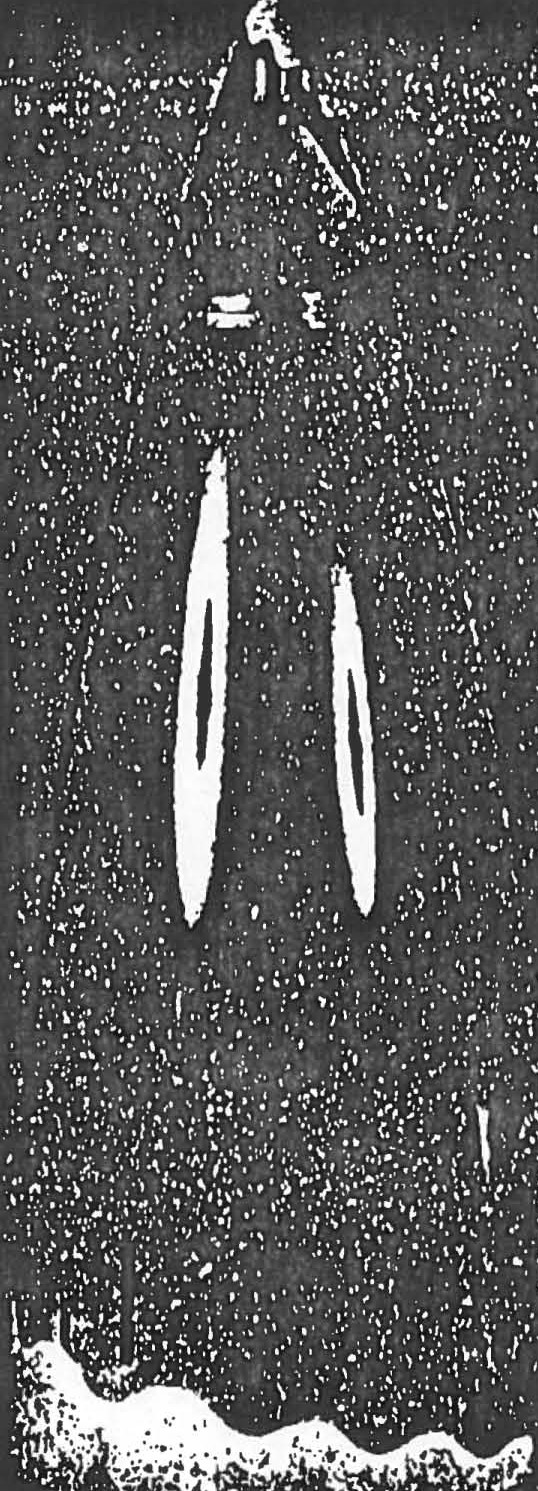
b. Exit Shroud (U)
c. [DELETED]
Figure 34-2. Exit shroud and two configurations of AF MARK 12 reentry system. (U)
Note: *Closure around chaff dispenser opening and covering around conical frustum removed. (U)
– – – – – – – – – – – – – – – – – – – – – – – – – – – – – – – – – – – – – – – –
1. Gen. B.A. Schriever, MINUTEMAN Ballistic Missile Development Plan, Hdqtrs. Air Research and Development Command, WDLPR 413 (1960), (Title U, Report SRD).
2. Report of the Ad Hoc Panel on Warhead Vulnerability to the President's Science Advisory Committee--The President's Science Advisory Committee, (1961) (Title U, Report TS/RD).
3. T. Greenwood, Qualitative Improvements in Offensive Strategic Arms: The Case of MIRV Center for International Studies, Massachusetts Institute of Technology, (1973) (Title U, Report U).
4. Final Report POLARIS MARK 2 Reentry Body, Vol. I, Summary, Special Project Office, (1959) (Title U, Report SRD).
5. J.C. Berquist and C.A. Burke, "Evolution of Threat Technology" (U), Discrimination, Proceedings of the Fifth Meeting, 26-28 March 1969 Foreign Missile and Space Analysis Center, Central Intelligence Agency, RMP-4, Vol. I (1969), p. 1-27 (Title U, Report SRD).
6. Missile Penetration Study, Office of the Director of Research and Engineering, (1961) (Report TOP SECRET).
7. R. Blecher, et al, AVCO Corp., The Penetration and Target Damage Effectiveness of Single and Multiple Reentry Vehicle Systems Against an Active Terminal Defense, Vols. I, II, Air Force Special Weapons Center, Air Force Systems Command, Kirtland AFB, AFSWC-TDR-62-28, (1962) (Title U, Reports SRD).
8. P. Mosher and J. Vullo, Penetration Capability of a Maneuvering Re-Entry Vehicle, Research and Advanced Development Division AVCO Corporation, Wilmington, Massachusetts, Document No. RAD-TM, 62-39, (1962) (Title U, Report SRD).
9. Preliminary Design Study for Maneuvering Re-Entry Vehicles (Maneuvering Re-Entry Vehicle Project--ARS Program), Research and Advanced Development Division AVCO Corporation, Document No. RAD-TM-62-62, (1962) (Title U, Report SRD).
10. Phase 1 Study of MARK 12 Reentry System for MINUTEMAN, Headquarters Air Force Special Weapons Center, Air Force Systems Command, SWVCS-2-0264, (1962) (Title U, Report SRD).
11. C.V. Carter, MK 12 Optimization Studies, Aerospace Corp., Interoffice correspondence, SA-62-0000-00298, (1962) (Title U, Report SRD).
12. Revision to Phase I Study of MARK 12 Reentry System for MINUTEMAN, Air Force Special Weapons Center, SWVCS-2-0316 (1963) (Title U, Report SRD).
13. Report of the Phase 1 Feasibility Study of Warheads for the MINUTEMAN/MK-12 ICBM, Hdqtrs. Field Command, Defense Atomic Support Agency, Sandia Base, Albuquerque, NM, FC/04630553 (1963) (Title U, Report SRD).
14. A.F. MARK 11 Reentry System Characteristics, Performance, and Observables, Battelle Memorial Institute, Columbus Laboratories, Columbus, Ohio, BAT-197-100-23, Change 1, Dec. 15, 1970, (1968) (Title U, Report SRD).
15. A.F. MARK 11A, 11B, and 11C Reentry System Characteristics, Performance, and Observables, Battelle Memorial Institute, Columbus, Ohio, BAT-197-100-25, Change 1, Apr. 15, 1971, (1968) (Title U, Report SRD).
16. H.F. York, Multiple Warhead Missiles, Scientific American, Vol. 229, (1973) (Title U, Article U).
17. W.B. Graham, Minuteman Payloads Against Defended Urban Targets, The Rand Corp., Memo. RM-3800-PR, (1963) (Title U, Report SRD).
18. MK 12 Penetration System Study, TARGET SYSTEMS CHARACTERISTICS, Final Report, General Electric, No. 64 SD 411, (1964) (Title U, Report S).
19. MARK 12 Penetration System Study, MISSION PAYLOAD REQUIREMENTS, Final Report, Ballistic Systems Division, Air Force Systems Command, Norton AF Base, No. 64SD615, (1964) (Title U, Report S).
20. MARK 12 Penetration System Study, MULTIPLE REENTRY VEHICLE SYSTEM Study, Final Report, General Electric, No. 6450518, (1964) (Title U, Report SRD).
21. BSD Exhibit 62-59 MK 12 Reentry System Design Criteria, Ballistic Systems Division, AF Systems Command, USAF, No. 64 BSYS 238 (1964) (Title U, Report SRD).
22. H. Kruger, History of the MK-12/XW-62 Warhead, LLL internal document COPJ-65-268, (1965) (Title U, Report SRD).
23. A Study of MINUTEMAN MARK 18 Requirement and Configuration, DDR&E Systems Review and Analysis Group, Office of Deputy Director for Strategic and Space Systems, R&E Log No. 59330, (1965) (Title U, Report TSRD).
24. A.L. Seward, Stage Disposal Capability of Strategic Missile Systems, PEN-X Paper 39, Institute for Defense Analyses, (1965) (Title U, Report SRD).
25. G. Gordon, Ballistic Missile Weapon Delivery Accuracy: Present and Future, PEN-X Paper 49, Institute for Defense Analyses, (1965) (Title U, Report S).
26. W. Emrick and M. Watter, USAF Advanced ICBM Concepts, PEN-X Paper 58, Institute for Defenses Analyses, (1965) (Title U, Report SRD).
27. B. Alexander, The PEN-X Report, Report 112, Institute for Defense Analyses, (1965) (Title U, Report SRD).
28. BSD Exhibit 62-59A, MARK 12 Reentry Vehicle Design Criteria, Ballistic Systems Division, AF Systems Command, No. 7549-2158-T1-000, (1964) (Title U, Report SRD).
29. BSD Exhibit 66-10 MINUTEMAN III Reentry System Design Criteria, Ballistic Systems Division, AF Systems Command, No. 7550-X454-T1-000, (1966) (Title U, Report SRD).
30. BSD Exhibit 66-11, MARK 12 Penetration Aids Subsystem Design Criteria, Ballistic Systems Division, AF Systems Command, No. 7549-2100-L1-001, (1966) (Title U, Report SRD).
31. Final Development Report on the W62 Warhead, Sandia Laboratories Livermore and Lawrence Radiation Laboratory, SCL-WD-70-96, (1971) (Title U, Report SRD).
32. AF MARK 12 Reentry System Characteristics, Performance, and Observables, US Reentry Systems Reference Books, Battelle Memorial Institute, BAT-197-100-27 Change 1, Feb. 15, 1971, (1968) (Title U, Report SRD).
– – – – – – – – – – – – – – – – – – – – – – – – – – – – – – – – – – – – – – – –
Glossary |
|
|
ABM |
Anti-ballistic Missile |
|---|---|
|
AEC |
Atomic Energy Commission |
|
AFF |
Arming Fuzing and Firing |
|
AICBM |
Anti Intercontinental Ballistic Missile |
|
ARPA |
Advanced Research Projects Agency |
|
BMD |
Ballistic Missile Defense |
|
BSD |
Ballistic Systems Division of the Air Force |
|
β |
(Beta) Ballistic coefficient |
|
CCM |
Counter-Countermeasure |
|
CEP |
Circular Error Probable |
|
CG |
Center of Gravity |
|
DASA |
Defense Atomic Support Agency |
|
DDR&E |
Director of Defense Research and Engineering |
|
DNA |
Defense Nuclear Agency |
|
DOD |
Department of Defense |
|
ECM |
Electronic Counter Measures |
|
EMP |
Electromagnetic Phenomena |
|
ERDA |
Energy Research and Development Agency |
|
ETR |
Eastern Test Range |
|
FPU |
First Production Unit |
|
ICBM |
Intercontinental Ballistic Missile |
|
IDA |
Institute for Defense Analyses |
|
IOC |
Initial Operational Capability |
|
kt |
kiloton |
|
LGM |
An underground silo launch to ground target missile |
|
MCs |
Military Characteristics |
|
MIRV |
Multiple Independently Targeted Reentry Vehicle (system) |
|
MRV |
Multiple Reentry Vehicle (System) |
|
Mt |
Megaton |
|
P/A |
Penetration Aids |
|
PBCS |
Post Boost Control Subsystem |
|
PBV |
Post Boost Vehicle |
|
PEN-AIDS |
Penetration Aids |
|
PHASE I |
Nuclear weapon conception |
|
PHASE II |
Feasibility study |
|
PHASE III |
Design and development engineering |
|
RMS |
Road Mobile System |
|
R/S |
Reentry System |
|
RV |
Reentry Vehicle |
|
SAM |
Surface to Air Missile |
|
STL |
Space Technology Laboratories Incorporated |
|
STS |
Stockpile-to-Target Sequence |
|
W/H |
Warhead |
|
WTR |
Western Test Range |
|
W/CDA |
Ballistic coefficient |
Units |
|
|
Yield |
1 kt = 4.20 (terajoules) - 4.20 x 10¹²J |
|
Energy |
1 keV = 0.1602 fJ (femtojoules) = 0.1602 x 10⁻¹⁵J |
|
Fluence |
1 cal/cm2 = 41.84 kJ/m2 |
|
Mass/area |
1 lb/ft2 = 4.882 kg/m2 (ballistic coefficient) |