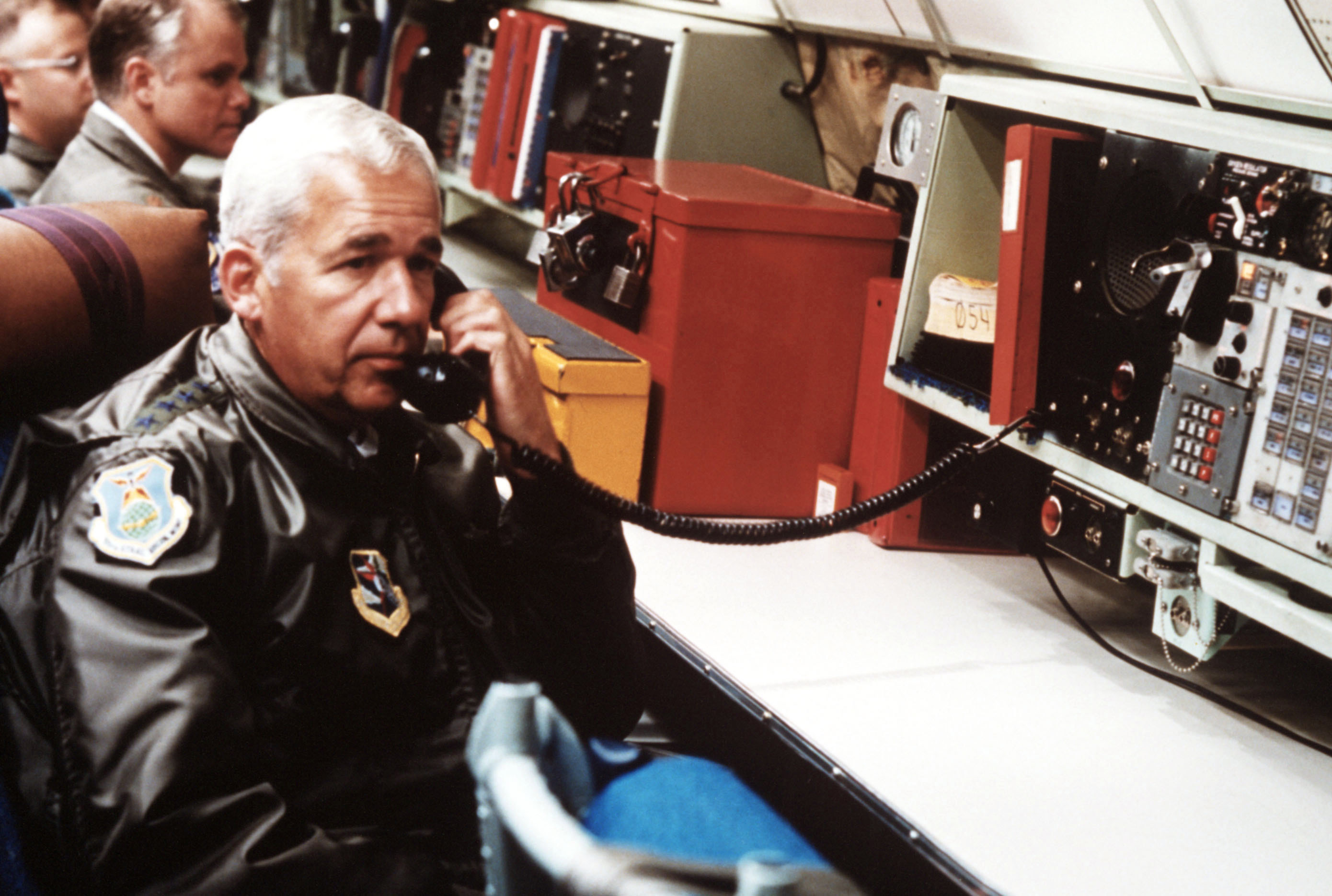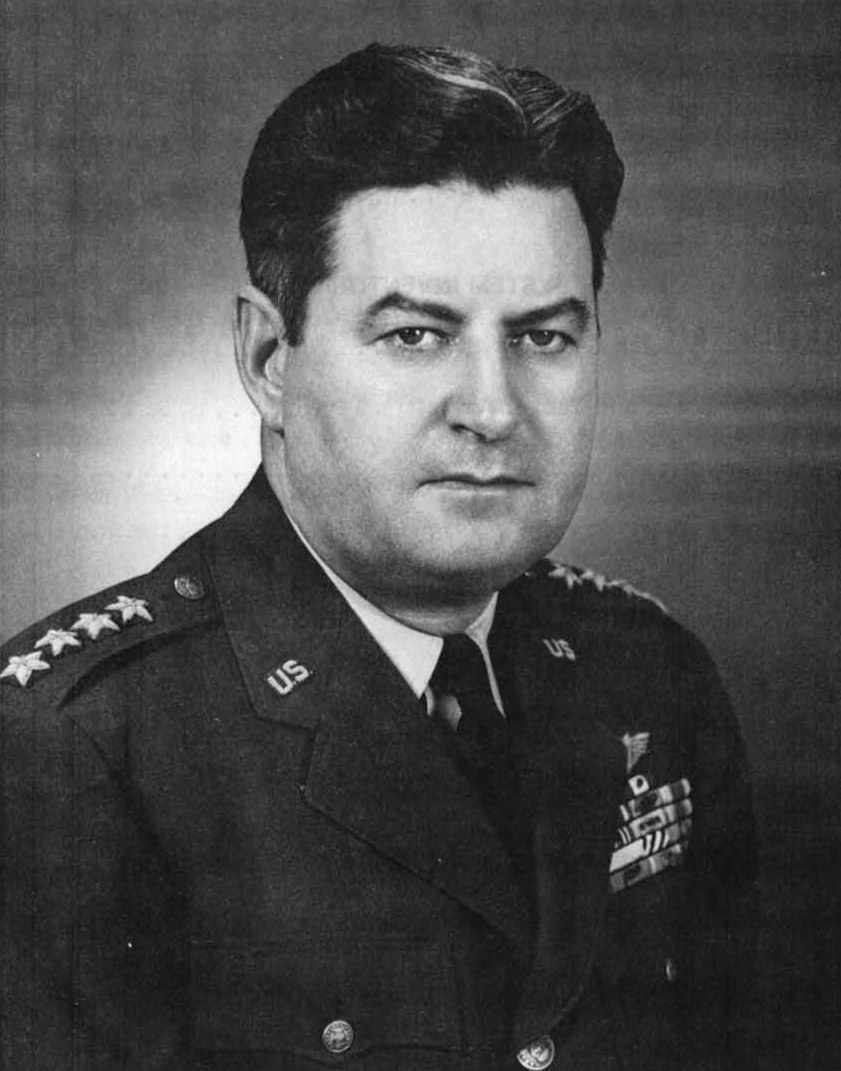
GENERAL CURTIS E. LEMAY
COMMANDER IN CHIEF, STRATEGIC AIR COMMAND
19 October 1948 - 30 June 1957
7 December 1991
OFFICE OF THE HISTORIAN
HEADQUARTERS STRATEGIC AIR
COMMAND
OFFUTT AIR FORCE BASE, NEBRASKA
- - - - - - - - - - - - - - - - - - - - - - - - - - - - - - - - - - - - - - - -
As CINCSAC, it was my privilege to oversee the most momentous SAC operation since the Cuban Missile Crisis. On 28 September 1991, I assembled my staff in the SAC Command Center where we supervised the stand down of SAC bombers, tankers, and Minuteman IIs from day-to-day alert. This event heralded the successful conclusion of the Cold War and over forty-five years of dedication and hard work by the command. It represented victory in the finest sense, peace and freedom through readiness rather than by the destruction of people and nations. Strategic Air Command entered the battle in March 1946 and had relied on the alert force as its primary tactic since October 1957. Through the mere projection of military power, SAC and the ballistic missile submarine force have deterred conflict between the major powers and prevented the employment of nuclear weapons. The events of 28 September represent a tremendous victory for this command and an achievement with which every citizen of the United States and the free world can be proud.
A curious irony of victory is that it eliminates the need for the people and organizations that forged it. Strategic Air Command was established to deter communist aggression, prevent nuclear warfare, and wage the Cold War. The successful conclusion of that campaign and changing concepts in the employment of air power have eliminated the requirement for a command exclusively dedicated to strategic air power. SAC has accomplished its mission and will be retired. The weapon systems it operated will transfer to several new Air Force commands. Future strategic operations, to include bombers, ICBMs, and SLBMs, will come under the purview of a newly established U.S. Strategic Command. Those who have witnessed the events of the last forty-five years may be assured that the legacy embodied in the words "Strategic Air Command" will not be lost. The new commands will carry forth the fine tradition and warmaking ability of our legendary command and the standards for dedication, readiness, and sacrifice that are synonymous with SAC will remain goals for all future organizations to achieve and maintain.
/S/
GEORGE L. BUTLER
General, USAF
Commander in Chief
- - - - - - - - - - - - - - - - - - - - - - - - - - - - - - - - - - - - - - - -
FOREWORD: General George L. Butler, CINCSAC
PEACE .... IS OUR PROFESSION: Alert Operations and the Strategic Air Command, 1957 -1991
APPENDIX I: General Power's Letter to the SAC Alert Force, 9 November 1957
APPENDIX II: General John T. Chain's Year of the Alert Force Message to the Command, 30 September 1987
APPENDIX III: General George L. Butler: Text of Remarks to SAC Wing and Unit Commanders Upon Stand Down of Bomber and Minuteman II Alert, 28 September 1991
APPENDIX IV: MANPOWER, 1946 – 1990
SAC
Manning - Officers, Airmen, Civilians
Headquarters
Strategic Air Command
Missile
Crews
APPENDIX V: WEAPON SYSTEM INVENTORIES, 1946 –
1990
Tactical
Weapon Systems
Bombardment
and Tanker Aircraft
Bombardment
Aircraft
Tanker
Aircraft
Post
Attack Command and Control Systems
Air
Launched Missiles
Intercontinental
Ballistic Missiles
Intercontinental
Ballistic Missiles by Model
APPENDIX VI: ALERT RATES, 1946 - 1990
Bomber
Alert Rates
Airborne
Alert Rates
ICBM
Alert Rates
- - - - - - - - - - - - - - - - - - - - - - - - - - - - - - - - - - - - - - - -
- - - - - - - - - - - - - - - - - - - - - - - - - - - - - - - - - - - - - - - -
During its first ten years, Strategic Air Command conducted operations from sanctuaries, most of them located within the United States. The Soviet Union's acquisition of thermonuclear weapons combined with a systematic build up of its long-range bomber force and development of intercontinental ballistic missiles in the mid-1950s profoundly altered this situation. Defense planners interpreted these actions as a conscious effort to project Soviet military power worldwide and to place the United States under the direct threat of nuclear attack. Given the inferiority of Soviet forces, SAC planners thought it reasonable that in time of war the Soviets would resort to the most basic military principle to quickly gain superiority — surprise.
Growing Soviet military power and the possibility of a surprise attack demanded attention. General Curtis E. LeMay, Commander in Chief of Strategic Air Command (CINCSAC), and his staff at Headquarters SAC understood the need for a quick retaliatory response to Soviet aggression. They also knew that to respond effectively, they had to protect their strategic forces from being destroyed on the ground. Under General LeMay's guidance, the SAC staff generated several studies that sought to neutralize the threat of surprise attack, assure a meaningful SAC response, and make the Soviets uncertain of success.
The alert force concept that emerged safeguarded the nuclear arsenal and maintained deterrence as a viable strategy. It placed SAC's bombers and tankers on ground alert with weapons loaded and crews ready for immediate takeoff. The goal was to keep one-third of the command's aircraft on ground alert at all times. SAC planners arrived at the one-third figure after evaluating training, manpower, and logistic requirements.
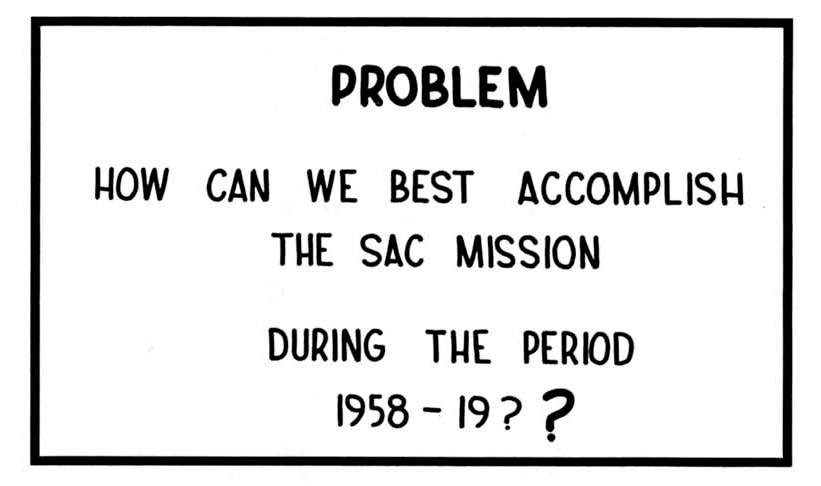
COVER
SLIDE FROM SAC ALERT CONCEPT BRIEFING MARCH 1956
Strategic Air Command's next step was to conduct three tests to determine the feasibility of the alert concept. The first test, Operation Try Out, was supervised by the 38th Air Division at Hunter AFB, Georgia. From November 1956 to March 1957, the 2d and 308th Bombardment Wings kept one-third of their B-47 and KC-97s on continuous 24-hour alert. Operation Try Out proved that ground alert was feasible. Two additional tests worked out problems identified in Operation Try Out and perfected the alert concept. The second test, Operation Watch Tower, was carried out by the 825th Air Division at Little Rock AFB, Arkansas. Between April and November 1957, the 70th Strategic Reconnaissance Wing, 384th Medium Bomb Wing, 825th Combat Support Group, and 70th Air Refueling Squadron validated an organizational structure that would accommodate alert operations without degrading other training requirements. Operation Fresh Approach, the last test, fell to the 9th Bombardment Wing at Mountain Home AFB, Idaho, in September 1957. The final test refined the organization evaluated by the 825th Air Division.
When General LeMay departed SAC in June 1957, General Thomas S. Power became the new CINCSAC and the driving force behind the alert program. Successful test results convinced General Power that alert would work. Even though testing had not been completed and many organizational and administrative details remained unresolved. General Power directed the start of ground alert operations on 1 October 1957 at several bases in the continental United States and overseas.
Preparation for overseas alert had begun in July, 1957 when four Second Air Force B-47 wings each sent five bombers to Sidi Slimane Air Base, Morocco. Overseas alert operations, more commonly known as Reflex Action, commenced on 1 October. Under Reflex, SAC units rotated crews and aircraft (B-47s and tankers) to bases overseas where they stood on alert. Reflex allowed SAC to further disperse its forces, thereby complicating Soviet targeting, while simultaneously positioning its strike force closer to the Soviet Union. A typical tour of duty for a standby alert crew in Alaska, for instance, lasted 72 hours. Ground crews worked eight-hour shifts. After 10-14 days, aircrews returned to their home bases. Reflex tours to SAC bases in the United Kingdom, Spain, and Morocco averaged 90 days.
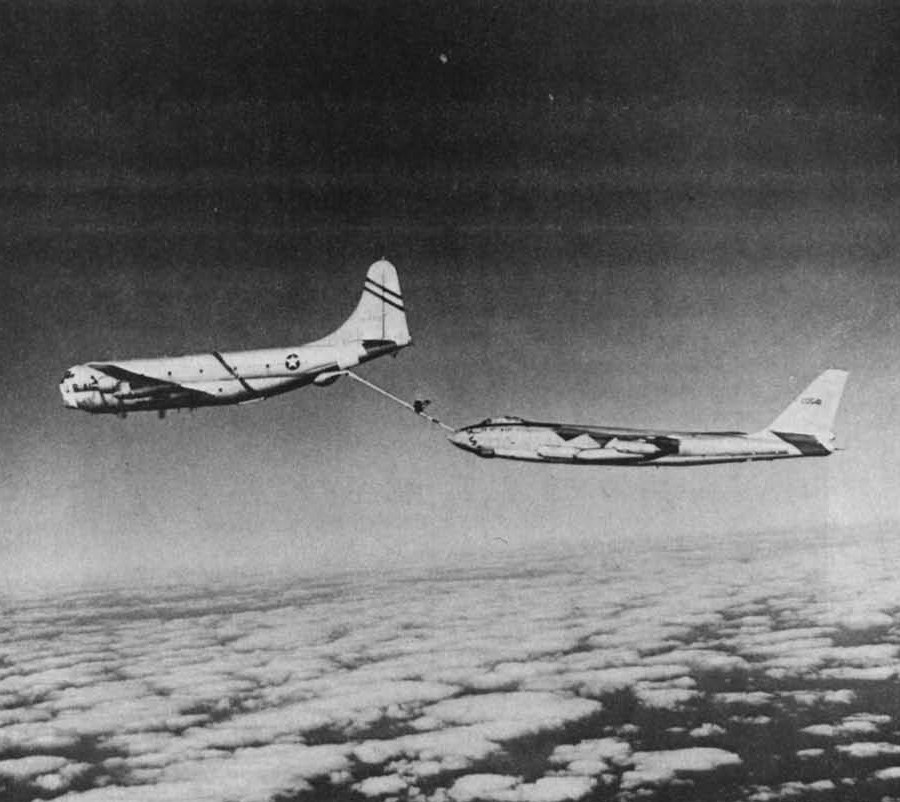
A
KC-97 PERFORMS A MID-AIR REFUELING OF A B-47E
As SAC units prepared to initiate alert operations, General Power wrote a memorandum addressed to each member of the SAC alert force explaining the purpose and importance of their new duty.
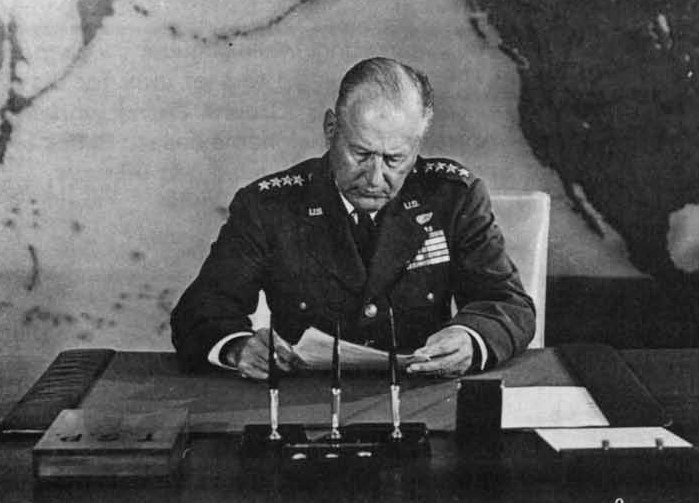
"As a member of SAC's Alert Force," he advised them, "you are contributing to an operation which is of the utmost importance to the security and welfare of this nation and its allies in the free world." The CINCSAC then noted that:
the only way of insuring the survival of some of SAC's combat capability, even in the case of the most unexpected and massive attack, is our Alert Force.
As long as the Soviets know that, no matter what means they may employ to stop it, a sizeable percentage of SAC's strike force will be in the air for the counterattack within minutes after they have initiated aggression, they will think twice before undertaking such aggression. For this reason, it is my considered opinion that a combat-ready Alert Force of adequate size is the very backbone of our deterrent posture.
The next month, General Power was able to inform the world press that Strategic Air Command had aircraft at the end of runways, bombs loaded, and crews nearby ready to take off within 1 5 minutes. Eleven percent of SAC's 1,528 bombers and 766 tankers were placed on alert that year, a percentage that would grow to 12 percent in 1958 and 20 percent in 1959. The command's goal of one-third was finally achieved in 1960.
SAC devised another tactic — dispersal — that it used in the late 1950s and early 1960s to complicate enemy planning. Dispersal divided large B-52 wings of 45 aircraft into smaller wings of 15 aircraft each and relocated them to other bases where they were placed on alert. Dispersal tactics increased the number of targets confronting Soviet planners and reduced the time required to get the alert force off the ground. These two factors strengthened the probability of a viable retaliatory attack and added credibility to SAC's deterrent strategy.
While SAC was bringing the alert force on line, significant achievements in ballistic missile technology were already altering the future structure of alert operations. On 31 October 1959, the 576th Strategic Missile Squadron at Vandenberg AFB, California, mated a nuclear warhead to the nation's first intercontinental ballistic missile, an Atlas D, thereby enabling General Power to declare it on alert. The Atlas D and E (the latter placed on alert in October 1961) were liquid-fueled missiles deployed in above-ground launchers. Together, they brought to fruition a program begun in 1946 that profoundly changed the scope and management of strategic operations. A second milestone occurred on 18 March 1960 when the 702d Strategic Missile Wing at Presque Isle AFB, Maine, succeeded in placing the first Snark intermediate range cruise missile on alert. These events foreshadowed a trend that continues to this day. Missiles would become the backbone of the alert force and the major component in the strategic deterrence equation.
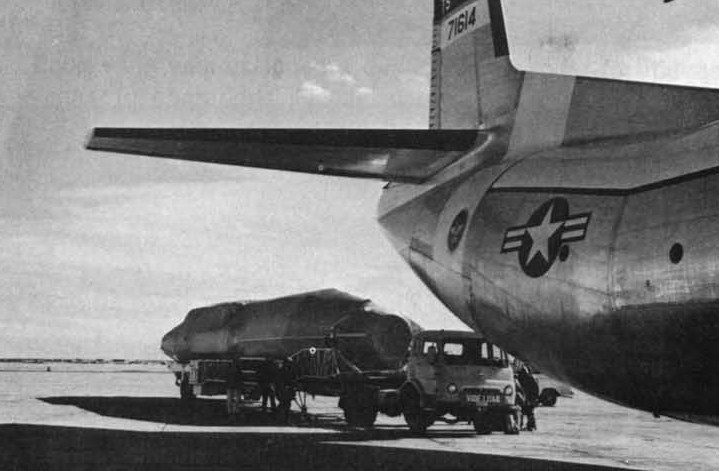
FIFTEENTH
AIR FORCE RECEIVES ITS FIRST ICBM, AN ATLAS D, F.E. WARREN AFB,
WYOMING, 2 OCTOBER 1959
Daily alert operations complicated maintenance and other routine unit activities. Strategic Air Command solved these problems in late 1958 by reorganizing its tactical wings and air base groups. The command centralized maintenance operations by establishing organizational maintenance squadrons to handle all wing maintenance functions. Each wing was assigned a deputy commander for maintenance and a deputy commander for operations. Finally, air base groups were redesignated combat support groups. These changes emphasized combat-ready aircraft and combat-ready aircrews — the components SAC considered essential for successful alert operations.
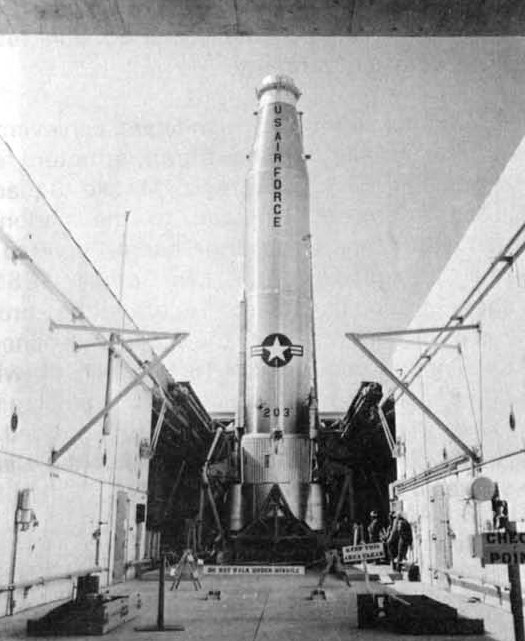
AN
ATLAS MISSILE STANDS ERECT AT COMPLEX 576-B, VANDENBERG AFB,
CALIFORNIA
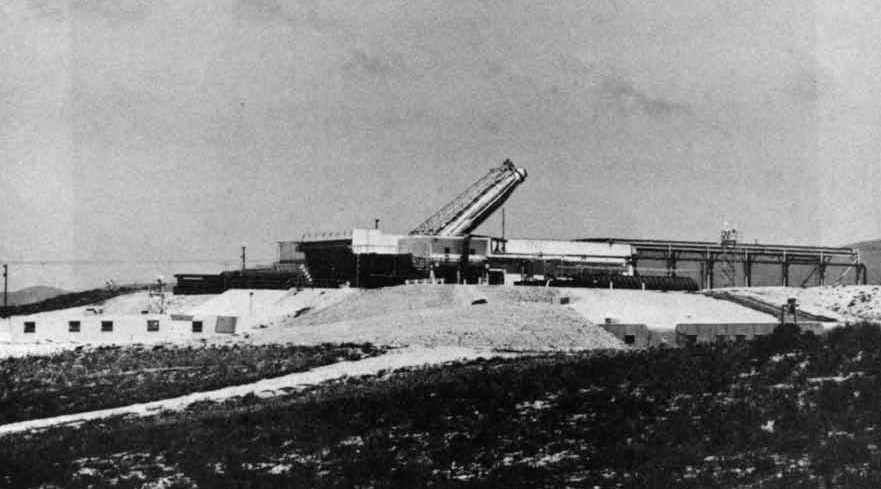
"ON
MY MARK IT WILL BE T-15 MINUTES . . . MARK" THE SHELTER TOP
ROLLS BACK AND AN ATLAS RISES TO LAUNCH POSITION
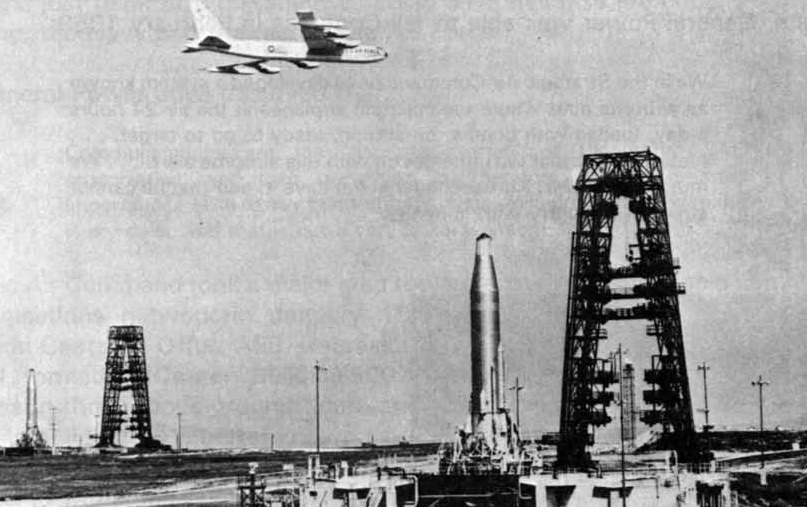
"POWER
FOR PEACE" IS EMPHASIZED AS A B-52 FLIES OVER AN ATLAS COMPLEX
AT VANDENBERG AFB, CALIFORNIA
When General Power announced to the world in November 1957 that his command had armed aircraft on alert, he also tantalized them with another cryptic comment. "Day and night," he stated, "I have a certain percentage of my command in the air." Political considerations in Washington prevented him from fully stating what this meant. The CINCSAC found such restrictions irritating because he believed that the best way to deter Soviet aggression was to convey in precise and deadly terms the military readiness of his command. Washington may have restrained him, but it did not prevent him from getting the message across. "These planes," he informed an inquiring press, "are bombed up and they don't carry bows and arrows."
In developing a plan to protect its strategic forces and maintain a credible deterrent, Strategic Air Command had not confined itself to ground alert. Command planners also produced a plan for airborne alert. As General Power had suggested, combat-ready bombers were airborne at all times. SAC had begun testing a B-52 airborne alert concept and by 1961 had amassed more than 6,000 alert sorties. The 92d Bombardment Wing participated in one test, Head Start II (2 March - 30 June 1959), which kept five B-52 bombers airborne at all times. Each crew flew a 24-hour sortie while ten KC-135s supported the airborne bombers. Based upon satisfactory test results, General Power was able to tell Congress in February 1959:
We in the Strategic Air Command have developed a system known as airborne alert where we maintain airplanes in the air 24 hours a day, loaded with bombs, on station, ready to go to target. . . . I feel strongly that we must get on with this airborne alert. . . . We must impress Mr. Khrushchev that we have it, and that he cannot strike this country with impunity.
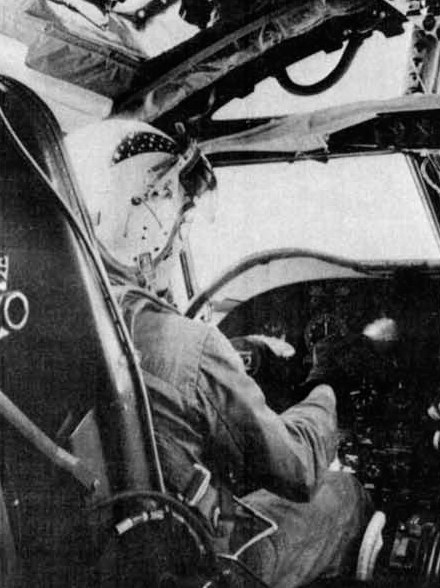
A
B-52 PILOT MANEUVERS HIS AIRCRAFT DURING A HEAD START II TEST
On 18 January 1961, SAC finally obtained permission to publicly announce that B-52 bombers were conducting airborne operations, but the activity had to be characterized as airborne indoctrination training.
Aircrews responded favorably to airborne alert training. "I don't mind ground alert because I know it's necessary," one crew member noted. "But I like our air alert so much better," he added. "Instead of sitting around and waiting for something to happen, I do what I know and like best – flying." Another crew member during Head Start II mused that it would be interesting "if General Power could invite that guy Khrushchev to fly a Head Start mission with the 92d." The experience, he concluded, "would keep him peaceful for a while!" The same individual then suddenly exclaimed, "Gee, and just think of the money we could save because we could do away with the Army, the Navy and the rest of the Air Force!"
General Power once observed that:
Communications are the 'nervous system' of the entire SAC organization, and their protection is, therefore, of the greatest importance. I like to say that, without communications, all I command is my desk, and that is not a very lethal weapon!
Strategic Air Command took a major step toward ensuring a survivable command and communications network in January 1957 when it moved into the new SAC Command Center at Offutt AFB, Nebraska. Two attached structures, buildings 500 and 501, formed the Center. Building 500 housed Headquarters SAC's administrative functions in three above-ground floors and a basement. The heart of the complex resided in building 501, better known as the SAC Command Post. This three-story underground structure adjacent to the new headquarters building was specially designed to withstand anything except a direct hit by a high yield nuclear weapon. Its reinforced concrete walls were 24-inches thick. The complex had more than three acres of floor space and was self-contained with its own power supply, rations and artesian well for extended operations. The state-of-the-art facility housed the SAC Command Post, a communications center, computers and the war planning staff. Giant maps and panels depicted the disposition and operational status of the entire force. From here, the CINCSAC monitored his forces 24-hours each day and maintained instantaneous contact with them throughout the world.
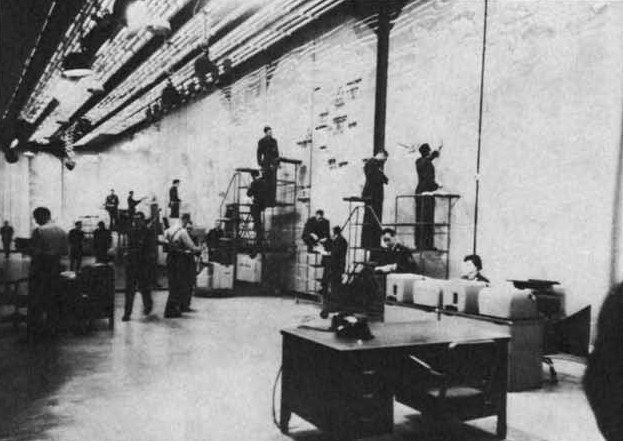
THE
SAC COMMAND POST
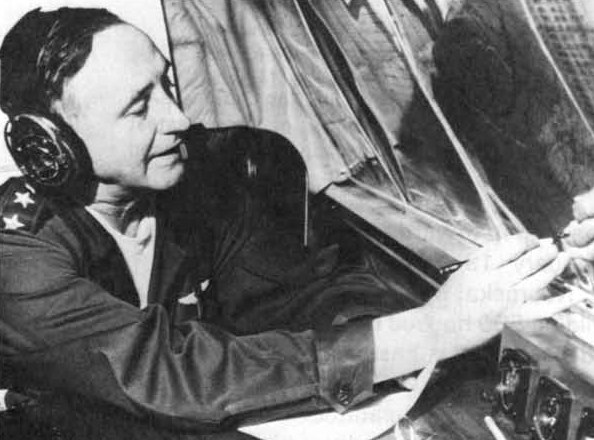
LT.
GEN JOHN P. McCONNELL ABOARD “LOOKING GLASS,” 3 FEBRUARY
1961
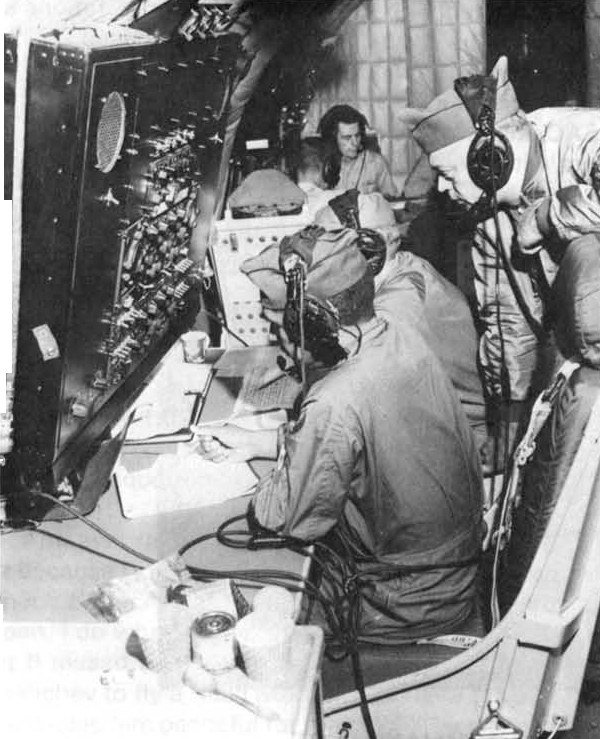
CONTROLLERS
AT WORK ONBOARD AN EARLY AIRBORNE COMMAND POST
After examining several alternatives, including a deep underground and a railmobile command post, SAC selected another means of ensuring its ability to command, control, and communicate with its worldwide forces. On 1 July 1960 the command began testing the airborne command post at Offutt AFB, Nebraska. Throughout the rest of the year, one of five specially configured KC-135 aircraft assigned to the 34th Air Refueling Squadron was placed on ground alert and periodically tested to determine its ability to take off within 15 minutes. Once airborne, the KC-135's primary mission was to serve as an alternate command post, one that could assume control over the SAC combat force in the event an enemy attack destroyed the underground command facility at Offutt and other command posts collocated with SAC's numbered air force headquarters. A SAC general officer and a team of controllers and communications experts manned each flight. The test proved successful and continuous airborne command post operations began on 3 February 1961 with Lieutenant General John P. McConnell, Commander of Second Air Force, serving as the first SAC Airborne Emergency Action Officer. Because these airborne operations mirrored the activities in SAC's underground command post, the airborne command post was nicknamed the "Looking Glass."
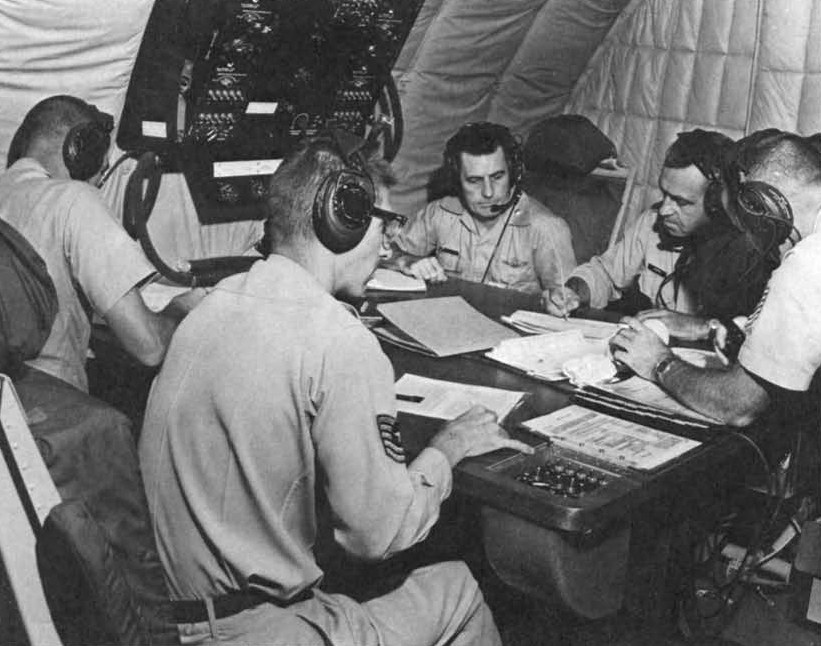
A
SAC AIRBORNE COMMAND POST TEAM ABOARD A "BAREBONES" KC-135
AIRBORNE COMMAND POST IN THE EARLY 1960s
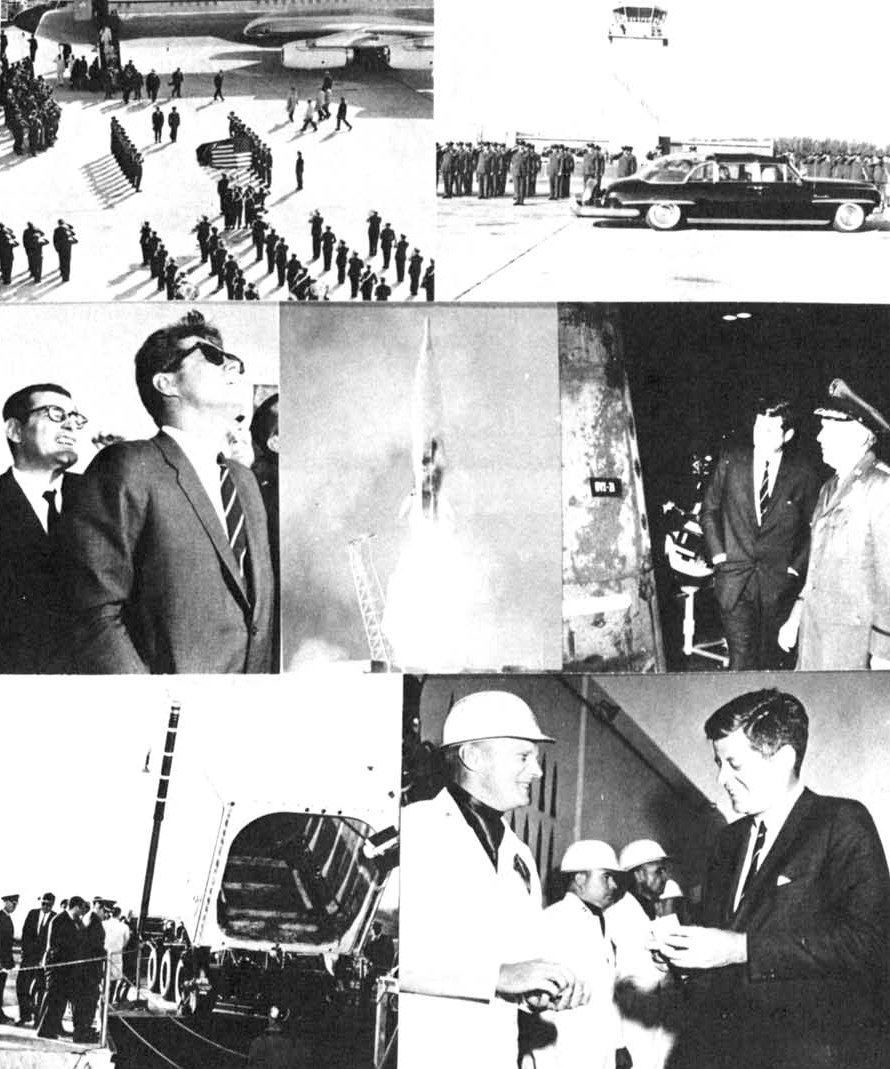
President
John F. Kennedy visits Vandenberg AFB, March 23, 1962. 1)
Receiving honors, 2) departing flight line, 3) viewing Atlas 134D
launch, 4). Atlas 134D, 5) viewing missile/space
exhibits, 6) at Minuteman site, 7) receiving missile badge.
PRESIDENT JOHN F. KENNEDY VISITS VANDENBERG AFB, CALIFORNIA 23 MARCH 1962
Shortly after becoming President, John F. Kennedy announced a new defense posture. His purpose was to strengthen the nation's military position in light of Soviet technological advances and worldwide political initiatives. The new posture directly affected Strategic Air Command because it increased ground alert to one-half of the command's bombers and tankers. SAC attained 50 percent alert in July 1961. An aircrew to aircraft ratio of 1.8 to 1 was established to help man the increased alert requirement.
The introduction of several new weapon systems reinforced the deterrent strength achieved by the new alert rate. The Titan missile joined the alert force on 20 April 1962 when the 724th Strategic Missile Squadron, Lowry AFB, Colorado, put the first Titan I on alert. In August, the Atlas F began alert duty with the 577th Strategic Missile Squadron, Altus AFB, Oklahoma. These two missiles were the first to stand alert upright in silos, although they were raised to surface level for launching. An inertial guidance system in the Titan I allowed the missile to operate without ground control during flight. On 1 September, the 305th Bombardment Wing at Bunker Hill AFB, Indiana, began alert operations with the B-58 Hustler.
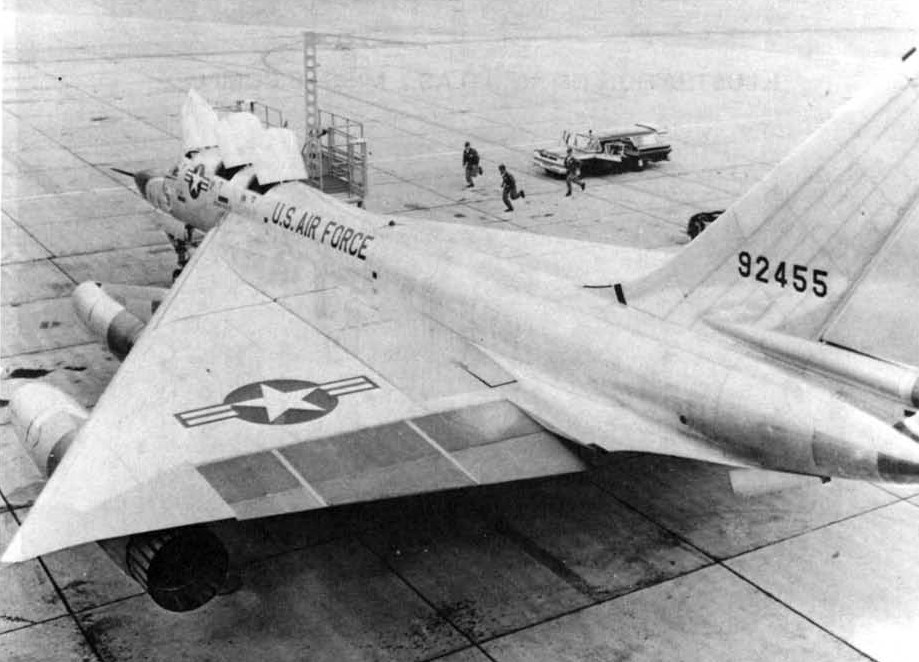
THE
CREW OF A B-58 "HUSTLER" RACES TO ITS AIRCRAFT DURING A
PRACTICE ALERT
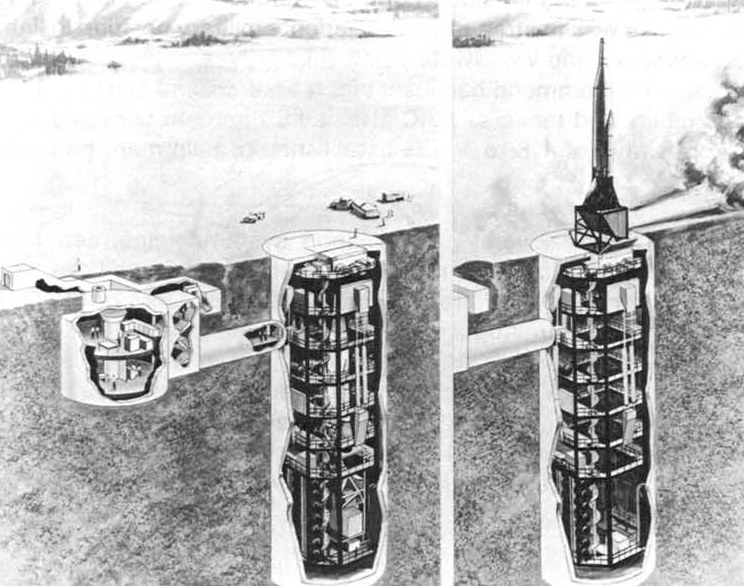
ILLUSTRATION OF AN ATLAS F MISSILE COMPLEX
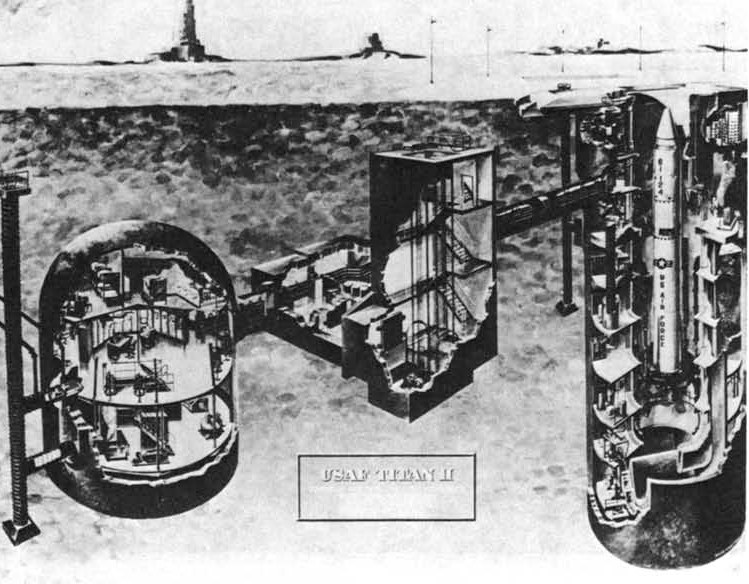
ILLUSTRATION OF A TITAN II MISSILE COMPLEX
Strategic Air Command also expanded its airborne command post operations. In April 1962, the Post Attack Command Control System or PACCS was augmented with three auxiliary airborne command posts. The new aircraft were established at Barksdale AFB, Louisiana; Westover AFB, Massachusetts; and March AFB, California. SAC then organized four support squadrons on 20 July at Mountain Home AFB, Idaho; Lincoln AFB, Nebraska; Lockbourne AFB, Ohio; and Plattsburgh AFB, New York. The command equipped the squadrons with EB-47L aircraft (B-47s modified with communications equipment) and redesignated them Post Attack Command Control Squadrons.
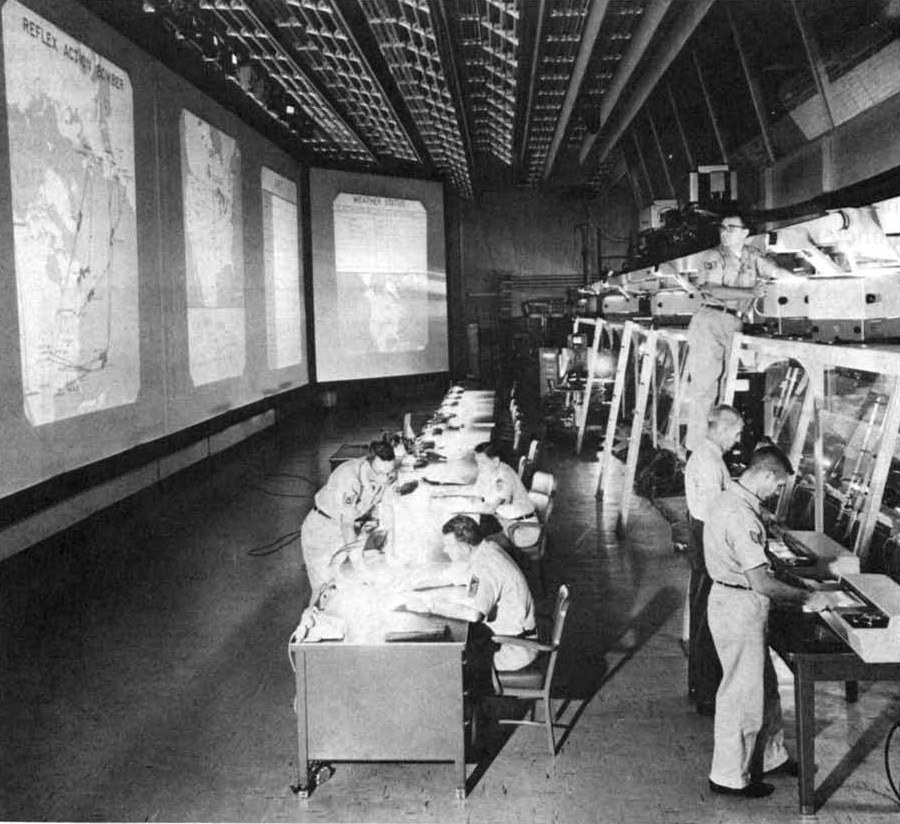
SAC
COMMAND POST IN 1962
The organizational adjustments and deployments of new weapon systems proved timely. President Kennedy addressed the nation on 22 October 1962 and announced the presence of Soviet intermediate range ballistic missiles in Cuba. He placed an arms quarantine against shipments bound for Cuba and demanded the removal of the missiles already delivered. Before his speech, SAC had begun to intensify its readiness posture. Battle staffs started 24-hour operations, leaves were canceled, and personnel were recalled to duty. The command dispersed its B-47 bombers, generated aircraft to full alert, and armed all of its bombers with nuclear weapons in accordance with the emergency war plan. B-52 airborne indoctrination training expanded into an actual airborne alert. The ICBM force, numbering around 200 operational missiles, was brought into alert configuration. Included in this figure was the first Minuteman missile, a feat accomplished by the 341st Strategic Missile Wing at Malmstrom AFB, Montana, on 27 October. When generation was completed, Strategic Air Command stood ready to defend national policy with the most lethal array of military firepower in human history. Fortunately, the Soviet Union agreed to withdraw the missiles from Cuba and on 20 November SAC was able to return to its normal alert posture. President Kennedy visited Headquarters SAC on 7 December where he thanked the command and presented General Power with a plaque citing the command's perfect record in flight safety during airborne alert in the Cuban emergency.
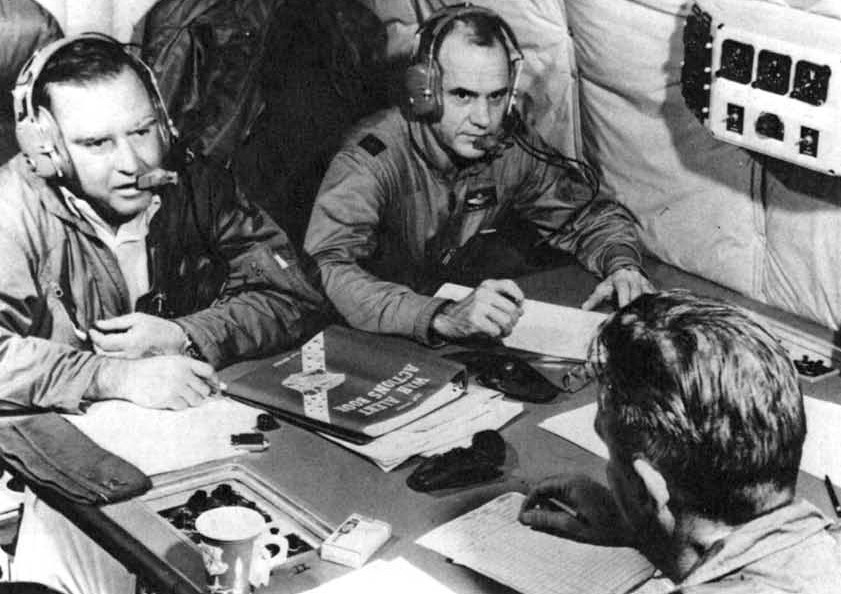
BRIG
GEN W.W. WISMAN COMMANDING AN AIRBORNE COMMAND POST SORTIE DURING THE
CUBAN MISSILE CRISIS
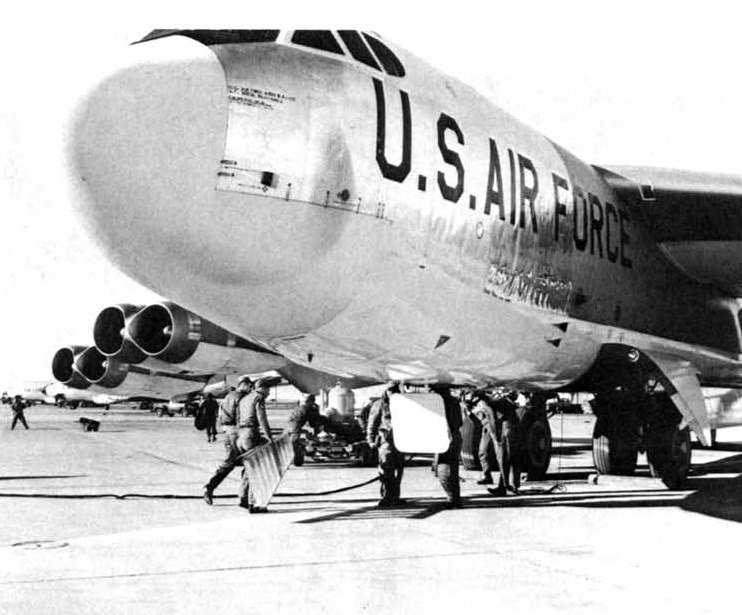
A
MAINTENANCE CREW GENERATES AN AIRBORNE ALERT SORTIE
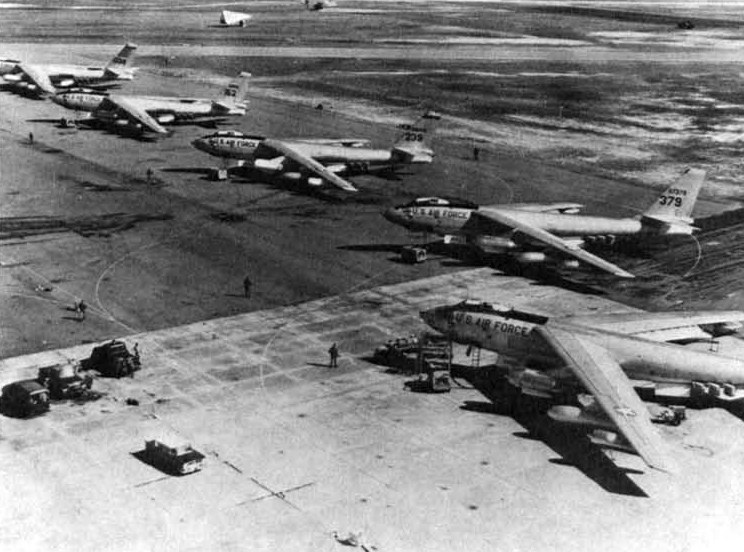
B-47
BOMBERS DISPERSED TO HURLBURT, FLORIDA
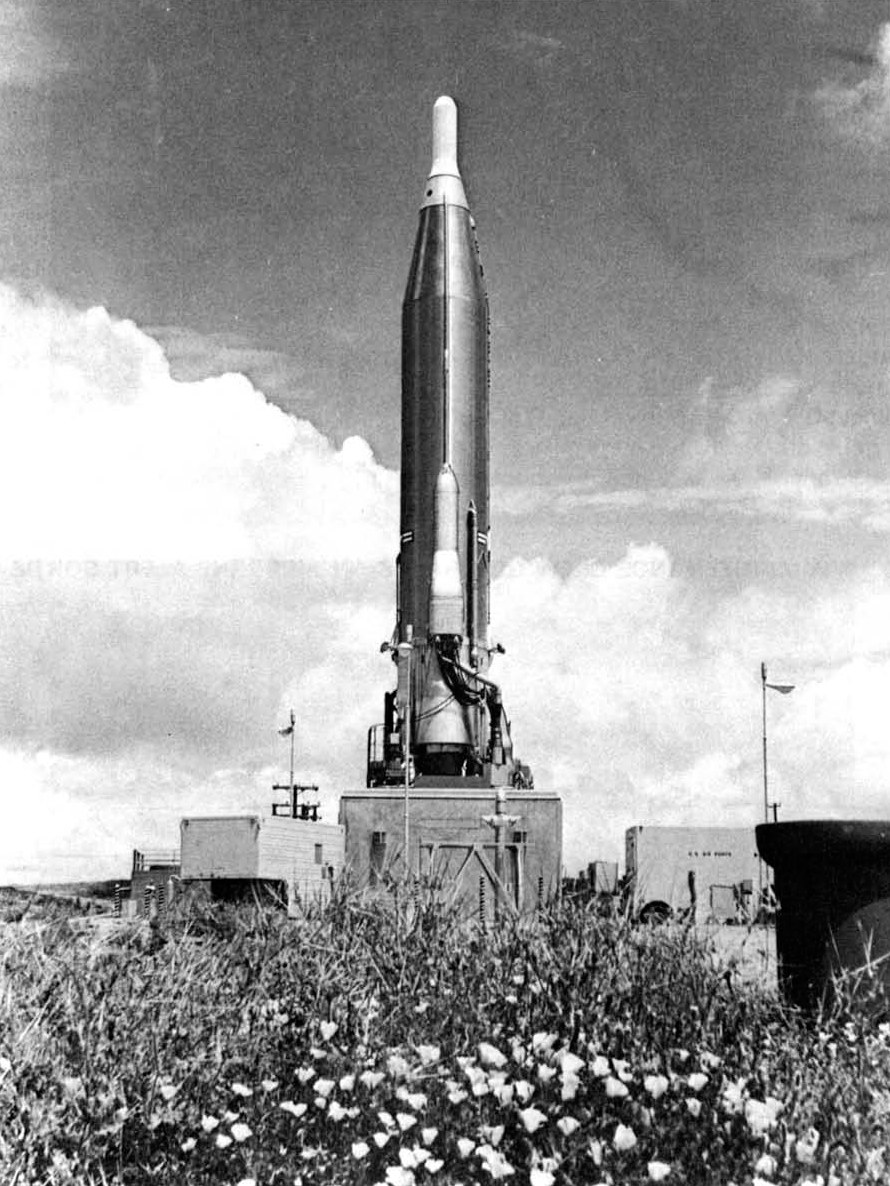
AN
ATLAS F ELEVATED FROM ITS SILO INTO LAUNCH POSITION
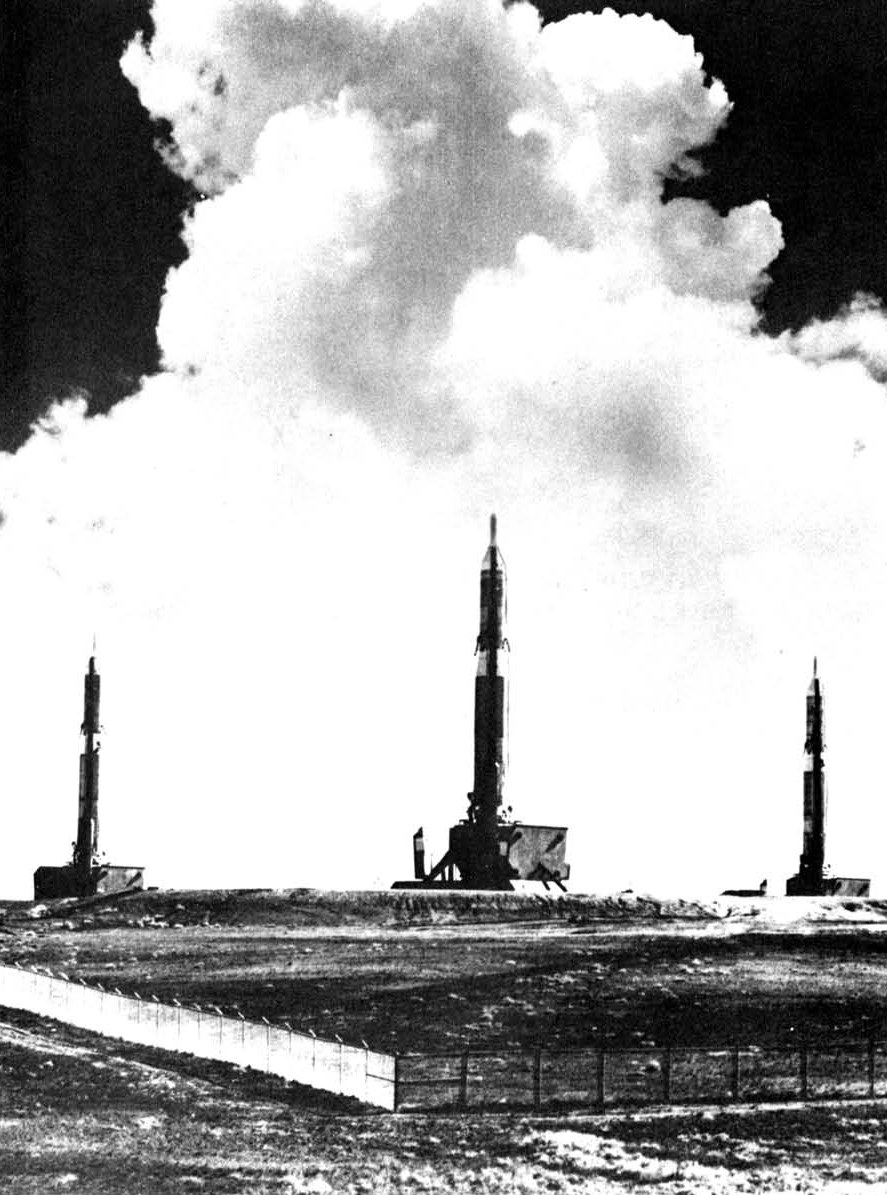
TITAN
I ICBMS RAISED TO LAUNCH POSITION
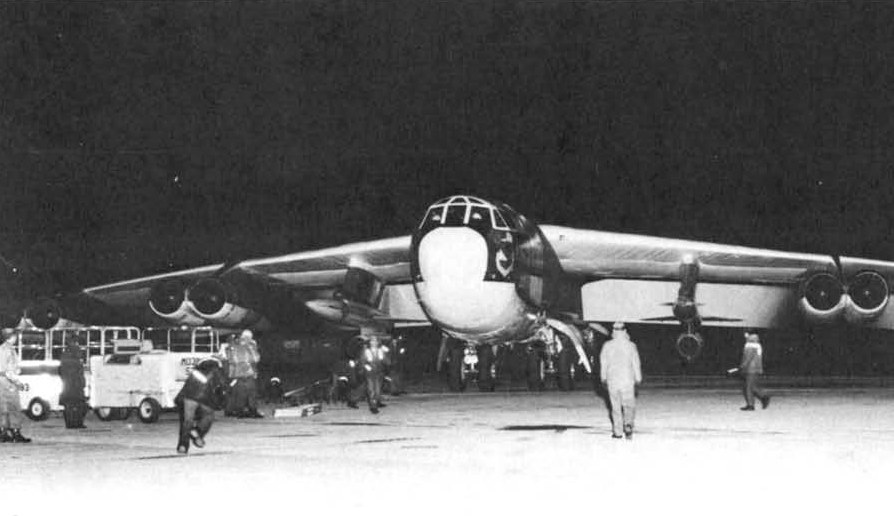
MAINTENANCE
CREWS AT WURTSMITH AFB, MICHIGAN, RECOVER THE LAST AIRBORNE ALERT
SORTIE FLOWN DURING THE CUBAN CRISIS – 21 NOVEMBER 1962
With the introduction of Minuteman and Titan II missiles (the latter first went on alert in April 1963 with the 570th Strategic Missile Squadron, Davis-Monthan AFB, Arizona), the nation's missile force had come of age. These technically improved weapon systems, deployed in hardened silos, gave the alert force the advantages of accuracy, reliability, and a near-instantaneous launch capability. They had a combined alert rate of over 90 percent and an operational cost significantly lower than that of manned bombers. The Atlas and Titan Is were phased out in April 1965.
In less dramatic fashion, SAC accepted and declared operational the three Blue Scout Junior launch sites at Wisner, West Point, and Tekamah, Nebraska. This 11 July 1963 event gave SAC another means of ensuring reliable command, control, and communications. The Blue Scout Junior rockets carried UHF recorders with a prerecorded force execution message that could be transmitted to all units within line of sight of the rocket's apogee flight.
The gradual phase out of the B-47 and KC-97 coupled with a serious balance of payments problem brought an end to Reflex operations. The reduction began in 1963 and Reflex ended on 31 March 1965. Ground alert for the KC-97 terminated on 10 November 1965 and for the B-47 on 11 February 1966. The rapid acquisition of Minuteman missiles accompanying the B-47 phase out continued to alter the command's weapons mixture. On 21 April 1964, the number of ICBMs on alert finally equaled the number of bombers on ground alert. From that day forward, the ICBM alert force gradually outdistanced the bomber alert force.
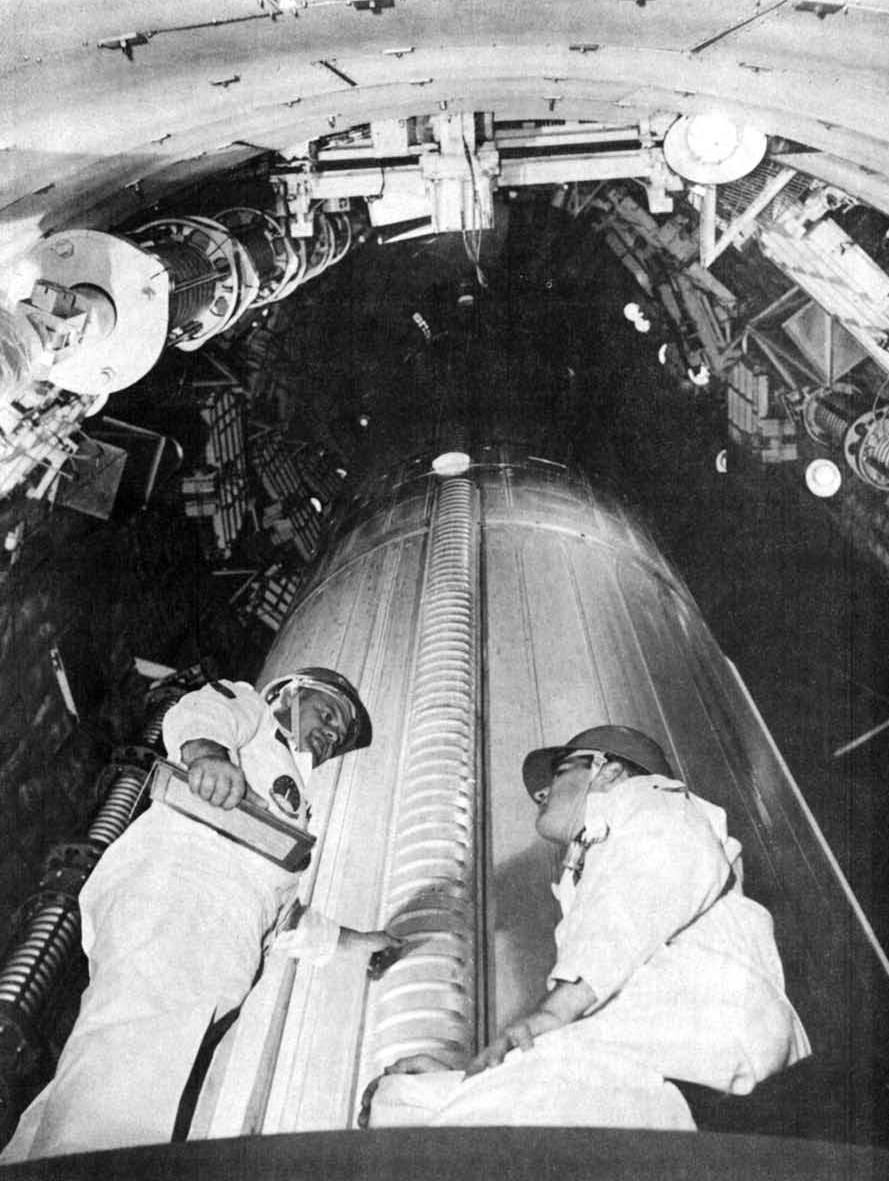
A
MAINTENANCE CREW WORKS ON A TITAN II IN ITS SILO
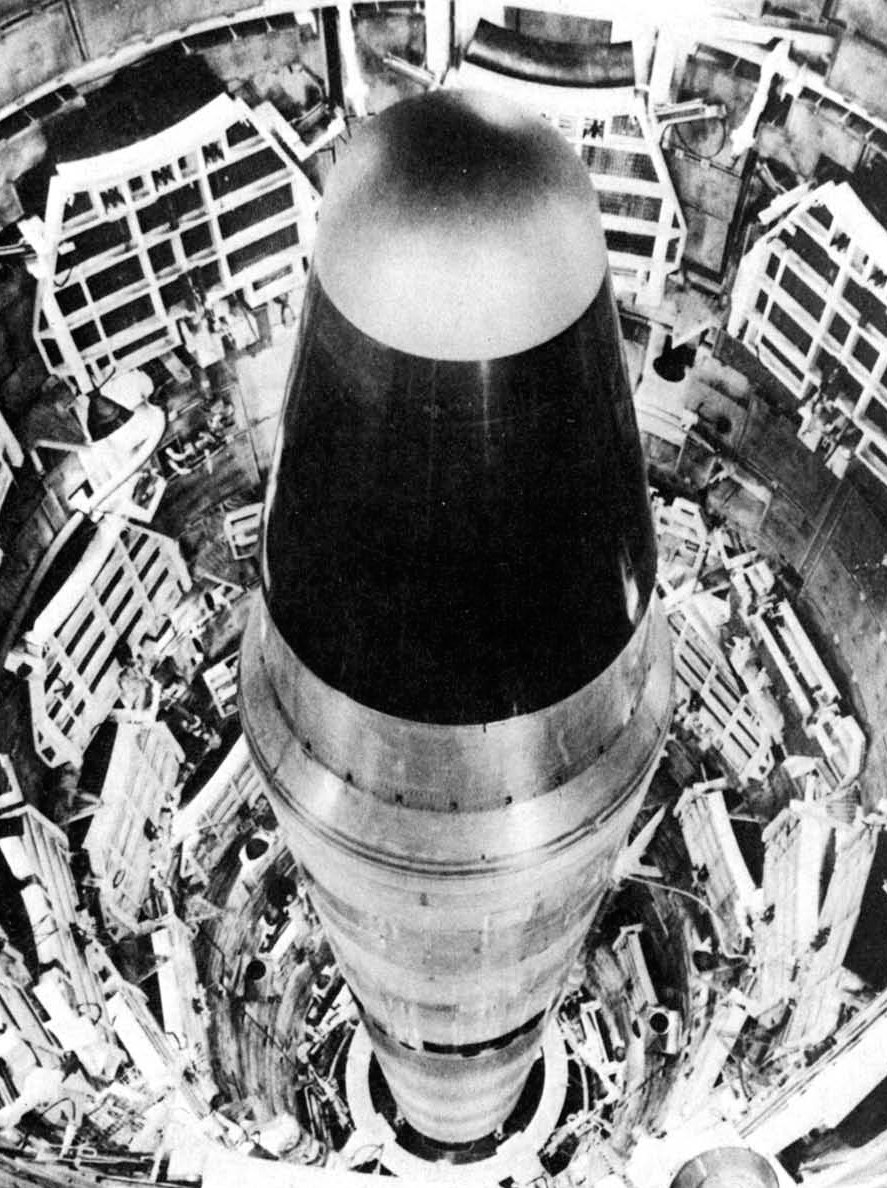
A
TITAN II ICBM IN ITS SILO
Another reorganization of the Post Attack Command Control System took place on 25 March 1965. The arrival of EC-135s, KC-135 tankers specially configured with sophisticated communications equipment for the PACCS mission, prompted the phase out of the EB-47L.S. The newly assigned EC-135s assumed both the Looking Glass and auxiliary airborne command post missions.
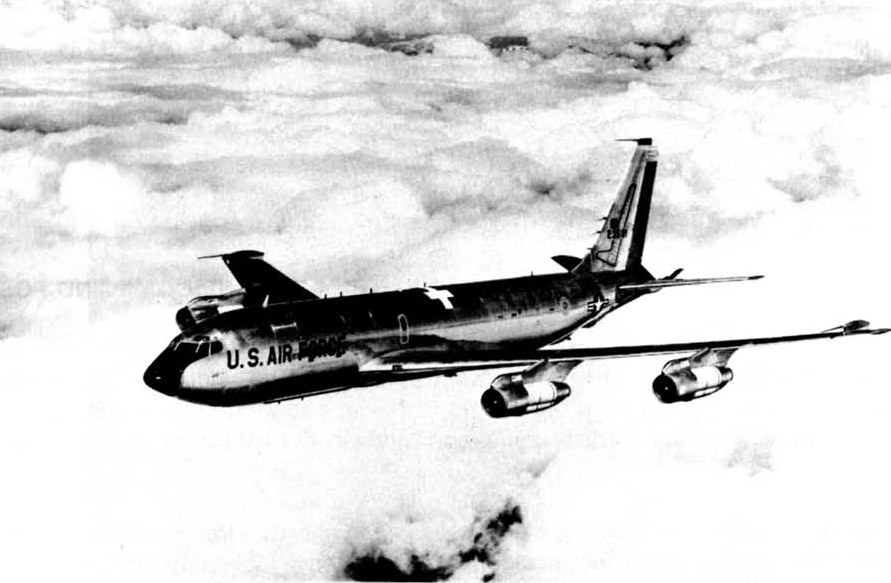
AN
EC-135 AIRBORNE COMMAND POST
SAC's alert operations were conducted without incident until 17 January 1966 when a B-52 on a training mission collided with a KC-135 tanker during refueling operations near the coast of Spain. Both aircraft crashed near the Spanish town of Palomares. Seven crew members died and four survived. All four weapons were recovered, the last after an exhaustive land and sea search, but some radioactive material was released when two of the bomber's four weapons underwent non-nuclear TNT-type explosions upon impact. A cleanup operation removed 1,400 tons of slightly contaminated soil and vegetation and transported them to the United States for disposal.
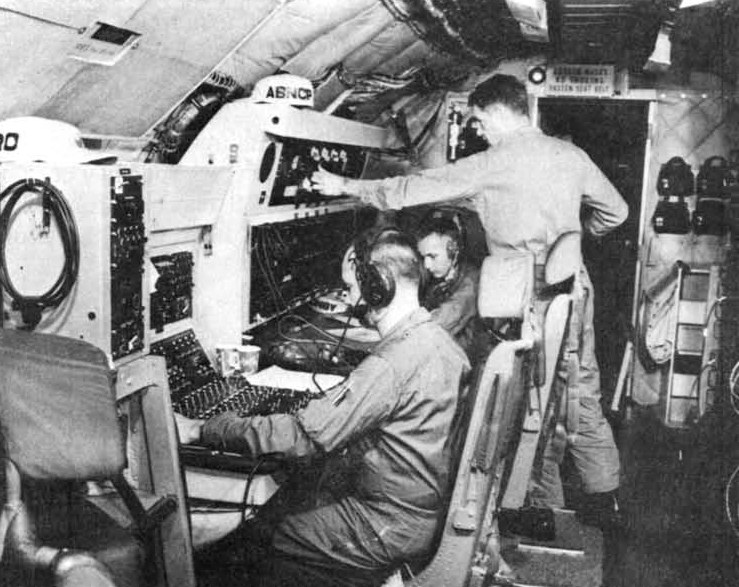
COMMUNICATIONS
EXPERTS WORKING ABOARD THE AIRBORNE COMMAND POST
A second accident occurred on 22 January 1968. A B-52G crashed and burned on the ice of North Star Bay after attempting an emergency landing at Thule AB, Greenland. A recovery team from the United States in cooperation with the Danish government removed the bomber's four weapons and all possible traces of radioactive material.
Airborne indoctrination training was discontinued shortly after the Thule crash. Although the Palomares and Thule accidents contributed to the program's demise, they alone were insufficient to end it. The operating costs for airborne alert had risen to an unacceptable rate and the advent of a responsive and survivable ICBM force had freed the bombers for more immediate duties.
The most significant demand facing Strategic Air Command's bombers and tankers in 1968 was the conventional operation in Southeast Asia. The first Arc Light bombing mission took place on 18 June 1965. As SAC's participation in the hostilities grew, so too did the demand for aircraft, aircrews, and support personnel. SAC's primary mission remained strategic deterrence and by 1968 the command was required to keep about 40 percent of its bombers and nearly 100 percent of its missiles on alert. But as SAC assets were sent into combat, aircraft units became hard pressed to maintain alert lines. On 12 November 1969, for instance, 75 bombers (38 percent of the regular bomber alert force) were degraded and 53 tankers (27 percent of the required tanker alert force) were not on alert. The generated force also suffered. Thirteen percent of the generated bomber force (66 vehicles) and eight percent (42 tankers) of the generated tanker force could not be placed on alert because crews were not available. Some units remained below a one-to-one aircraft-to-aircrew ratio, a factor that impeded their ability to generate alert sorties. SAC crew members frequently found themselves rotating between combat tours in Southeast Asia and tours in the United States that were filled with alert duty. The war also placed a premium on maintenance and logistics personnel. Such circumstances evoked extraordinary effort and immense personal sacrifice from the members of Strategic Air Command, both in the theater of combat and on the alert line.
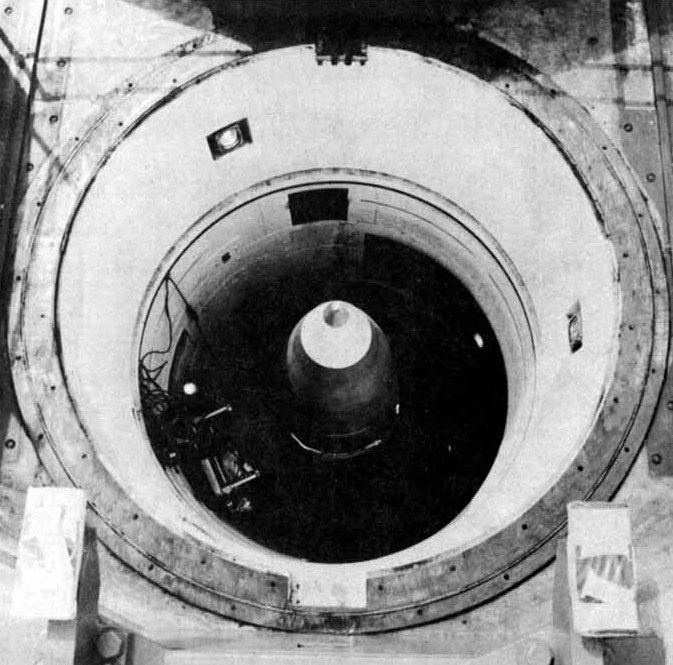
SAC'S
FIRST MULTIPLE WARHEAD MINUTEMAN III IN LAUNCH FACILITY H-2 WITH THE
741 ST SMS, MINOT AFB, NORTH DAKOTA
Amid such trying circumstances, Strategic Air Command still accomplished its primary mission. The continued growth of the missile force aided this effort. In January 1966, the first Minuteman II went on alert with the 447th Strategic Missile Squadron, 321st Strategic Missile Wing, at Grand Forks AFB, North Dakota. Similarly, the 741st Strategic Missile Squadron, 91st Strategic Missile Wing, at Minot AFB, North Dakota, placed the first Minuteman III on alert on 19 August 1970. The Minuteman III represented a most significant addition to the alert force because each missile carried up to three Multiple Independently Retargetable Reentry Vehicles (MIRVs).
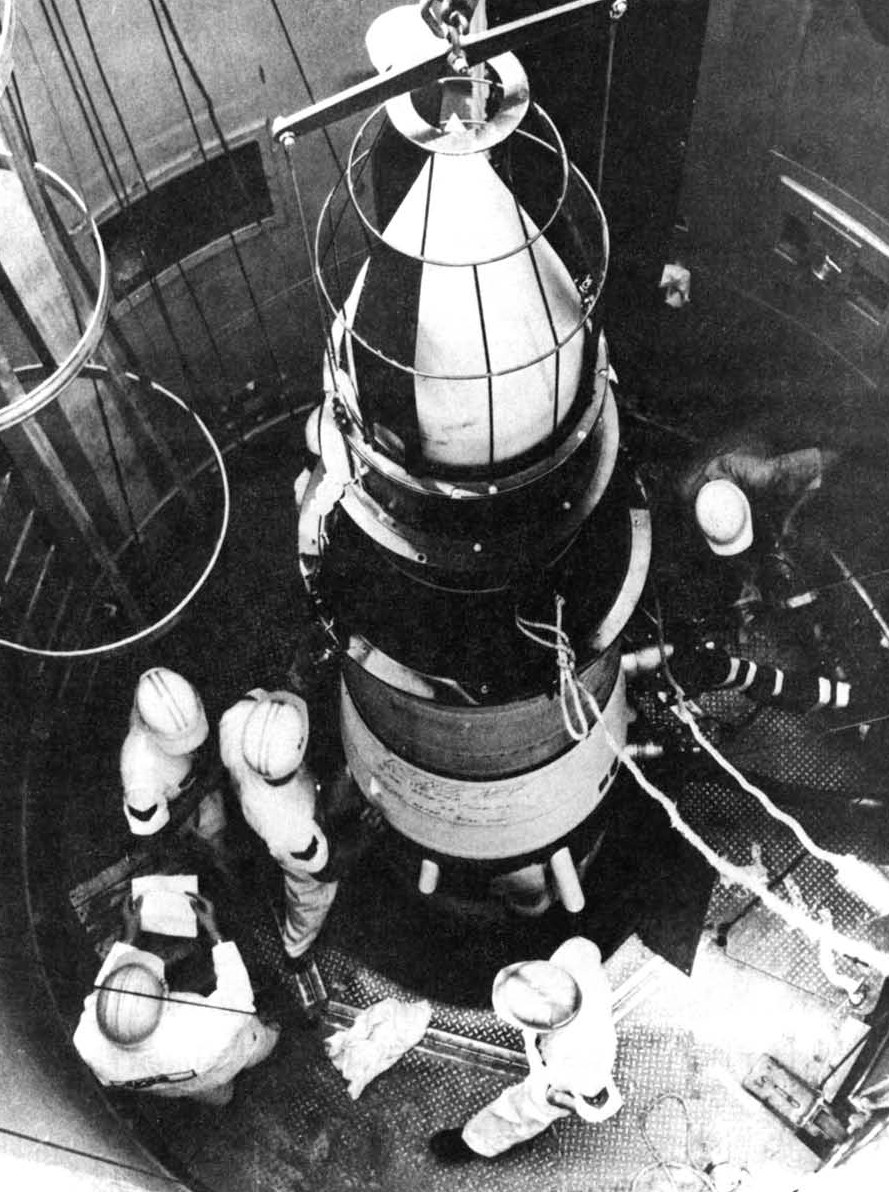
MISSILE
MAINTENANCE TECHNICIANS PREPARE A MINUTEMAN II FOR A TEST LAUNCH AT
VANDENBERG AFB, CALIFORNIA
There were other positive developments as well. The Airborne Launch Control System, developed to provide SAC with the ability to launch land-based Minuteman missiles from the airborne command post, became a reality. SAC tested the system on 17 April 1967 by launching a Minuteman II from Vandenberg AFB, California. The successful result enabled the Airborne Launch Control System (ALCS) to attain initial operational capability on 31 May.
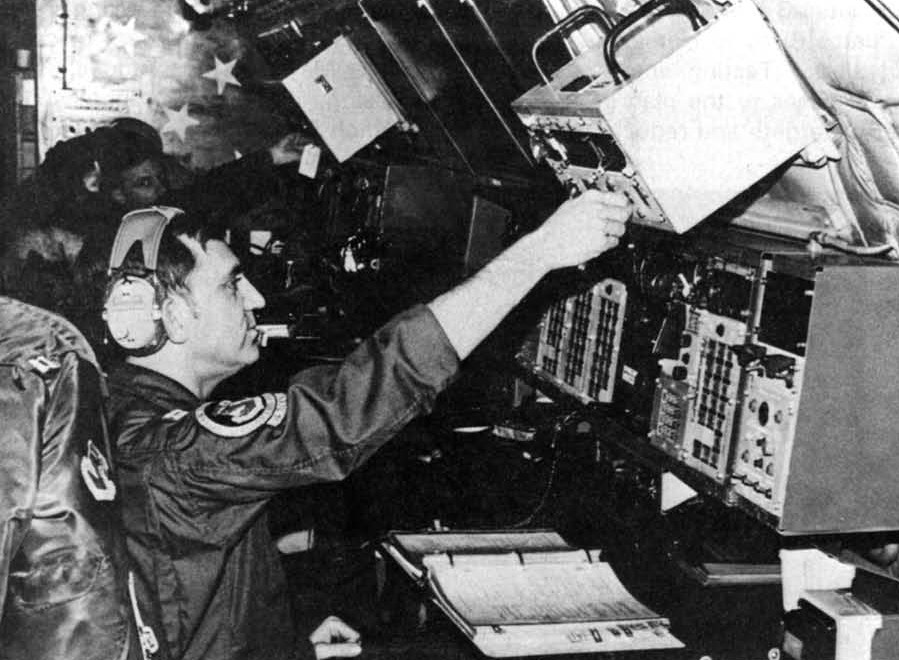
AIRBORNE
LAUNCH CONTROL OFFICERS ON THE “LOOKING GLASS” PREPARE TO
INITIATE AN ICBM TEST LAUNCH USING THE ALCS
The first Emergency Rocket Communications System (ERCS) became operational on 10 October 1967 when technicians installed the system on a Minuteman II missile at Whiteman AFB, Missouri. ERCS vastly improved SAC's ability to transmit command control messages to its forces. The new system also made the Blue Scout Junior rocket system obsolete and on 1 December 1967 SAC inactivated the three Blue Scout sites in Nebraska.
In 1968, SAC revived the B-47 dispersal program it had used successfully during the Cuban missile emergency and applied it to the command's B-52s and KC-135s. This program scattered SAC aircraft over a large number of bases (both military installations and civilian airfields) during periods of increased tension or international emergency. Dispersal complicated an enemy's targeting problem and allowed more aircraft to become airborne within a given time period.
The deployment of Soviet submarine launched ballistic missiles forced SAC to develop a satellite basing program similar to the B-52 dispersal tactics it used ten years earlier. SAC began testing a satellite basing plan on 20 February 1969. The test relocated B-52s and KC-135s assigned to the 72d Bombardment Wing, Ramey AFB, Puerto Rico, to Homestead AFB, Florida, where the aircraft were placed on ground alert. Testing ended successfully on 20 May and SAC added several additional bases to the plan in July. Satellite basing, like dispersal, increased the number of targets and reduced the alert force launch time.
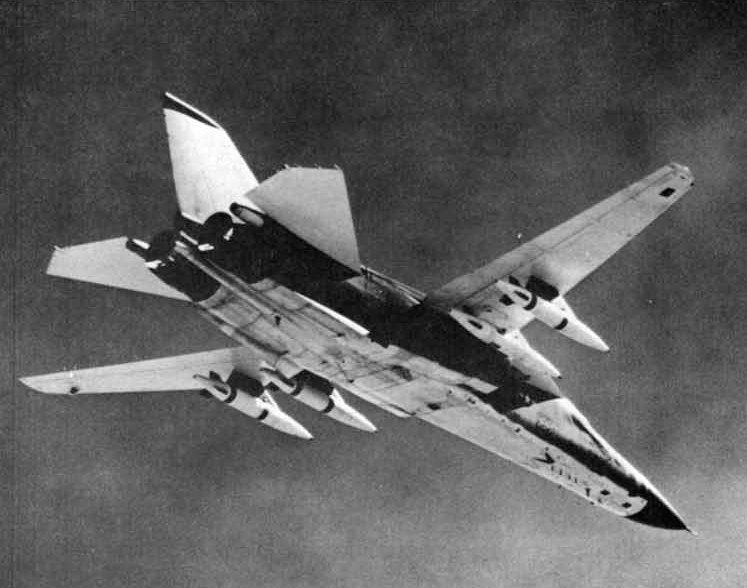
AN
FB-111A WITH AN EXTERNAL LOAD OF SHORT RANGE ATTACK MISSILES
SAC's bomber force gained strength with the deployment of the FB-111 bomber in 1969 despite the retirement of the B-58 the next year. The FB-111 began alert duty on 1 July 1971 with the 509th Bombardment Wing at Pease AFB, New Hampshire. SAC's Short Range Attack Missile (SRAM) reinforced the bomber's lethal punch when it went on alert 15 September 1972 with the 42d Bombardment Wing at Loring AFB, Maine.
Strategic Air Command also consolidated and reorganized the Post Attack Command Control System on 1 April 1970. The EC-135s moved out of Westover, Barksdale, and March Air Force Bases. All were assigned to the 2d, 3d, and 4th Airborne Command and Control Squadrons which were activated at Offutt, Grissom, and Ellsworth Air Force Bases. The reorganization met administrative needs and did not alter the basic PACCS function.
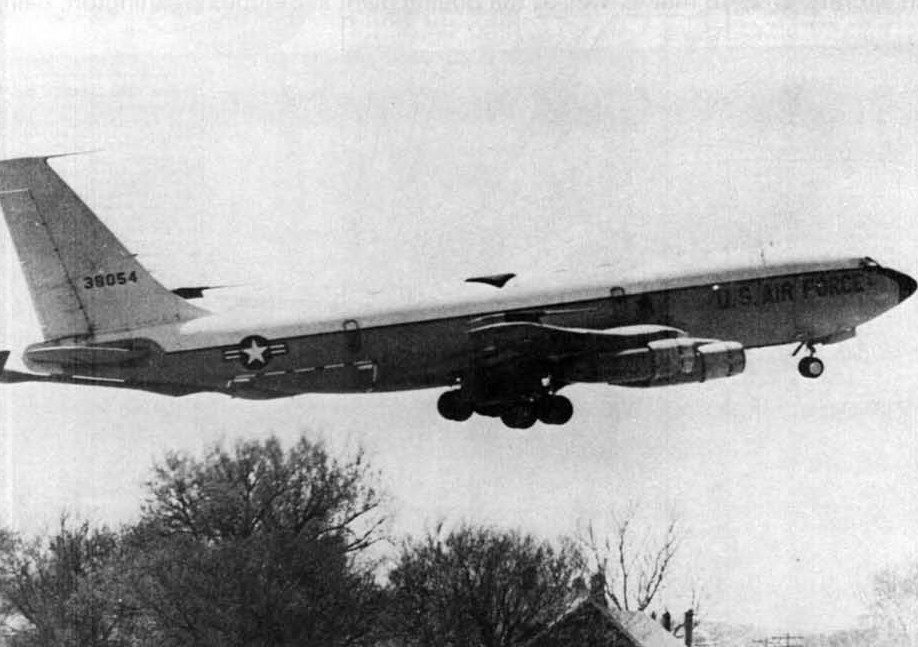
AN
EC-135 AIRBORNE COMMAND POST HEADING OUT ON A LOOKING GLASS MISSION
Shortly after the Southeast Asian War concluded, Strategic Air Command was pressed into action again on behalf of national policy as tensions in the Middle East erupted into open conflict. Egyptian forces successfully crossed the Suez canal in October 1973 and attacked Israeli forces in the Sinai desert. An Israeli airborne counterattack into Egypt saved the day for Israel, but soon raised the specter of a serious escalation in the conflict. The United States, which was assisting Israel with logistical support, wanted to avoid escalation and prevent a superpower confrontation. Upon direction of the Joint Chiefs of Staff, SAC generated its forces to a higher readiness posture in support of U.S. interests. The command stood ready from 24 to 25 October 1973 whereupon it was able to stand down, having once again fulfilled its mission without combat.
A new responsibility came to Strategic Air Command on 1 November 1975 when Headquarters USAF transferred the 1st Airborne Command and Control Squadron from Headquarters Command to SAC. The 1st ACCS moved from Andrews AFB, Maryland, to Offutt AFB, bringing with it the unit's four E-4 aircraft. Three of these modified Boeing 747s were outfitted with EC-135 type communications equipment and served as the President's National Emergency Airborne Command Posts. The fourth aircraft, an E-4B model, was at the Boeing plant in Seattle, Washington, being outfitted with advanced communications equipment. The three E-4A models continued to perform alert duty at Andrews AFB and on 22 May 1980 the E-4B served its first alert tour. All E-4As were eventually modified to the E-4B configuration, the last aircraft being completed on 30 January 1985.
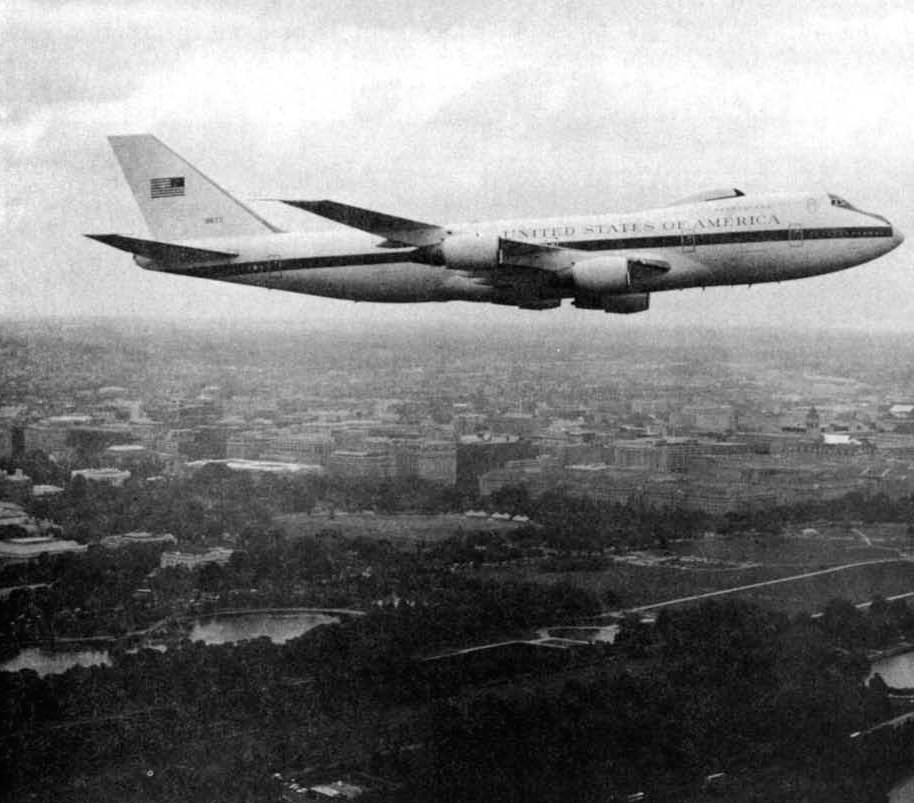
AN
E-4B NATIONAL EMERGENCY AIRBORNE COMMAND POST
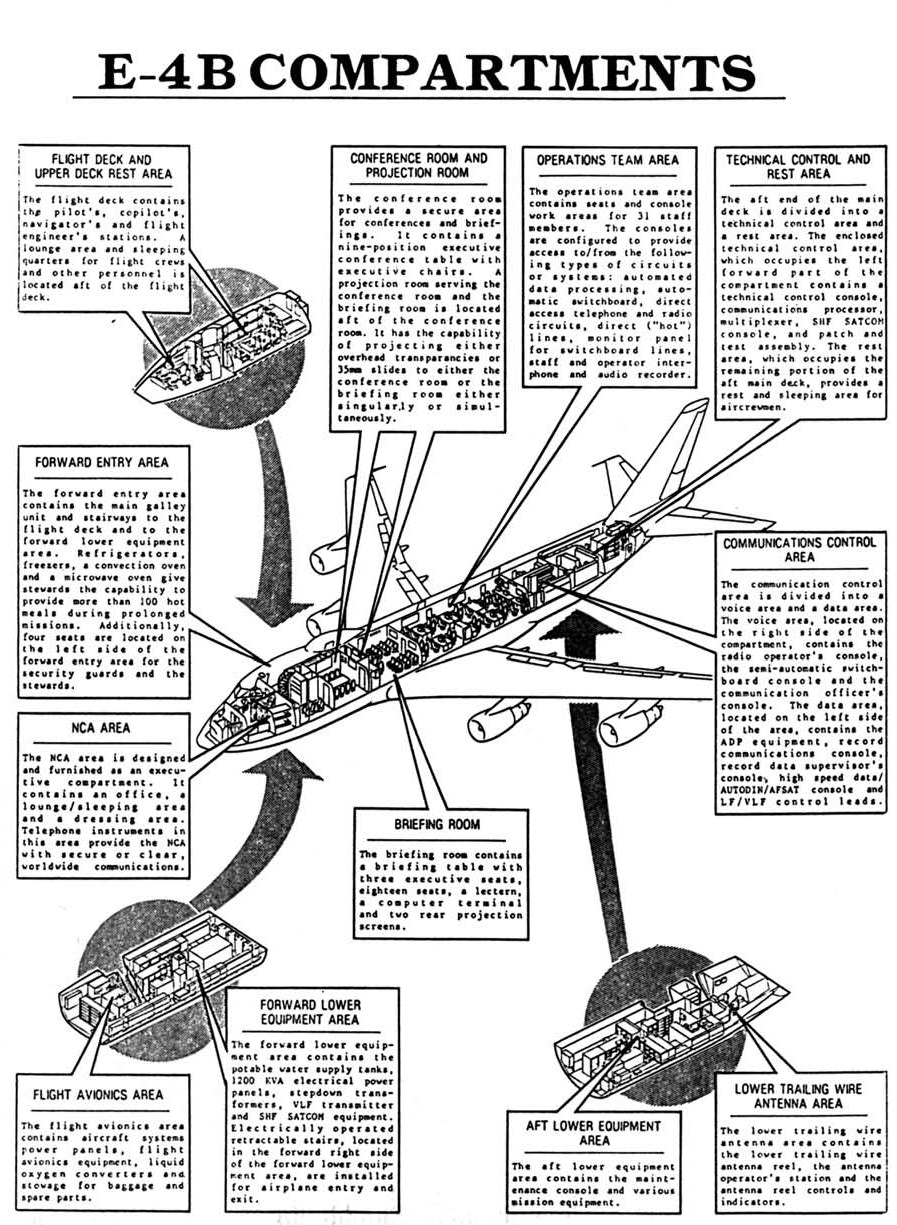
INTERIOR
DIAGRAM OF AN EMERGENCY AIRBORNE COMMAND POST
In an unrelated action, SAC again reorganized the Post Attack Command Control System to consolidate resources. On 31 December 1975 the 3d Airborne Command and Control Squadron at Grissom AFB, Indiana, was inactivated. The 70th Air Refueling Squadron and the 2d Airborne Command and Control Squadron at Offutt AFB assumed the unit's functions.
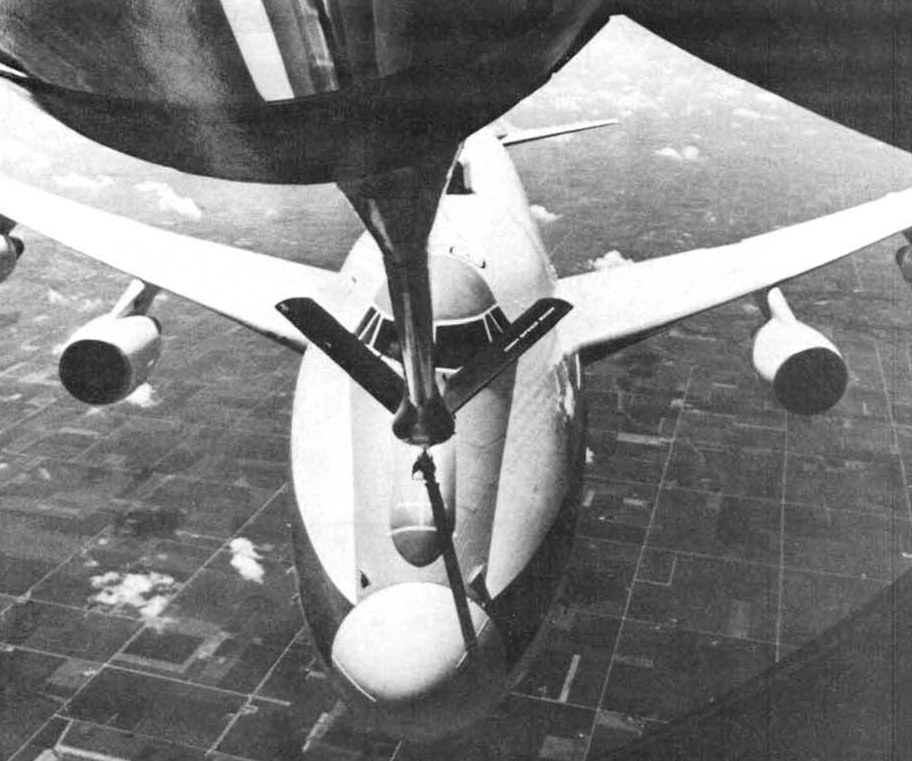
A
KC-135 REFUELS A 1ST ACCS E-4B
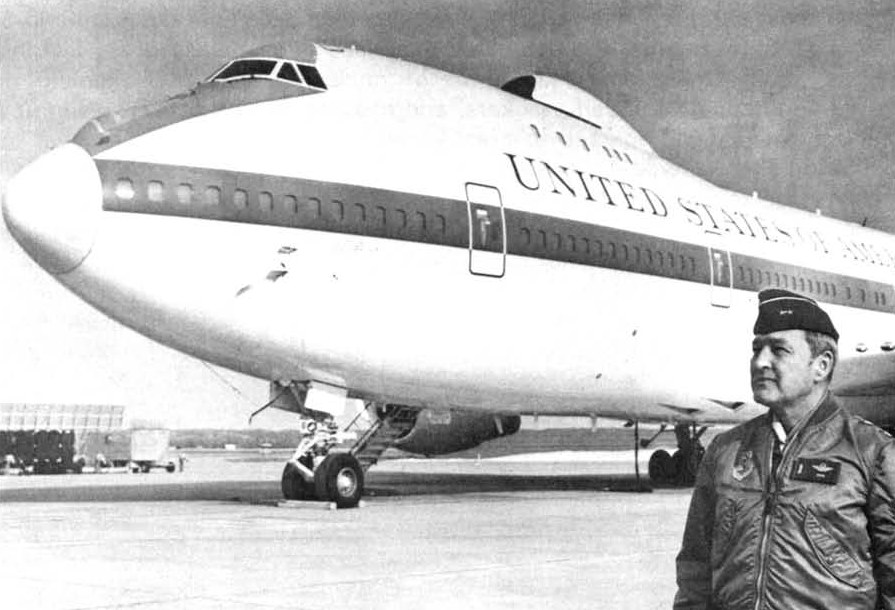
MAJ
GEN EARL G. PECK SERVED AS THE AEAO ON THE FIRST OPERATIONAL E-4B
MISSION, 4 MARCH 1980
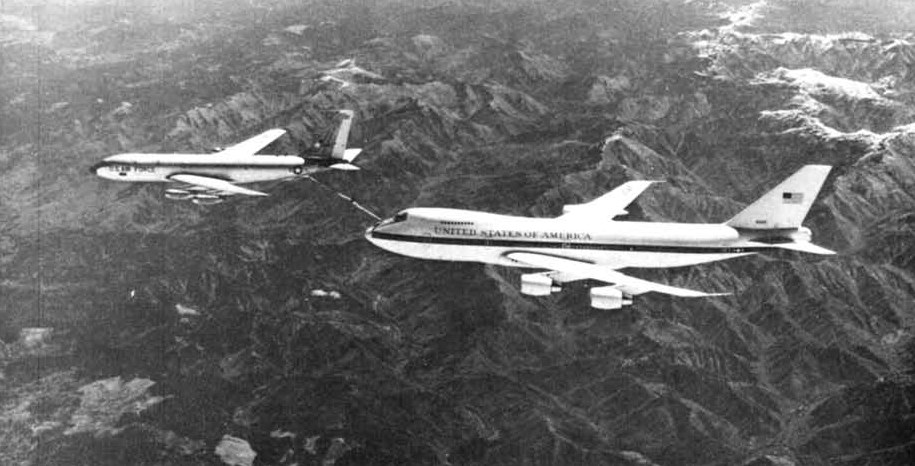
A
KC-135 REFUELS AN E-4A
From 8 to 16 July 1979, Strategic Air Command conducted Global Shield 79, one of the most comprehensive nuclear war plan exercises ever conducted in SAC history. For the first time, the command exercised every phase of its role in the Single Integrated Operational Plan short of nuclear warfare. Command units generated hundreds of bombers, tankers, and missiles to alert status. Aircraft and ground support teams dispersed to preselected bases and flew sorties over radar bomb-scoring sites. General Richard H. Ellis, the CINCSAC, called the exercise "an extremely valuable training experience for the aircrews, missile crews, and support personnel who participated in it." Global Shield became a regular command exercise which grew in scope and intensity throughout the 1980s.
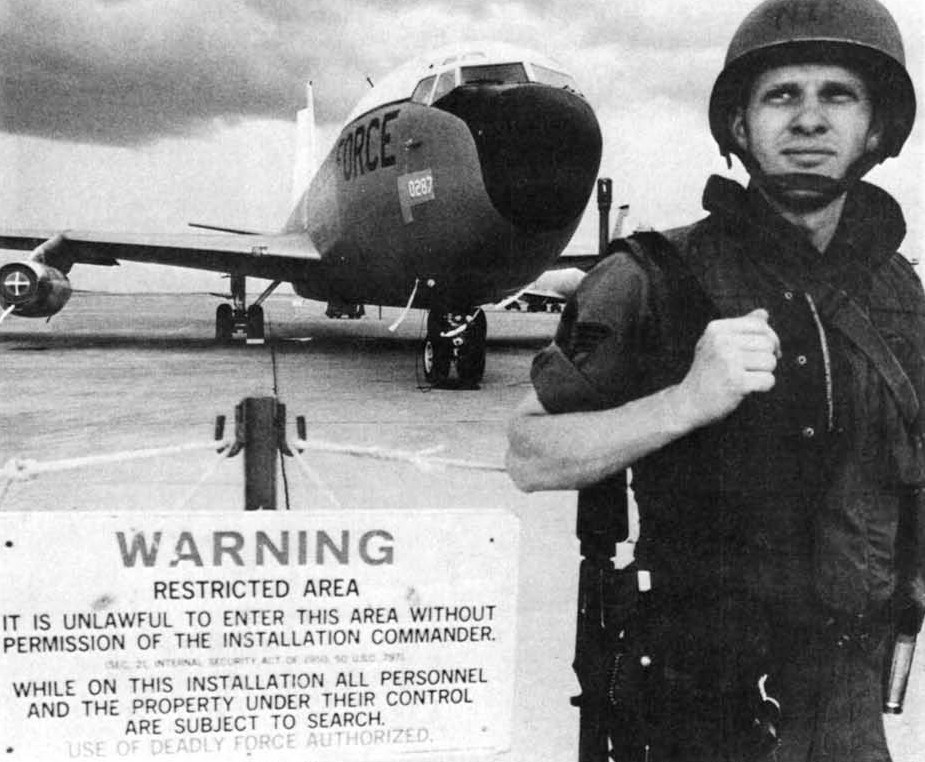
A
SAC SECURITY POLICEMAN GUARDS A PACCS AIRCRAFT DISPERSED TO MALMSTROM
AFB, MONTANA DURING GLOBAL SHIELD 83
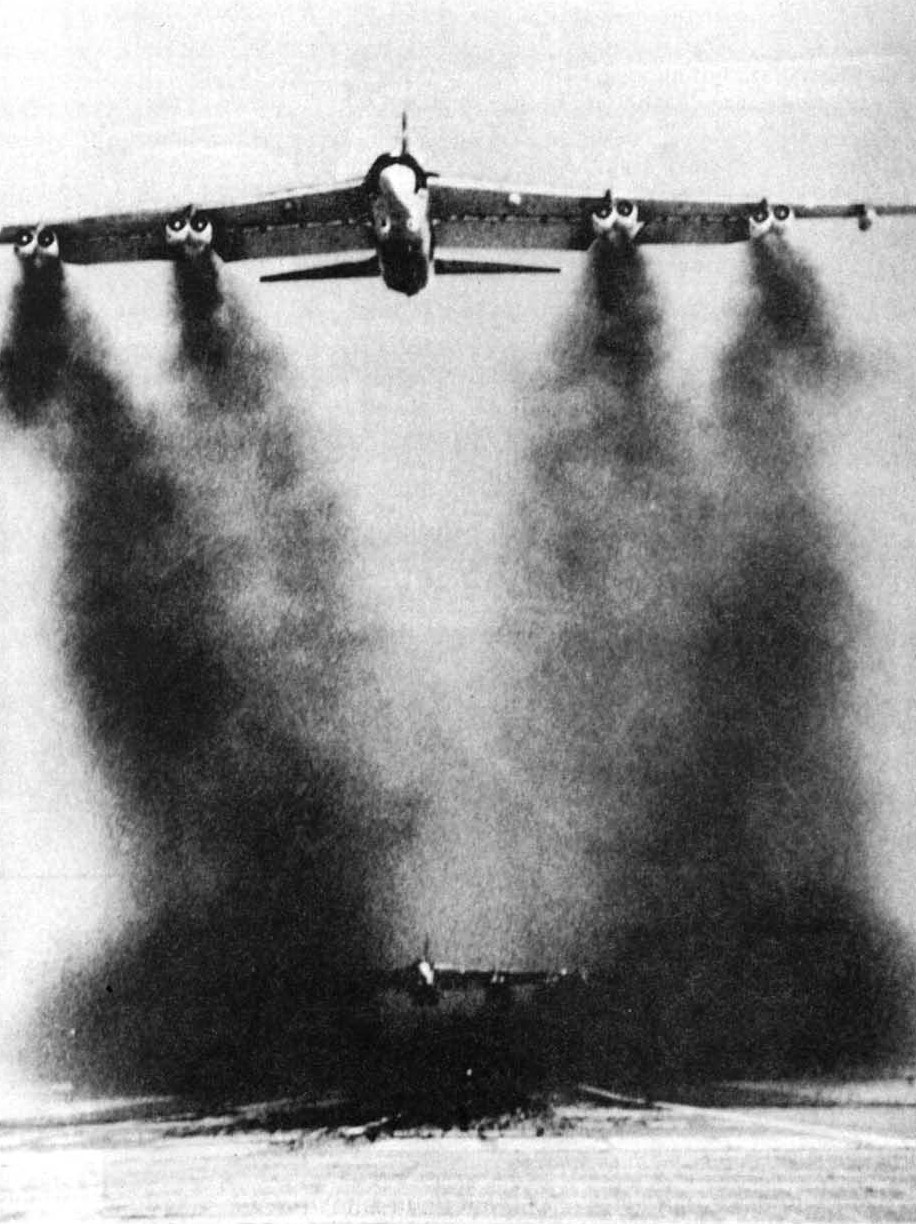
B-52
CREWS CONDUCT A MINIMUM INTERVAL TAKEOFF (MITO) AT FAIRCHILD AFB,
WASHINGTON DURING A GLOBAL SHIELD EXERCISE
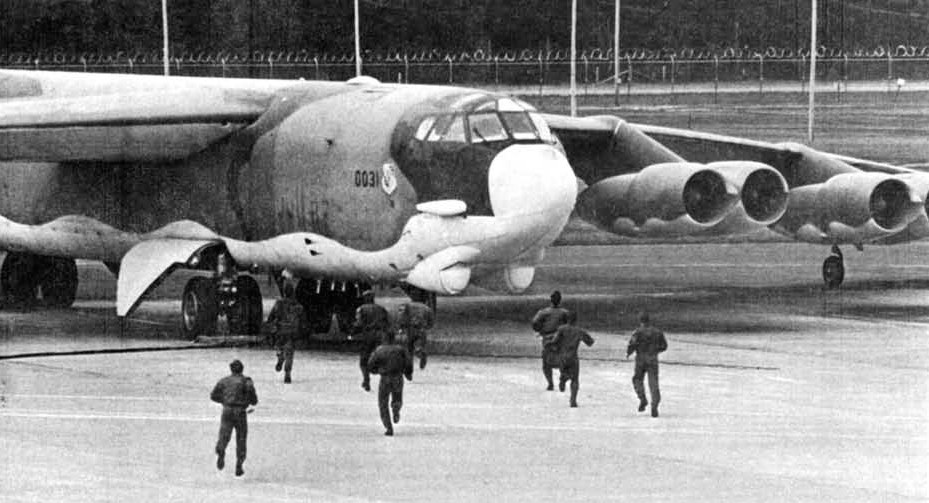
A
B-52 CREW FROM THE 410TH BMW, K.I. SAWYER AFB, MICHIGAN SCRAMBLE TO
THEIR BOMBER DURING A GLOBAL SHIELD 83 EXERCISE
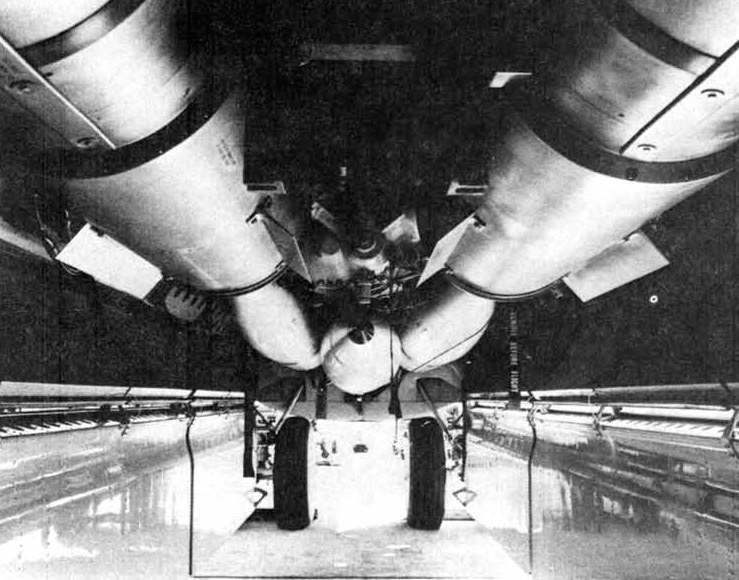
A
B-52H WITH AN INTERNAL LOAD OF SRAM MISSILES
The Strategic Modernization Program introduced in the 1980s significantly improved SAC's war-fighting abilities. Among the improvements were the Air Launched Cruise Missile, which entered service on 16 December 1982 when the 416th Bombardment Wing at Griffiss AFB, New York, placed the first ALCM on alert. The landmark year for the Strategic Modernization Program came in 1986. On 1 October of that year, the 96th Bombardment Wing at Dyess AFB, Texas, hosted the first B-1B alert line. Nine days later, the 90th Strategic Missile Wing placed the first of SAC's ten-warhead Peacekeeper missiles on alert at F.E. Warren AFB, Wyoming. The B-1B represented SAC's first new bomber in seventeen years. Similarly, the Peacekeeper was the command's first new ICBM since the deployment of the Minuteman III in 1970.
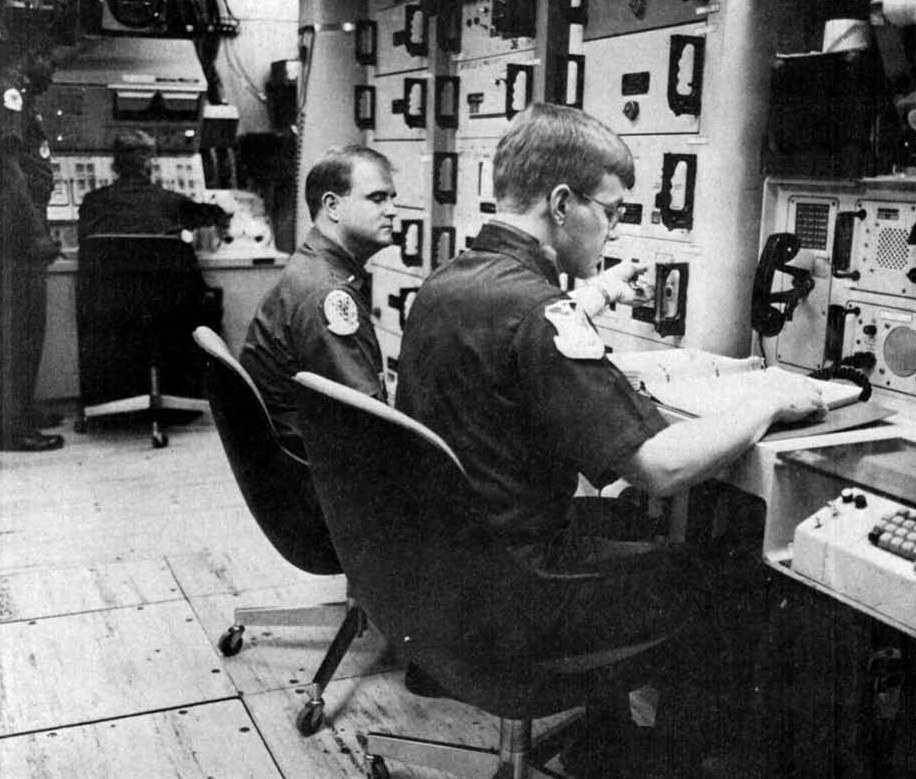
A
SAC MISSILE CREW PREPARES FOR MISSILE FLIGHT TEST 12 AT PEACEKEEPER
LAUNCH CONTROL FACILITY 01E, VANDENBERG AFB, CALIFORNIA
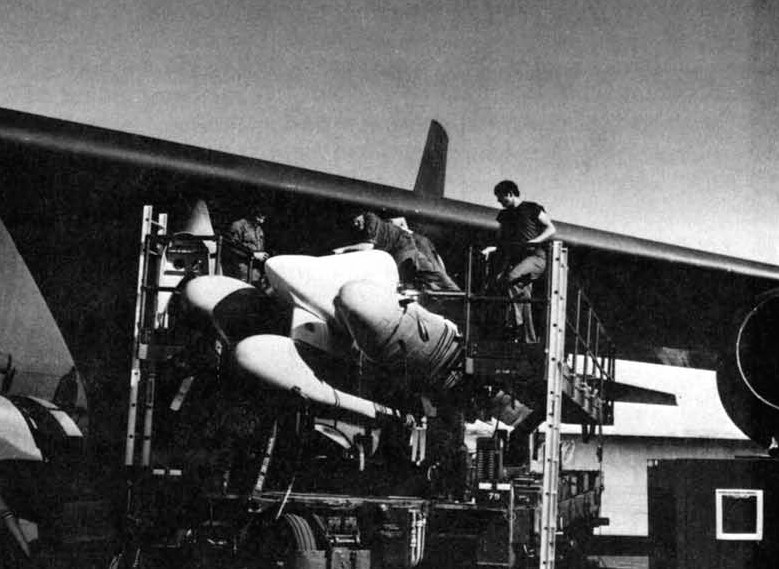
A
7TH MMS MUNITIONS TEAM LOADS ALCM MISSILES ON A B-52H. AT CARSWELL
AFB, TEXAS, 10 DECEMBER 1986
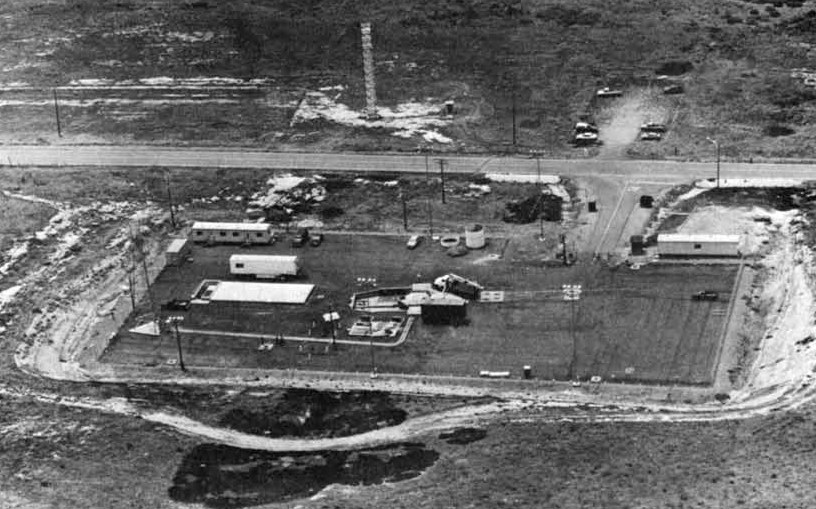
AERIAL
VIEW OF PEACEKEEPER LAUNCH FACILITY 08, VANDENBERG AFB, CALIFORNIA
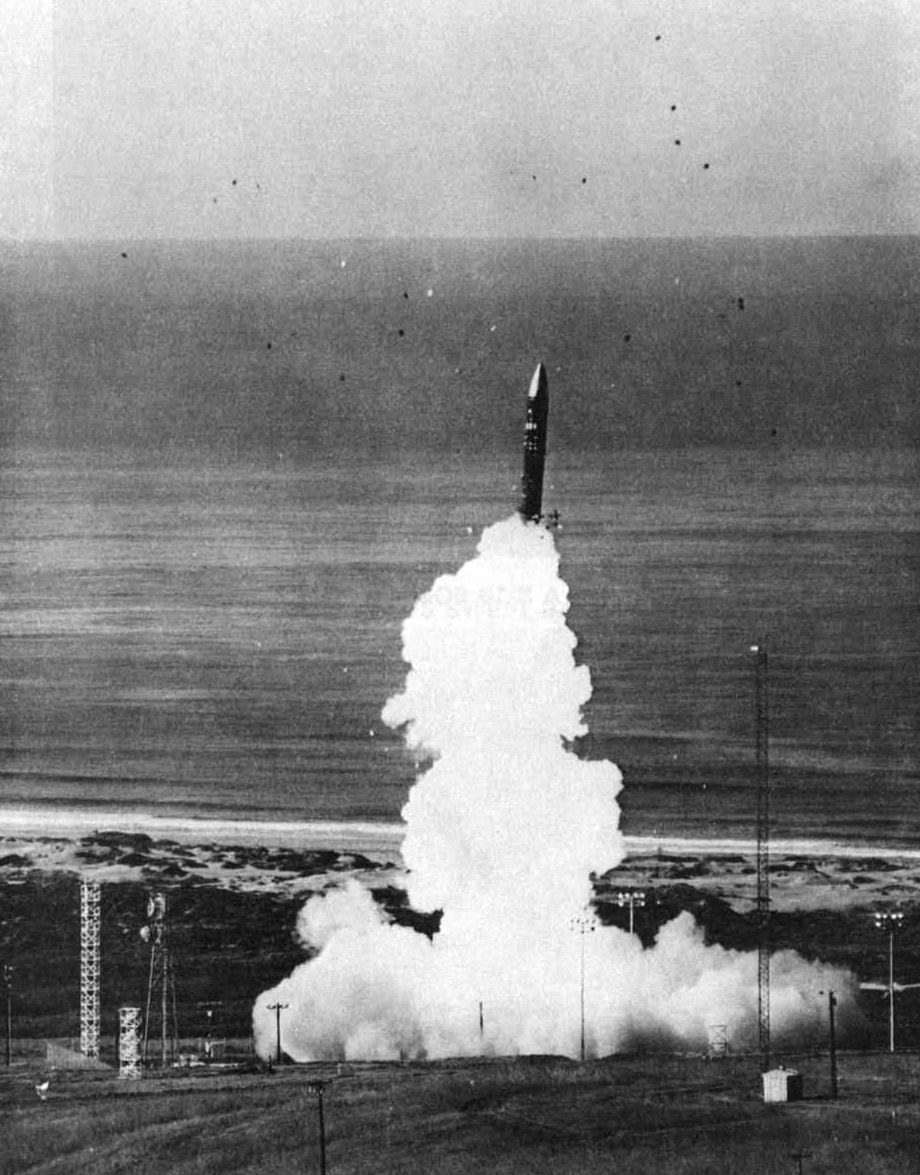
PEACEKEEPER
FLIGHT TEST 10, VANDENBERG AFB, CALIFORNIA
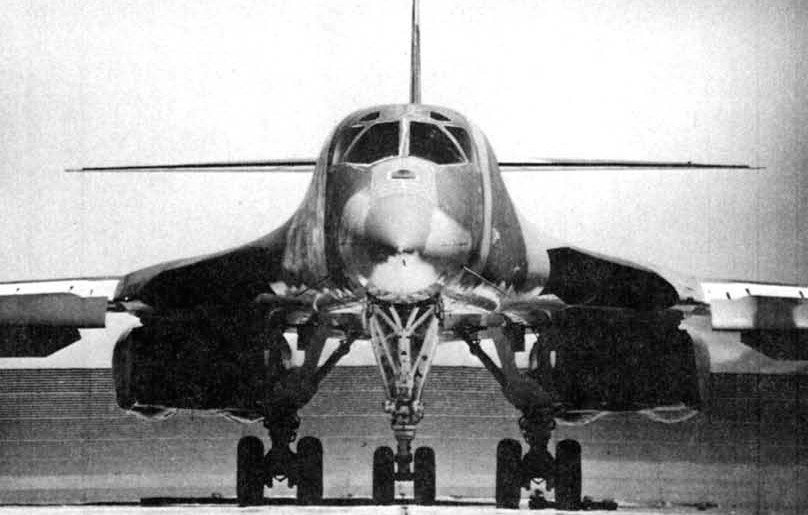
A
B-1B BOMBER
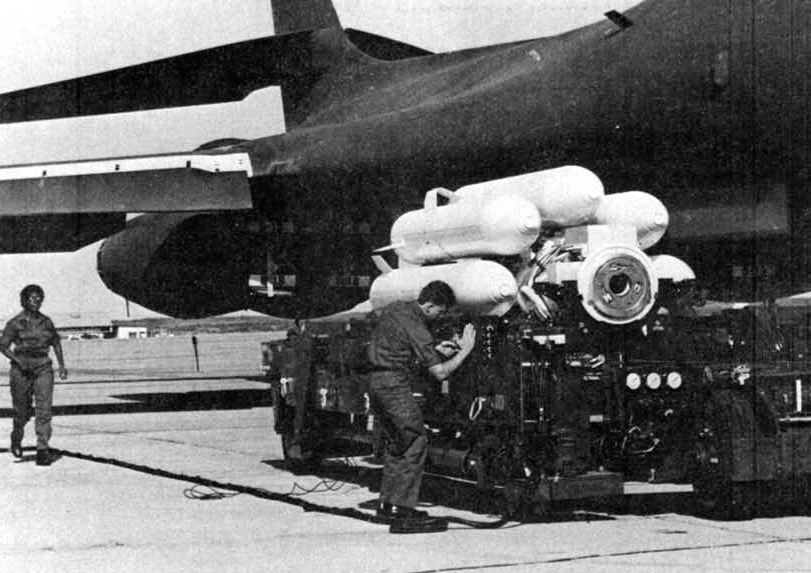
MUNITIONS
SPECIALIST LOADING TRAINING MUNITIONS ON A B-1B
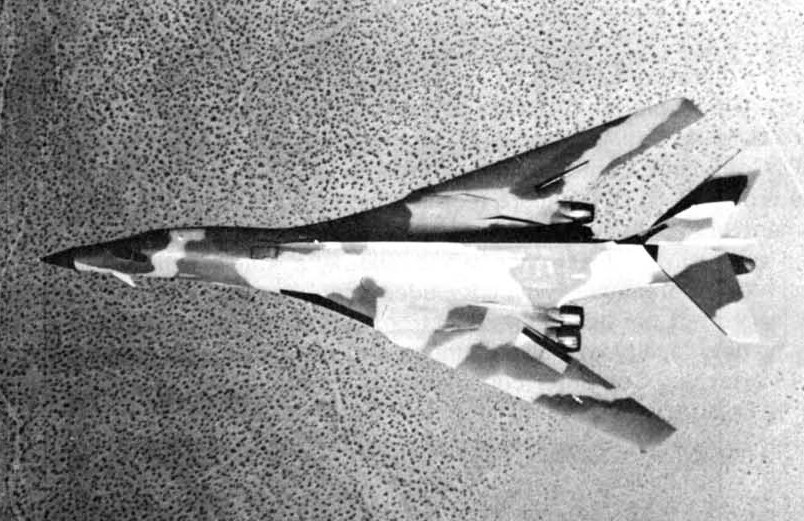
A
B-1B WITH WINGS SWEPT BACK IN FLIGHT
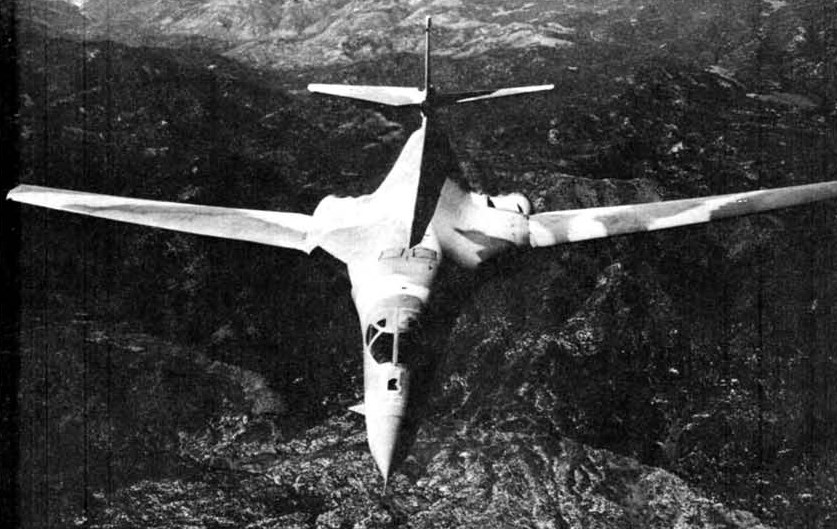
A B-1B WITH WINGS FORWARD IN FLIGHT
Construction of a new command post complemented the modernization of SAC's strategic forces. The existing facility, opened in 1957, had become crowded, technologically obsolete, and poorly suited to manage modern weapon systems. General Bennie L. Davis, the CINCSAC, approved a plan in August 1982 to completely renovate the existing facility, an endeavor he characterized as his legacy to the command. After exploring funding and construction alternatives, General Davis opted instead to build an entirely new underground complex adjacent to the existing one. The SAC Command Center became operational in March 1989. The two-level structure provided 14,000 square feet in which SAC housed the critical information management and communication systems that assured the CINCSAC's ability to command and control his forces worldwide. Its state-of-the-art computers and communications equipment, which included telephone, satellite and radio networks, were protected against damage by electromagnetic pulse from high altitude nuclear bursts. The new facility was also connected to warning systems that detected ICBM and SLBM attacks. Computer consoles at each staff position and eight computer-driven wall screens immediately informed the battle staff of any changes in force status.
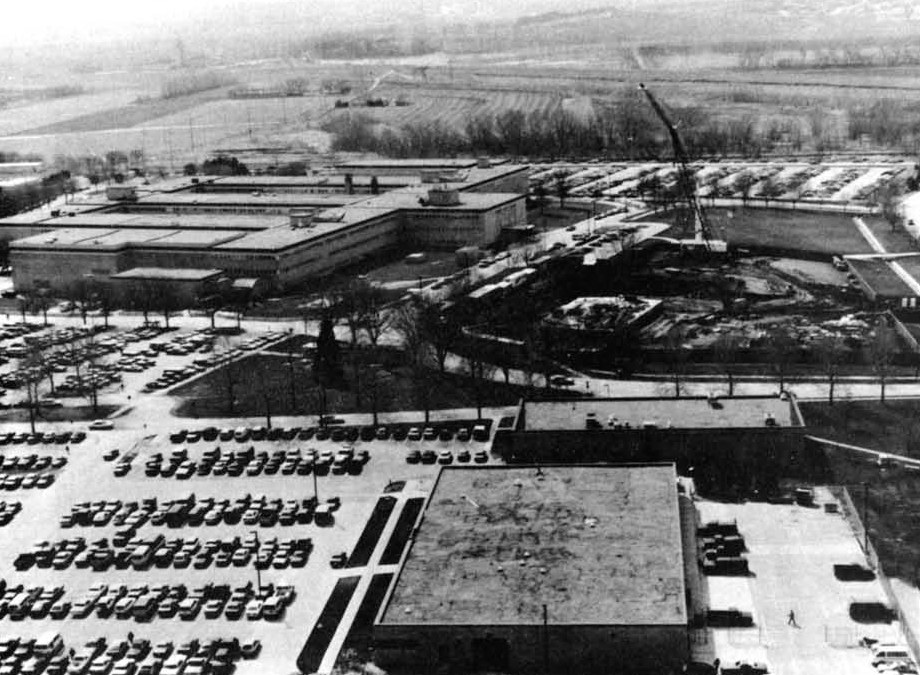
SAC
COMMAND CENTER UNDER CONSTRUCTION, 1988
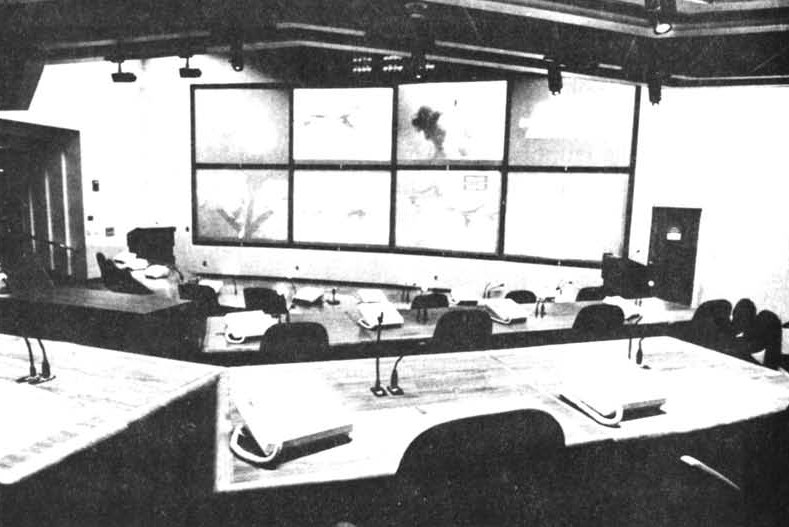
THE
SAC COMMAND CENTER, 1989
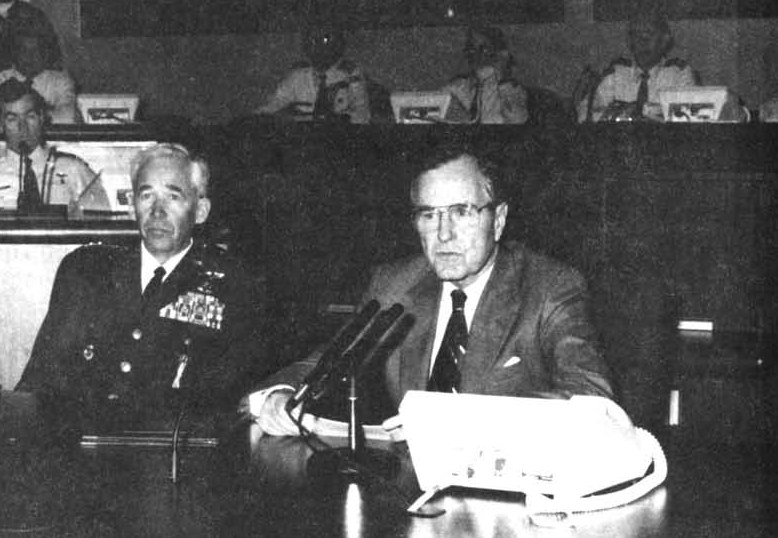
GENERAL
JOHN T. CHAIN HOSTS PRESIDENT GEORGE BUSH IN THE SAC COMMAND CENTER,
8 FEBRUARY 1990
Although Strategic Air Command had experienced remarkable improvements in weapons and technology through the years, the backbone of deterrence remained the SAC alert force — aircrews, missile crews, logistics specialists, security police, and the support staff who made the operation work. Their dedication and vigilance contributed fundamentally to the preservation of freedom for the American people and the Western alliance. The crews that pulled daily alert, whether on the ground, in the air, or in buried missile launch control centers, as well as those who supported them, formed the cornerstone of America's deterrent strength. The importance, prestige, and commitment of the SAC alert force were among the reasons which led General John T. Chain, Jr., the SAC Commander in Chief, to declare 1988 "The Year of the SAC Alert Force."
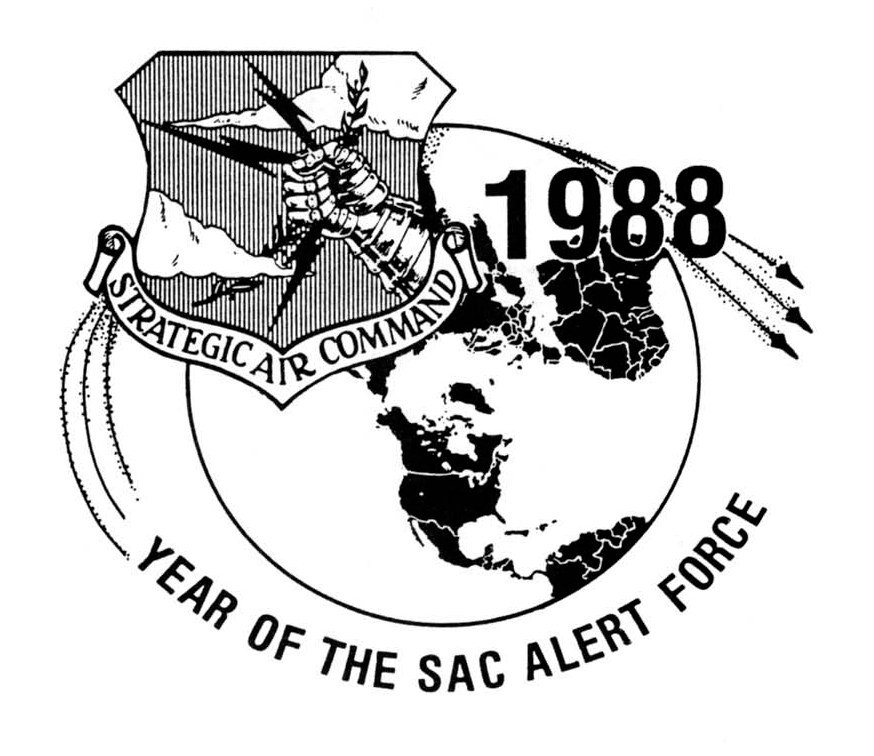
THE
YEAR OF THE ALERT FORCE EMBLEM
|
THE WHITE HOUSE October 9, 1987 To the Men and Women of the Strategic Air Command: In October 1957, aircrews of the Strategic Air Command went on alert for the first time. From that historic day forward, SAC's demonstrated readiness has been a cornerstone of peace and security for the free world. Today, strategic deterrence is still the foundation on which rest the peace of the world and the protection of freedom. We look with pride on SAC's 30-year alert history. The men and women of SAC mastered the growing challenge of deterrence presented by the Intercontinental Ballistic Missile, by burgeoning technology, and by an expanding Soviet threat. You who serve in SAC today share with your predecessors a noble tradition of dedication to the unrelenting demands of constant watchfulness, instantaneous readiness, and unyielding professionalism. On this, the 30th anniversary of SAC's first alert, I extend to every member of the Strategic Air Command family the appreciation of a grateful nation, along with my personal congratulations on a job well done.
|
|
PRESIDENT RONALD REAGAN HONORS THE SAC ALERT FORCE |
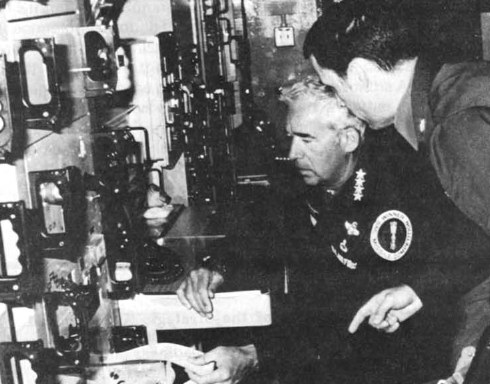
GENERAL
JOHN T. CHAIN, THE FIRST CINCSAC TO PERFORM MISSILE ALERT, MALMSTROM
AFB, MONTANA, 26 SEPTEMBER 1986
Ironically, the world in which SAC celebrated the Year of the Alert Force differed significantly from the one which had led to the creation of an alert program. Better communication and cooperation between the U.S. and U.S.S.R. had produced several nuclear arms reduction treaties and greatly reduced superpower tensions. Technological innovation had improved intelligence assessment and warning against strategic attack. "The chances of a bolt-out-of-the-blue kind of attack these days is virtually gone," observed one SAC spokesman. By 1989, the greatest threat confronting the Soviet Union was not Western military power but the collapse of the Soviet economy. With their economy in shambles, Soviet leaders had begun to institute democratic reforms at home, release their grip on Eastern Europe, and look to the West for economic and technical assistance, Economics was also a major concern in the United States. The national debt was increasing at an alarming rate and cost reduction had become a major defense activity. These circumstances led General Chain to propose an end to continuous airborne command post operations in late 1989. Defense leaders instantly rejected his suggestion, believing it would send the wrong signal to the Soviets at a moment when democracy in Eastern Europe stood at a critical juncture.
In November 1989, the world finally witnessed the destruction of the Berlin Wall. This milestone marked the start of a phenomenally rapid series of events that would fundamentally alter international relations and the strategic posture of the United States. Within eight months, the U.S.S.R. had begun to withdraw its forces from Eastern Europe, laying the foundation for the November 1990 Treaty on Conventional Forces in Europe between the United States and the Soviet Union which limited conventional weapons and weapon systems in the European theater, widely heralded as marking the end of the Cold War.
With the threat of attack diminishing, confidence in attack warning and detection increasing, and pressure to reduce operating expenses growing, new life was breathed into General Chain's airborne command post proposal. The Secretary of Defense reexamined the issue and, with the concurrence of the President, accepted SAC's recommendation. Casey One, the CINCSAC's EC-135 aircraft, took off from Offutt AFB, Nebraska, at 6:59 AM on 24 July 1990 with General Chain on board as the Airborne Emergency Action Officer. When the aircraft landed at 2:28 PM, almost thirty years of continuous airborne command post operations and over 250 million hours of accident-free flying came to an end. The new alert plan which went into effect did not alter the role or mission of the Looking Glass and included airborne and ground alert postures. EC-135s continued to fly random sorties each week, but quick reaction ground alert constituted the bulk of daily Looking Glass operations.
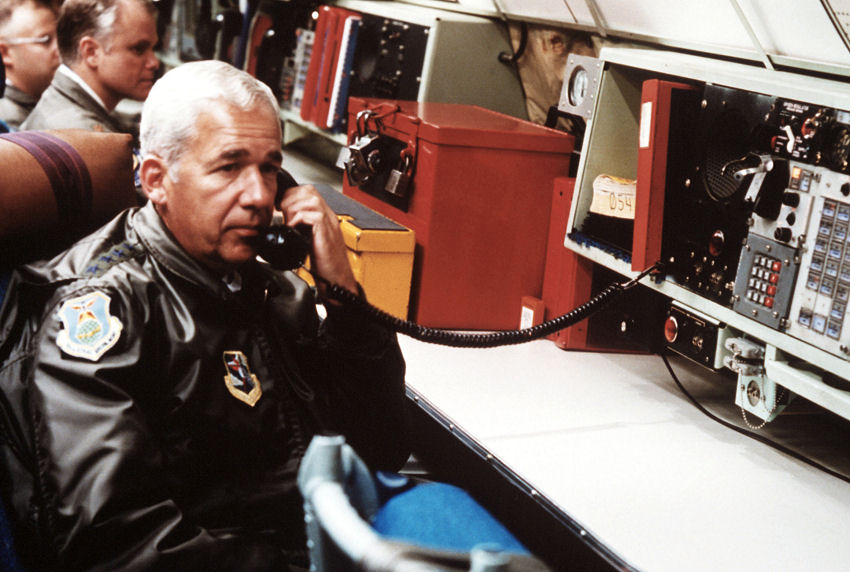
GENERAL
JOHN T. CHAIN PERFORMS DUTY AS THE AIRBORNE EMERGENCY ACTION OFFICER
ON THE LOOKING GLASS (Big Image)
These changes foreshadowed others that would radically alter alert operations. The breathtaking transformation of the communist world continued without abatement. By mid-1991, the Soviet Union had largely completed its withdrawal of forces from Eastern Europe and on 1 July 1991 it announced the dissolution of the Warsaw Pact. Thirty days later, Soviet President Mikhail S. Gorbachev and President George Bush signed a Strategic Arms Limitation Treaty (START) that limited nuclear warheads and strategic delivery systems. Hardline Communist Party officials, discontented with the radical changes, attempted a coup in August. Their objective was to overthrow Gorbachev and the reform movement, end the disintegration of the U.S.S.R. into independent republics, and restore the central authority of the Party. The poorly organized coup collapsed quickly. Its legacy was to strengthen the democratic forces, emasculate the Communist Party, and accelerate the reform movement. On 6 September 1991, the Soviet Union recognized the independence of the Baltic Republics. With gold reserves nearly exhausted and their economy in ruins, Soviet leaders desperately appealed to the United States and its allies for economic assistance.
President George Bush interpreted the unsuccessful coup as a firm sign that democracy had taken hold in the Soviet Union and that a fundamental shift in superpower relations was in order. He addressed the nation on the evening of Friday, 1 7 September 1991. "The prospect of Soviet invasion into Western Europe launched with little or no warning," he informed the country, "is no longer a realistic threat." He expressed his desire to move away from global confrontation, shrink the nuclear arsenal, and rely on defensive measures to increase stability and reduce the risk of war. At the same time, he wanted to give the Soviets an incentive to shift their collapsing economy from building defenses to building democracy. He then announced major changes in the nation's strategic posture. "First," he stated, "to further reduce tensions, I'm directing that all United States strategic bombers immediately stand down from their alert posture." All intercontinental ballistic missiles scheduled for deactivation under START (i.e. Minuteman lIs) were also to be brought off alert immediately. Substantial changes in the nation's tactical nuclear arsenal were ordered and several major programs including Rail Garrison Peacekeeper and the mobile portion of the small ICBM were canceled. President Bush also indicated he would simplify strategic command and control by establishing a new strategic command, the United States Strategic Command.
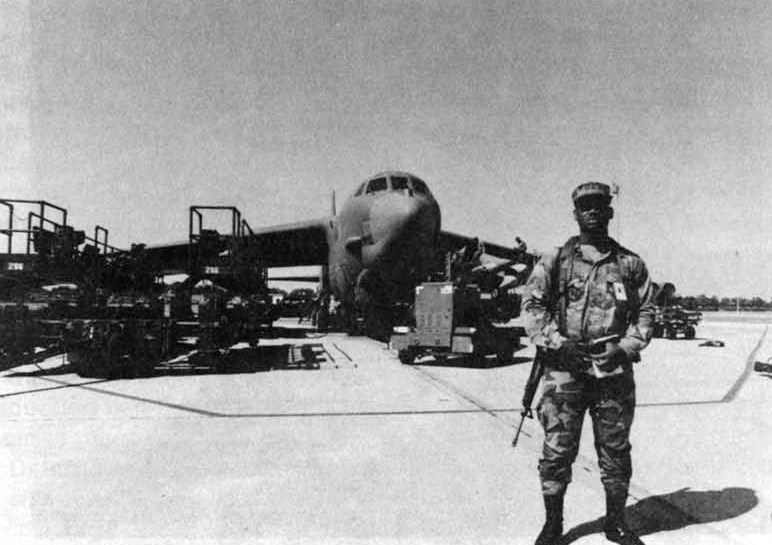
A
2D WING SECURITY GUARD STANDS WATCH AS A B-52 IS REMOVED FROM ALERT
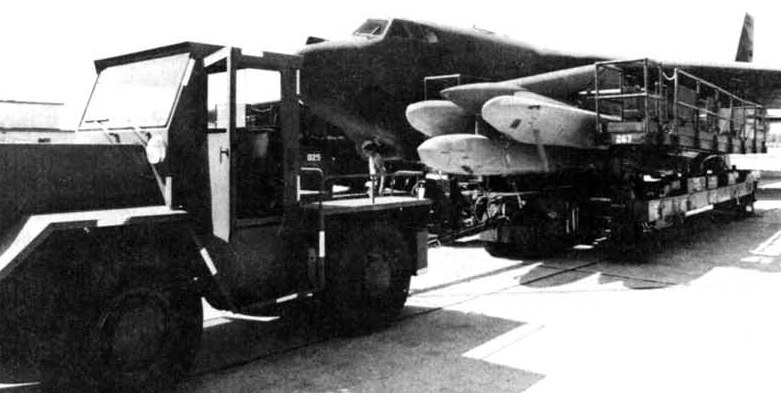
AIR-LAUNCHED
CRUISE MISSILES BEING TOWED TO STORAGE AREA
The Secretary of Defense signed an execution order the next morning directing Strategic Air Command to implement the actions ordered by the President. Maintenance crews at twelve SAC bases began removing ALCMs and gravity bombs from the approximately 40 B-52 and B-1 bombers that were kept on day-to-day alert (the FB-111As had already come off alert and been retired in June 1991). Launch Control Center crews removed launch enable control panels and codes to preclude launch orders from being transmitted to the 450 Minuteman II missiles. As each weapon was taken off alert, SAC's wing commanders reported the action to the SAC Command Center where General George L. Butler, the CINCSAC, monitored their progress. At 2:59 PM, he received notification that all bombers and Minuteman IIs were off alert.
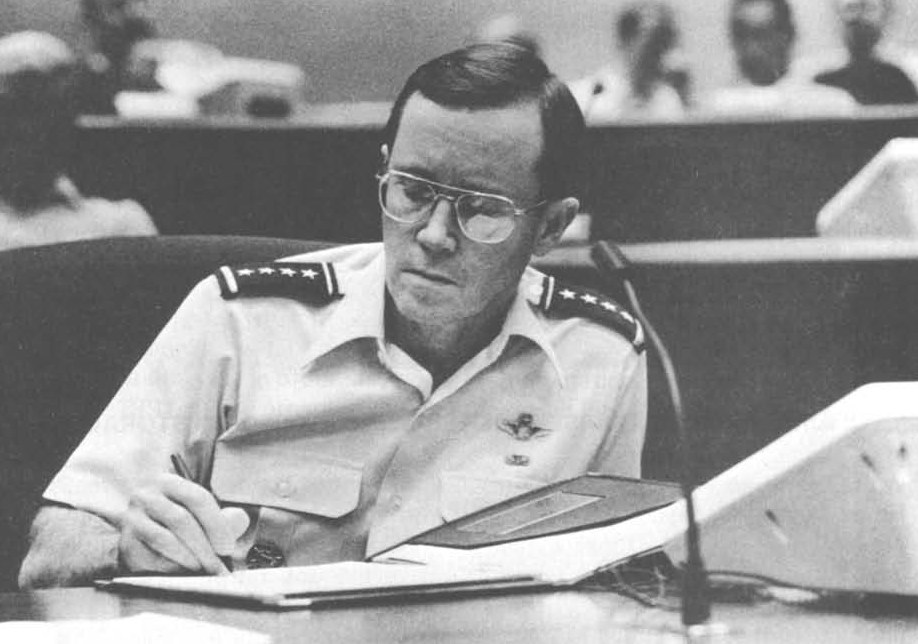
GENERAL
GEORGE L. BUTLER MONITORS THE ALERT FORCE STAND DOWN
General Butler called his wing and unit commanders from the SAC Command Center immediately upon completion of the stand down. He first told them:
. . . what an enormously exhilarating and gratifying moment this is for me as the CINCSAC, and by extension, the entire command. It is clearly one of the singular events of our time that as I sit here in my command center I see all of SAC's bomber forces off alert."
He saluted the men and women of the Minuteman II force and characterized the occasion as "a sweeping tribute to 45 years of unparalleled devotion" that allowed the nation to begin its climb "back down the ladder of nuclear confrontation." "In the meanwhile," he concluded,
rest secure in the knowledge that for the first time in over 40 years we can truly promise our children and our grandchildren a world drained from the tension of superpower confrontation. God bless you all for what you have accomplished. CINCSAC out.
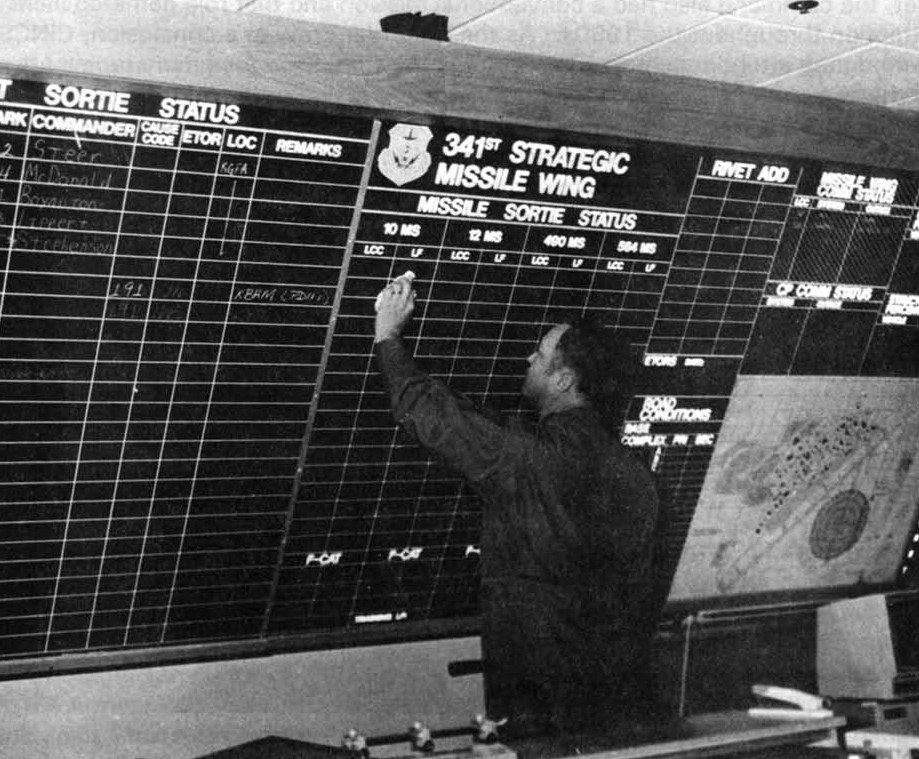
A
BATTLE STAFF CONTROLLER MONITORS THE ICBM STAND DOWN AT THE 341ST
SMW, MALMSTROM AFB, MONTANA
Over the next two days, missile maintenance crews visited each of the 450 launch facilities and installed safety control switches that prevented the missiles from being launched. With the turn of a key at the Alpha 9 missile silo near Stockett, Montana, the last Minuteman II was made safe on 20 September 1991. This event was especially symbolic since Alpha 9 was where the first Minuteman was placed on alert in 1962, an act President Kennedy called his "ace in the hole" because it made a critical difference in his negotiations with Premier Khrushchev during the Cuban Missile Crisis. After the stand down, SAC maintained 450 Minuteman III and 50 Peacekeeper ICBMs on alert and was capable of generating the bomber force within 24 hours.
The dramatic events that were reshaping alert operations were also causing Strategic Air Command to develop new doctrine. SAC was the child of the nuclear age and for forty years its mission had been almost exclusively nuclear deterrence. Yet, the command also had a conventional mission and that role garnered increasing attention throughout the 1980s. As the Cold War drew to a conclusion, CINCSACs turned their attention to preparing Strategic Air Command for a more prominent place in the conventional warfare arena. Under General Butler this role was defined as the TWIN TRIAD. The first triad, embodied in the overlapping and mutually reinforcing capabilities of bombers, ICBMs, and Navy SLBM forces, accomplished the command's traditional nuclear deterrence mission. The second or non-nuclear triad emphasized SAC's conventional warfighting capabilities as represented by its bombers, tankers, and battle management forces.
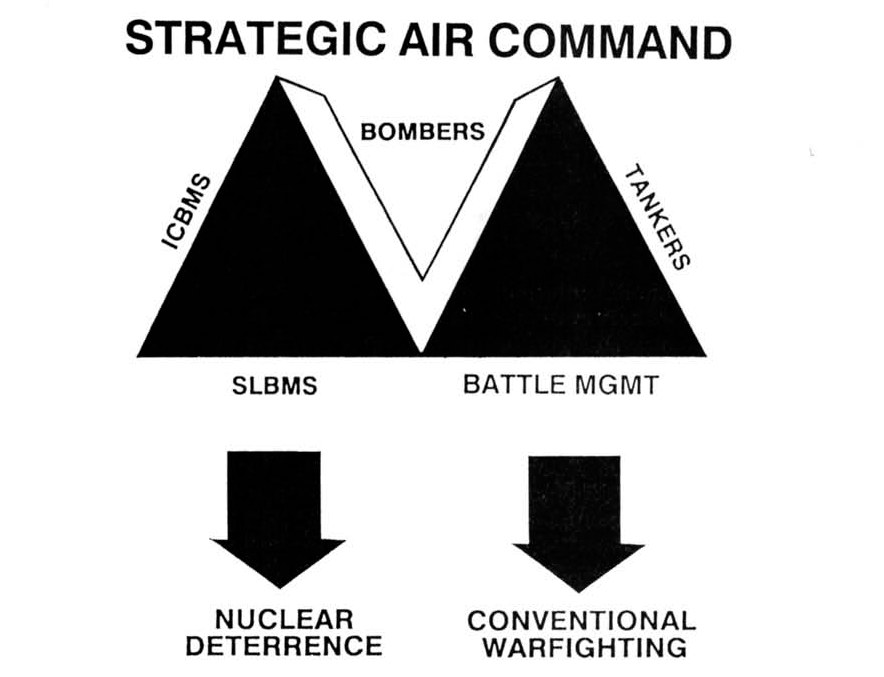
THE
TWIN TRIAD CONCEPT
A major reorganization on 1 September 1991 restructured SAC's combat forces along functional lines to meet the operational and force management requirements of the twin triad. Second Air Force was reactivated and assigned responsibility for SAC's reconnaissance and battle management assets. Twentieth Air Force was reactivated to manage the command's ICBM force. Finally, SAC's two existing air forces began a gradual transition that would eventually place functional control of bomber operations under Eighth Air Force and tanker operations under Fifteenth Air Force.
SAC's internal reorganization occurred amid a fundamental reorientation of Air Force structure and doctrine. The same forces which altered alert operations were also redefining defense force structure. Simultaneously, modern warfare and new airpower doctrine were blurring the distinction between strategic and tactical weapons and platforms. As the 1991 air campaign against Iraq demonstrated, force structure had to focus on weapon employment rather than weapon system. To this end, Air Force leaders reevaluated their service organization and in September 1991 announced a major restructuring. The three major operational commands — SAC, TAC, and MAC — would inactivate and two new commands would activate. One, the Air Mobility Command, would focus on Global Reach through management of most airlift and air refueling assets. The other, Air Combat Command, would be dedicated to Global Power through the application of bomber, fighter, battle management, defense suppression and some air refueling resources. This new command will also have peacetime responsibility for organizing, training, and equipping the ICBM force.
In President Bush's 17 September address, he announced the creation of a new command, designated United States Strategic Command, to simplify command and control of strategic nuclear weapons. STRATCOM would be activated in June 1992 at Offutt AFB, Nebraska, and occupy the same building that housed SAC and the Joint Strategic Target Planning Staff. As a unified command comprised of members from the Army, Navy, Air Force, and Marine Corps, STRATCOM would report directly to the Joint Chiefs of Staff and exercise operational control over all of the nation's strategic nuclear offensive alert systems, both Air Force and Navy. General George L. Butler, the thirteenth and last CINCSAC, was selected by the Chairman of the Joint Chiefs of Staff and forwarded to the President as the nominee to be the first Commander in Chief of U.S. Strategic Command.
- - - - - - - - - - - - - - - - - - - - - - - - - - - - - - - - - - - - - - - -
HEADQUARTERS STRATEGIC AIR COMMAND
Office of
the Commander in Chief
Offutt Air Force Base, Nebraska
9 November 1957
MEMORANDUM TO: Each Member of the SAC Alert Force
As a member of SAC's Alert Force, you are contributing to an operation which is of the utmost importance to the security and welfare of this nation and its allies in the free world. The purpose of this memorandum is to discuss with you some aspects of this operation and the importance of your part in it. For you must fully understand the reasons for the establishment of the Alert Force in order to believe in what you are doing and, consequently, do it with all your heart and to the best of your ability.
When SAC was organized, less than twelve years ago, its long-range bombers and stores of atom bombs were unmatched throughout the world and, therefore, represented an effective deterrent to aggression. Initiation of hostile action against this country would have been the signal to launch SAC's strike forces for the counterattack within a few days, and little could have prevented these forces from inflicting unacceptable damage upon any aggressor.
But while SAC's basic mission has not changed, there have been radical changes in the factors which affect the manner in which we must accomplish that mission. We no longer have a monopoly in nuclear weapons and long-range bombers. Many of the rapid advances in military technology which are reflected in our weapon systems are also utilized by the Soviets, permitting them to attack us with greater speed, firepower, and accuracy. Our own strike forces are no longer immune to destruction before they can be launched, and continuous improvements in the Soviet's aerial defenses make successful counterattacks more difficult.
None of these problems is insurmountable but we must devote a great deal of effort and talent toward their solution. I am confident that we can cope with them because SAC is not based on any particular weapon system but on an organization of experienced men like you, flexible enough to be readily adaptable to any new weapon system or technique, no matter how revolutionary. This applies, in particular, to the problems posed by the limitations of warning time.
As most of you know, we deal with two types of warning-"Strategic Warning" and "Tactical Warning." Strategic Warning is defined as that kind of long-range warning which gives the field commander enough time to move into fighting position and configuration. Tactical Warning means there is so little advance warning of an impending attack that the commander must fight from his present position and configuration.
We received a form of strategic warning of communist aggression as early as 1848 when Karl Marx and Friedrich Engels published the "Communist Manifesto." Ever since, all the top men of the communist hierarchy-from Lenin and Stalin to Khrushchev-have made it clear that the ultimate goal of communism is the liquidation of the capitalist countries and, primarily, of the United States.
As for the Tactical Warning, we can expect the Soviets to use the oldest and most successful military stratagem-surprise, because they surely would want to exploit our weaknesses, not our strengths. Therefore, we cannot count on any warning of overt hostile action against this country until after such action has been initiated. This would give us only a few hours to launch SAC's strike forces for the counterattack. And, once ballistic missiles become operational, the tactical warning period would shrink further to a mere fraction of an hour.
It stands to reason that the brunt of the initial attack would be directed against SAC because the Soviets know only too well that the price they would have to pay for aggression would be unacceptable to them unless they succeed in preventing SAC's strike forces from being launched. We can gain a certain degree of protection against overt and covert actions, designed to immobilize our forces, by appropriate means to deal with sabotage attempts, by a limited amount of base hardening, by dispersal, and by similar defensive measures. However, the only way of insuring the survival of some of SAC's combat capability, even in case of the most unexpected and massive attack, is our Alert Force.
As long as the Soviets know that, no matter what means they may employ to stop it, a sizeable percentage of SAC's strike force will be in the air for the counterattack within minutes after they have initiated aggression, they will think twice before undertaking such aggression. For this reason, it is my considered opinion that a combat-ready Alert Force of adequate size is the very backbone of our deterrent posture.
To achieve our goal of maintaining as much as one-third of our strike forces on continuous alert will not be easy, but it can and must be done. I realize that this will entail personal inconvenience and sacrifices to you and your families. But you can be sure that I will do everything possible to ease this aspect of your alert duties. The success of this system depends on you, and I count on you to insure that the Alert Force will always be ready to achieve its vital objectives.
/s/
THOMAS S. POWER
General, USAF
Commander in Chief
- - - - - - - - - - - - - - - - - - - - - - - - - - - - - - - - - - - - - - - -
301400Z Sep 87
CINCSAC OFFUTT AFB NE
AIG 740
AIG 9470
SUBJECT: 1988, The Year of SAC Alert
1. Strategic Air Command personnel have fought their war of deterrence every day for over 30 years. Bomber and tanker crews first began SAC ground alert on 1 Oct 57. Those initial alert crews and support personnel formed the cornerstone of America's deterrence-SAC alert. The men and women of our aircrews, missile crews, and all the SAC people who support them should never forget that it is their vigilance and dedication which allow Americans to live in freedom in this great nation. For those reasons, I've declared 1988 "The Year of the SAC Alert Force."
2. The goals of our program are to reaffirm the importance, enhance the prestige, and upgrade the environment of SAC alert. To aid in this effort, I've established a Headquarters SAC working group to gather, develop, and expedite good ideas. We are already working a number of projects which include: upgrading alert facilities, simplifying the SIOP, flying on alert, streamlining procedures, improving intelligence support, revitalizing the public affairs campaign, and examining unit awards programs.
3. I encourage all of you to build the best possible unit programs and implement local initiatives that support "The Year of the SAC Alert Force" program. I also want to share your good ideas with others across the command. Therefore, the numbered air forces and 1st STRAD should catalogue the new ideas and initiatives their units plan for 1988 and forward them to this headquarters by 1 Dec 87. Direct your inputs to my POC, Capt Chip Beck, HQ SAC/XOKM, AUTOVON 271-4464.
4. SAC alert is the foundation of our mission--and of our nation's defense. The people of this country have entrusted us with providing the deterrent shield that safeguards American liberty. Everyone in SAC shares that responsibility. With your help, we'll achieve our goals and improve the way we carry out our mission. I look forward to working with you as we celebrate the year of SAC alert.
- - - - - - - - - - - - - - - - - - - - - - - - - - - - - - - - - - - - - - - -
This is General Butler. I thought it would be appropriate if I had the opportunity to say to all of your units through you as their leaders and principle spokesmen what an enormously exhilarating and gratifying moment this is for me as the CINCSAC, and by extension, the entire command. It is clearly one of the singular events of our time that as I sit here in my command center I see all of SAC's bomber forces off alert.
I was in Washington, D.C., last night when the President made his historic address, and as I listened to his words, I was filled with a sense of pride and fulfillment. His words and the initiatives they conveyed were made possible in every sense by the thousands of men and women past and present who have manned the quiet ramparts of nuclear deterrence. This includes a multitude of professionals from virtually every service and across a wide spectrum of specialties and expertise.
Today we especially salute the men and women of the Minuteman II force. Their contribution to this mission has now been achieved and they can stand down from alert with enormous pride and the gratitude of the entire nation, indeed of the entire world.
This is a great day for SAC. It's a sweeping tribute to 45 years of unparalleled devotion along with our brothers in the SLBM force. We can sit quietly and reflect on the wondrous news that we've begun to climb back down the ladder of nuclear confrontation.
My congratulations to all of you. You have made this possible, and most importantly, we can truly say that the world is becoming a safer place. With that in mind I know that you will have a multitude of questions with respect to how we proceed. That guidance will be forthcoming shortly.
The most important thing that you have to do right now is to convey to your people in a very positive way what this represents. The fact that we are able to take bombers and tankers off alert for the first time in 34 years, that we can take those Minuteman II missiles down with full confidence, that we created an era where nuclear deterrence can be preserved at lower force levels. We can proceed in a measured way with the rest of the President's agenda.
Tell your folks that this is a very exciting event for those of us here in headquarters as we gather and watch the numbers of alert aircraft and Minuteman II missiles come down off the boards. That we are working diligently with guidance from Washington on where we go from here. We will have more specific instructions out with regard to the continued contributions of the Minuteman II crews as we work through this period.
So from me to all of you, my deepest thanks, my admiration, my appreciation. Come back to us with your individual questions, but recognize that we will be getting out to you with very broad guidance in the very near future.
In the meantime, rest secure in the knowledge that for the first time in over 40 years we can truly promise our children and our grandchildren a world drained from the tension of superpower confrontation. God bless you all for what you have accomplished. CINCSAC out.
- - - - - - - - - - - - - - - - - - - - - - - - - - - - - - - - - - - - - - - -
SAC MANNING - OFFICERS, AIRMEN, CIVILIANS
HEADQUARTERS
STRATEGIC AIR COMMAND
MISSILE CREWS
[Figures as of 31 December]
|
Year |
Officers |
Airmen |
Civilians |
Total |
|
1946 |
4,319 |
27,871 |
4,902 |
37,092 |
|
1947 |
5,175 |
39,307 |
5,107 |
49,589 |
|
1948 |
5,562 |
40,038 |
6,365 |
51,965 |
|
1949 |
10,050 |
53,460 |
7,980 |
71,490 |
|
1950 |
10,600 |
66,600 |
8,273 |
85,473 |
|
1951 |
19,747 |
113,224 |
11,554 |
144,525 |
|
1952 |
20,282 |
134,072 |
11,667 |
166,021 |
|
1953 |
19,944 |
138,782 |
12,156 |
170,982 |
|
1954 |
23,447 |
151,466 |
14,193 |
189,106 |
|
1955 |
26,180 |
151,595 |
18,222 |
195,997 |
|
1956 |
27,871 |
169,170 |
20,238 |
217,279 |
|
1957 |
29,946 |
174,030 |
20,038 |
224,014 |
|
1958 |
34,112 |
199,562 |
25,029 |
258,703 |
|
1959 |
36,435 |
199,970 |
26,204 |
262,609 |
|
1960 |
37,562 |
202,507 |
26,719 |
266,788 |
|
1961 |
37,555 |
216,148 |
26,879 |
280,582 |
|
1962 |
38,542 |
217,650 |
26,531 |
282,723 |
|
1963 |
36,206 |
211,482 |
23,984 |
271,672 |
|
1964 |
35,035 |
201,933 |
22,903 |
259,871 |
|
1965 |
30,336 |
164,414 |
21,931 |
216,681 |
|
1966 |
26,558 |
147,197 |
23,102 |
196,887 |
|
1967 |
25,745 |
143,412 |
22,148 |
191,305 |
|
1968 |
24,323 |
124,221 |
19,956 |
168,500 |
|
1969 |
23,167 |
122,828 |
18,333 |
164,328 |
|
1970 |
23,244 |
112,401 |
18,722 |
154,367 |
|
1971 |
23,043 |
118,300 |
19,732 |
161,075 |
|
1972 |
24,040 |
119,777 |
18,884 |
162,701 |
|
1973 |
23,686 |
121,060 |
19,008 |
163,754 |
|
1974 |
22,873 |
109,778 |
19,670 |
152,321 |
|
1975 |
21,788 |
98,890 |
20,057 |
140,375 |
|
1976 |
19,662 |
91,722 |
16,175 |
127,599 |
|
1977 |
18,726 |
89,440 |
14,876 |
123,042 |
|
1978 |
18,177 |
90,625 |
13,698 |
122,500 |
|
1979 |
18,451 |
86,315 |
14,201 |
118,967 |
|
1980 |
18,575 |
85,401 |
14,217 |
118,193 |
|
1981 |
18,708 |
87,055 |
13,036 |
118,799 |
|
1982 |
18,674 |
89,918 |
14,105 |
122,697 |
|
1983 |
17,767 |
89,267 |
13,009 |
120,043 |
|
1984 |
17,165 |
88,458 |
12,861 |
118,484 |
|
1985 |
17,475 |
88,341 |
13,160 |
118,976 |
|
1986 |
17,681 |
91,111 |
12,938 |
121,730 |
|
1987 |
17,453 |
90,320 |
12,816 |
120,679 |
|
1988 |
17,319 |
88,045 |
12,179 |
117,879 |
|
1989 |
16,788 |
83,418 |
12,574 |
112,780 |
|
1990 |
16,688 |
82,407 |
12,272 |
111,367 |
[Figures as of 31 December
Prior to 1971 data may also include figures from supporting units.]
|
Year |
Officers |
Enlisted |
Civilians |
Total |
||||
|
Auth |
Asgd |
Auth |
Asgd |
Auth |
Asgd |
Auth |
Asgd |
|
|
1946 |
|
492 |
|
2034 |
|
893 |
|
|
|
1947 |
|
202 |
|
566 |
|
259 |
|
|
|
1948 |
|
171 |
|
348 |
|
301 |
|
|
|
1949 |
|
|
|
|
|
|
|
|
|
1950 |
|
|
|
|
|
|
|
|
|
1951 |
440 |
625 |
573 |
788 |
|
427 |
|
1840 |
|
1952 |
436 |
652 |
565 |
723 |
430 |
423 |
1431 |
1798 |
|
1953 |
485 |
558 |
|
|
399 |
391 |
|
|
|
1954 |
550 |
556 |
645 |
693 |
403 |
400 |
1598 |
1649 |
|
1955 |
575 |
627 |
660 |
690 |
415 |
428 |
1650 |
1745 |
|
1956 |
623 |
639 |
688 |
718 |
531 |
518 |
1842 |
1875 |
|
1957 |
749 |
742 |
705 |
719 |
474 |
470 |
1928 |
1931 |
|
1958 |
884 |
945 |
777 |
774 |
506 |
506 |
2167 |
2225 |
|
1959 |
954 |
954 |
801 |
809 |
523 |
520 |
2278 |
2283 |
|
1960 |
1005 |
1017 |
765 |
786 |
499 |
488 |
2269 |
2291 |
|
1961 |
971 |
873 |
1146 |
1180 |
497 |
499 |
2614 |
2552 |
|
1962 |
1233 |
1265 |
1098 |
1316 |
578 |
558 |
2909 |
3139 |
|
1963 |
1463 |
1307 |
1434 |
1409 |
570 |
554 |
3467 |
3270 |
|
1964 |
1523 |
1412 |
1343 |
1608 |
583 |
558 |
3449 |
3578 |
|
1965 |
1629 |
1490 |
1853 |
1563 |
557 |
533 |
4021 |
3586 |
|
1966 |
1697 |
1590 |
1958 |
1914 |
626 |
562 |
4281 |
4066 |
|
1967 |
1803 |
1468 |
1971 |
1660 |
521 |
521 |
4295 |
3649 |
|
1968 |
1668 |
1530 |
2113 |
2079 |
691 |
637 |
4472 |
4246 |
|
1969 |
2104 |
1575 |
1813 |
1833 |
633 |
593 |
4550 |
4001 |
|
1970 |
1733 |
1521 |
2030 |
2004 |
632 |
598 |
4395 |
4123 |
|
1971 |
886 |
888 |
656 |
642 |
430 |
428 |
1972 |
1958 |
|
1972 |
1312 |
1291 |
977 |
954 |
517 |
472 |
2806 |
2717 |
|
1973 |
1310 |
1324 |
968 |
929 |
490 |
448 |
2768 |
2701 |
|
1974 |
1310 |
1324 |
968 |
929 |
490 |
448 |
2768 |
2701 |
|
1975 |
1220 |
1165 |
876 |
791 |
471 |
451 |
2567 |
2407 |
|
1976 |
907 |
875 |
676 |
600 |
434 |
408 |
2017 |
1883 |
|
1977 |
897 |
773 |
634 |
589 |
421 |
403 |
1952 |
1965 |
|
1978 |
1021 |
967 |
944 |
891 |
492 |
469 |
2457 |
2327 |
|
1979 |
1088 |
965 |
1026 |
939 |
531 |
459 |
2645 |
2363 |
|
1980 |
1085 |
1014 |
1066 |
999 |
544 |
514 |
2695 |
2527 |
|
1981 |
1121 |
1010 |
1091 |
1043 |
558 |
508 |
2770 |
2561 |
|
1982 |
1086 |
1034 |
1032 |
1031 |
539 |
509 |
2657 |
2574 |
|
1983 |
1043 |
992 |
972 |
965 |
514 |
488 |
2529 |
2445 |
|
1984 |
996 |
963 |
807 |
895 |
497 |
469 |
2300 |
2327 |
|
1985 |
1041 |
1018 |
877 |
866 |
488 |
479 |
2406 |
2383 |
|
1986 |
1047 |
1033 |
895 |
921 |
493 |
471 |
2435 |
2425 |
|
1987 |
1030 |
1027 |
899 |
895 |
508 |
479 |
2437 |
2401 |
|
1988 |
919 |
787 |
942 |
866 |
554 |
486 |
2415 |
2139 |
|
1989 |
922 |
727 |
917 |
834 |
549 |
500 |
2388 |
2061 |
|
1990 |
895 |
876 |
792 |
792 |
535 |
507 |
2222 |
2175 |
[Figures as of 31 December]
|
Year |
Authorized |
Formed |
|
1961 |
155 |
150 |
|
1962 |
747 |
654 |
|
1963 |
1169 |
1159 |
|
1964 |
1378 |
1261 |
|
1965 |
781 |
767 |
|
1966 |
872 |
834 |
|
1967 |
906 |
838 |
|
1968 |
996 |
947 |
|
1969 |
1059 |
1020 |
|
1970 |
1090 |
1036 |
|
1971 |
1109 |
1096 |
|
1972 |
1036 |
1089 |
|
1973 |
1162 |
1144 |
|
1974 |
1200 |
1188 |
|
1975 |
1185 |
1194 |
|
1976 |
1185 |
1100 |
|
1977 |
985 |
893 |
|
1978 |
885 |
869 |
|
1979 |
886 |
863 |
|
1980 |
885 |
843 |
|
1981 |
884 |
866 |
|
1982 |
892 |
863 |
|
1983 |
890 |
897 |
|
1984 |
782 |
743 |
|
1985 |
757 |
714 |
|
1986 |
670 |
663 |
|
1987 |
630 |
640 |
|
1988 |
634 |
627 |
|
1989 |
630 |
576 |
|
1990 |
614 |
575 |
- - - - - - - - - - - - - - - - - - - - - - - - - - - - - - - - - - - - - - - -
TACTICAL WEAPON SYSTEMS
BOMBARDMENT AND TANKER
AIRCRAFT
BOMBARDMENT AIRCRAFT
TANKER AIRCRAFT
POST ATTACK
COMMAND AND CONTROL SYSTEMS
INTERCONTINENTAL BALLISTIC
MISSILES
INTERCONTINENTAL BALLISTIC MISSILES BY MODEL
[Figures represent assigned systems as of 31 December]
|
Year |
Fighters |
Bombers |
Tankers |
Recon |
PACCS |
ICBM |
Missiles |
Total |
|
1946 |
85 |
148 |
|
31 |
|
|
|
264 |
|
1947 |
350 |
319 |
|
35 |
|
|
|
704 |
|
1948 |
212 |
556 |
|
54 |
|
|
|
822 |
|
1949 |
161 |
525 |
67 |
80 |
|
|
|
833 |
|
1950 |
167 |
520 |
126 |
112 |
|
|
|
925 |
|
1951 |
96 |
669 |
208 |
173 |
|
|
|
1146 |
|
1952 |
230 |
857 |
318 |
193 |
|
|
|
1598 |
|
1953 |
235 |
762 |
502 |
282 |
|
|
|
1781 |
|
1954 |
411 |
1082 |
683 |
410 |
|
|
|
2586 |
|
1955 |
554 |
1309 |
761 |
448 |
|
|
|
3072 |
|
1956 |
366 |
1650 |
824 |
574 |
|
|
|
3414 |
|
1957 |
|
1655 |
766 |
388 |
|
|
|
2809 |
|
1958 |
|
1769 |
962 |
218 |
|
|
|
2949 |
|
1959 |
|
1854 |
1067 |
205 |
|
6 |
1 |
3133 |
|
1960 |
|
1735 |
1094 |
139 |
|
12 |
147 |
3127 |
|
1961 |
|
1526 |
1095 |
164 |
|
63 |
627 |
3475 |
|
1962 |
|
1595 |
1018 |
65 |
5 |
224 |
983 |
3890 |
|
1963 |
|
1335 |
895 |
60 |
41 |
631 |
1085 |
4047 |
|
1964 |
|
1111 |
844 |
40 |
47 |
931 |
1043 |
4016 |
|
1965 |
|
807 |
642 |
32 |
23 |
880 |
1007 |
3391 |
|
1966 |
|
674 |
636 |
40 |
26 |
968 |
1005 |
3349 |
|
1967 |
|
669 |
641 |
48 |
17 |
1036 |
925 |
3336 |
|
1968 |
|
655 |
632 |
53 |
20 |
1026 |
757 |
3143 |
|
1969 |
|
549 |
629 |
55 |
18 |
1065 |
779 |
3095 |
|
1970 |
|
501 |
630 |
49 |
28 |
1039 |
775 |
3022 |
|
1971 |
|
478 |
622 |
40 |
26 |
1048 |
770 |
2984 |
|
1972 |
|
462 |
616 |
42 |
27 |
1012 |
982 |
3141 |
|
1973 |
|
491 |
641 |
43 |
29 |
1027 |
1397 |
3628 |
|
1974 |
|
494 |
643 |
54 |
28 |
1056 |
1891 |
4166 |
|
1975 |
|
489 |
642 |
50 |
31 |
1067 |
2114 |
4393 |
|
1976 |
|
487 |
643 |
51 |
31 |
1152 |
2074 |
4438 |
|
1977 |
|
483 |
640 |
50 |
30 |
1219 |
2018 |
4440 |
|
1978 |
|
410 |
640 |
46 |
30 |
1237 |
1408 |
3771 |
|
1979 |
|
408 |
642 |
41 |
30 |
1227 |
1396 |
3744 |
|
1980 |
|
406 |
517 |
38 |
31 |
1223 |
1383 |
3598 |
|
1981 |
|
406 |
523 |
38 |
31 |
1220 |
1388 |
3606 |
|
1982 |
|
362 |
562 |
43 |
30 |
1206 |
1620 |
3823 |
|
1983 |
|
323 |
535 |
49 |
30 |
1192 |
2063 |
4192 |
|
1984 |
|
322 |
543 |
47 |
32 |
1171 |
2518 |
4633 |
|
1985 |
|
321 |
673 |
55 |
31 |
1161 |
2580 |
4821 |
|
1986 |
|
286 |
556 |
59 |
31 |
1149 |
2568 |
4649 |
|
1987 |
|
306 |
550 |
60 |
31 |
1179 |
2529 |
4655 |
|
1988 |
|
411 |
548 |
66 |
31 |
1201 |
2638 |
4895 |
|
1989 |
|
400 |
545 |
68 |
31 |
1202 |
2620 |
4866 |
|
1990 |
|
346 |
530 |
49 |
31 |
1149 |
2512 |
4617 |
[Figures represent assigned aircraft as of 31 December]
|
Year |
B-29 |
B-50 |
KB-29 |
B-36 |
B-47 |
KC-97 |
B-52 |
KC-135 |
B-58 |
FB-111 |
KC-10 |
B-1 |
TOTAL |
|
1946 |
148 |
|
|
|
|
|
|
|
|
|
|
|
148 |
|
1947 |
319 |
|
|
|
|
|
|
|
|
|
|
|
319 |
|
1948 |
486 |
35 |
|
35 |
|
|
|
|
|
|
|
|
556 |
|
1949 |
390 |
99 |
67 |
36 |
|
|
|
|
|
|
|
|
592 |
|
1950 |
286 |
196 |
126 |
38 |
|
|
|
|
|
|
|
|
646 |
|
1951 |
340 |
219 |
187 |
98 |
12 |
21 |
|
|
|
|
|
|
877 |
|
1952 |
417 |
224 |
179 |
154 |
62 |
139 |
|
|
|
|
|
|
1175 |
|
1953 |
110 |
138 |
143 |
185 |
329 |
359 |
|
|
|
|
|
|
1264 |
|
1954 |
|
78 |
91 |
209 |
795 |
592 |
|
|
|
|
|
|
1765 |
|
1955 |
|
|
82 |
205 |
1086 |
679 |
18 |
|
|
|
|
|
2070 |
|
1956 |
|
|
74 |
247 |
1306 |
750 |
97 |
|
|
|
|
|
2474 |
|
1957 |
|
|
|
127 |
1285 |
742 |
243 |
24 |
|
|
|
|
2421 |
|
1958 |
|
|
|
22 |
1367 |
780 |
380 |
182 |
|
|
|
|
2731 |
|
1959 |
|
|
|
|
1366 |
745 |
488 |
322 |
|
|
|
|
2921 |
|
1960 |
|
|
|
|
1178 |
689 |
538 |
405 |
19 |
|
|
|
2826 |
|
1961 |
|
|
|
|
889 |
651 |
571 |
444 |
66 |
|
|
|
2621 |
|
1962 |
|
|
|
|
880 |
503 |
639 |
515 |
76 |
|
|
|
2613 |
|
1963 |
|
|
|
|
613 |
306 |
636 |
589 |
86 |
|
|
|
2230 |
|
1964 |
|
|
|
|
391 |
190 |
626 |
654 |
94 |
|
|
|
1955 |
|
1965 |
|
|
|
|
114 |
|
600 |
642 |
93 |
|
|
|
1449 |
|
1966 |
|
|
|
|
|
|
591 |
636 |
83 |
|
|
|
1310 |
|
1967 |
|
|
|
|
|
|
588 |
641 |
81 |
|
|
|
1310 |
|
1968 |
|
|
|
|
|
|
579 |
632 |
76 |
|
|
|
1287 |
|
1969 |
|
|
|
|
|
|
505 |
629 |
41 |
3 |
|
|
1178 |
|
1970 |
|
|
|
|
|
|
459 |
630 |
|
42 |
|
|
1131 |
|
1971 |
|
|
|
|
|
|
412 |
622 |
|
66 |
|
|
1100 |
|
1972 |
|
|
|
|
|
|
402 |
616 |
|
60 |
|
|
1078 |
|
1973 |
|
|
|
|
|
|
422 |
641 |
|
71 |
|
|
1134 |
|
1974 |
|
|
|
|
|
|
422 |
643 |
|
72 |
|
|
1137 |
|
1975 |
|
|
|
|
|
|
420 |
625 |
|
69 |
|
|
1114 |
|
1976 |
|
|
|
|
|
|
419 |
584 |
|
68 |
|
|
1071 |
|
1977 |
|
|
|
|
|
|
417 |
547 |
|
66 |
|
|
1030 |
|
1978 |
|
|
|
|
|
|
344 |
512 |
|
66 |
|
|
922 |
|
1979 |
|
|
|
|
|
|
343 |
514 |
|
65 |
|
|
922 |
|
1980 |
|
|
|
|
|
|
343 |
517 |
|
63 |
|
|
923 |
|
1981 |
|
|
|
|
|
|
344 |
517 |
|
62 |
6 |
|
929 |
|
1982 |
|
|
|
|
|
|
300 |
514 |
|
62 |
12 |
|
888 |
|
1983 |
|
|
|
|
|
|
262 |
515 |
|
61 |
20 |
|
858 |
|
1984 |
|
|
|
|
|
|
262 |
515 |
|
60 |
28 |
|
865 |
|
1985 |
|
|
|
|
|
|
261 |
506 |
|
60 |
39 |
|
866 |
|
1986 |
|
|
|
|
|
|
233 |
506 |
|
51 |
50 |
2 |
842 |
|
1987 |
|
|
|
|
|
|
260 |
493 |
|
60 |
57 |
76 |
946 |
|
1988 |
|
|
|
|
|
|
258 |
490 |
|
59 |
58 |
94 |
959 |
|
1989 |
|
|
|
|
|
|
248 |
487 |
|
58 |
58 |
94 |
945 |
|
1990 |
|
|
|
|
|
|
222 |
471 |
|
30 |
59 |
94 |
876 |
[Figures are assigned aircraft as of 31 December]
[Aircraft and Missile figures 1973-1990 include SAC
aircraft undergoing maintenance and modification work at Air Force
Logistics Command facilities.
Prior to 1973, these aircraft were
assigned to AFLC rather than SAC.]
|
Year |
B-29 |
B-50 |
B-36 |
B-47 |
B-52 |
B-58 |
FB-111 |
B-1B |
TOTAL |
|
1946 |
148 |
|
|
|
|
|
|
|
148 |
|
1947 |
319 |
|
|
|
|
|
|
|
319 |
|
1948 |
486 |
35 |
35 |
|
|
|
|
|
556 |
|
1949 |
390 |
99 |
36 |
|
|
|
|
|
525 |
|
1950 |
286 |
196 |
38 |
|
|
|
|
|
520 |
|
1951 |
340 |
219 |
98 |
12 |
|
|
|
|
669 |
|
1952 |
417 |
224 |
154 |
62 |
|
|
|
|
857 |
|
1953 |
110 |
138 |
185 |
329 |
|
|
|
|
762 |
|
1954 |
|
78 |
209 |
795 |
|
|
|
|
1082 |
|
1955 |
|
|
205 |
1086 |
18 |
|
|
|
1309 |
|
1956 |
|
|
247 |
1306 |
97 |
|
|
|
1650 |
|
1957 |
|
|
127 |
1285 |
243 |
|
|
|
1655 |
|
1958 |
|
|
22 |
1367 |
380 |
|
|
|
1769 |
|
1959 |
|
|
|
1366 |
488 |
|
|
|
1854 |
|
1960 |
|
|
|
1178 |
538 |
19 |
|
|
1735 |
|
1961 |
|
|
|
889 |
571 |
66 |
|
|
1526 |
|
1962 |
|
|
|
880 |
639 |
76 |
|
|
1595 |
|
1963 |
|
|
|
613 |
636 |
86 |
|
|
1335 |
|
1964 |
|
|
|
391 |
626 |
94 |
|
|
1111 |
|
1965 |
|
|
|
114 |
600 |
93 |
|
|
807 |
|
1966 |
|
|
|
|
591 |
83 |
|
|
674 |
|
1967 |
|
|
|
|
588 |
81 |
|
|
669 |
|
1968 |
|
|
|
|
579 |
76 |
|
|
655 |
|
1969 |
|
|
|
|
505 |
41 |
3 |
|
549 |
|
1970 |
|
|
|
|
459 |
|
42 |
|
501 |
|
1971 |
|
|
|
|
412 |
|
66 |
|
478 |
|
1972 |
|
|
|
|
402 |
|
60 |
|
462 |
|
1973 |
|
|
|
|
422 |
|
71 |
|
493 |
|
1974 |
|
|
|
|
422 |
|
72 |
|
494 |
|
1975 |
|
|
|
|
420 |
|
69 |
|
489 |
|
1976 |
|
|
|
|
419 |
|
68 |
|
487 |
|
1977 |
|
|
|
|
417 |
|
66 |
|
483 |
|
1978 |
|
|
|
|
344 |
|
66 |
|
410 |
|
1979 |
|
|
|
|
343 |
|
65 |
|
408 |
|
1980 |
|
|
|
|
343 |
|
63 |
|
406 |
|
1981 |
|
|
|
|
344 |
|
62 |
|
406 |
|
1982 |
|
|
|
|
300 |
|
62 |
|
362 |
|
1983 |
|
|
|
|
262 |
|
61 |
|
323 |
|
1984 |
|
|
|
|
262 |
|
60 |
|
322 |
|
1985 |
|
|
|
|
261 |
|
60 |
|
321 |
|
1986 |
|
|
|
|
233 |
|
51 |
2 |
286 |
|
1987 |
|
|
|
|
260 |
|
60 |
76 |
396 |
|
1988 |
|
|
|
|
258 |
|
59 |
94 |
411 |
|
1989 |
|
|
|
|
248 |
|
58 |
94 |
400 |
|
1990 |
|
|
|
|
222 |
|
30 |
94 |
346 |
[Figures represent assigned aircraft as of 31 December]
|
Year |
KB-29 |
KC-97 |
KC-135 (SAC) |
KC-135 (ARF) |
KC-10 |
|
1949 |
67 |
|
|
|
|
|
1950 |
126 |
|
|
|
|
|
1951 |
187 |
21 |
|
|
|
|
1952 |
179 |
139 |
|
|
|
|
1953 |
143 |
359 |
|
|
|
|
1954 |
91 |
592 |
|
|
|
|
1955 |
82 |
679 |
|
|
|
|
1956 |
74 |
750 |
|
|
|
|
1957 |
|
742 |
24 |
|
|
|
1958 |
|
780 |
182 |
|
|
|
1959 |
|
745 |
322 |
|
|
|
1960 |
|
689 |
405 |
|
|
|
1961 |
|
651 |
444 |
|
|
|
1962 |
|
503 |
515 |
|
|
|
1963 |
|
306 |
589 |
|
|
|
1964 |
|
190 |
654 |
|
|
|
1965 |
|
|
642 |
|
|
|
1966 |
|
|
636 |
|
|
|
1967 |
|
|
641 |
|
|
|
1968 |
|
|
632 |
|
|
|
1969 |
|
|
629 |
|
|
|
1970 |
|
|
630 |
|
|
|
1971 |
|
|
622 |
|
|
|
1972 |
|
|
616 |
|
|
|
1973 |
|
|
641 |
|
|
|
1974 |
|
|
643 |
|
|
|
1975 |
|
|
625 |
17 |
|
|
1976 |
|
|
584 |
59 |
|
|
1977 |
|
|
547 |
93 |
|
|
1978 |
|
|
512 |
128 |
|
|
1979 |
|
|
514 |
128 |
|
|
1980 |
|
|
517 |
128 |
|
|
1981 |
|
|
517 |
128 |
6 |
|
1982 |
|
|
514 |
128 |
12 |
|
1983 |
|
|
515 |
128 |
20 |
|
1984 |
|
|
515 |
128 |
28 |
|
1985 |
|
|
506 |
128 |
39 |
|
1986 |
|
|
506 |
124 |
50 |
|
1987 |
|
|
493 |
134 |
57 |
|
1988 |
|
|
490 |
134 |
58 |
|
1989 |
|
|
487 |
134 |
58 |
|
1990 |
|
|
471 |
147 |
59 |
[Figures represent assigned aircraft as of 31 December]
|
Year |
EB-47 |
EC-135 |
E-4 |
|
1961 |
|
|
|
|
1962 |
5 |
|
|
|
1963 |
26 |
15 |
|
|
1964 |
22 |
25 |
|
|
1965 |
|
23 |
|
|
1966 |
|
26 |
|
|
1967 |
|
17 |
|
|
1968 |
|
20 |
|
|
1969 |
|
18 |
|
|
1970 |
|
28 |
|
|
1971 |
|
26 |
|
|
1972 |
|
27 |
|
|
1973 |
|
29 |
|
|
1974 |
|
28 |
|
|
1975 |
|
28 |
3 |
|
1976 |
|
28 |
3 |
|
1977 |
|
27 |
3 |
|
1978 |
|
27 |
3 |
|
1979 |
|
27 |
3 |
|
1980 |
|
27 |
4 |
|
1981 |
|
27 |
4 |
|
1982 |
|
26 |
4 |
|
1983 |
|
26 |
4 |
|
1984 |
|
28 |
4 |
|
1985 |
|
28 |
3 |
|
1986 |
|
28 |
3 |
|
1987 |
|
27 |
4 |
|
1988 |
|
28 |
3 |
|
1989 |
|
28 |
3 |
|
1990 |
|
28 |
3 |
[Figures represent assigned missiles as of 31 December]
[* Snark was a surface-to-surface intercontinental missile]
|
Year |
Snark* |
Quail |
Hound Dog |
SRAM |
ALCM |
|
1959 |
13 |
|
1 |
|
|
|
1960 |
30 |
93 |
54 |
|
|
|
1961 |
|
397 |
230 |
|
|
|
1962 |
|
436 |
547 |
|
|
|
1963 |
|
492 |
593 |
|
|
|
1964 |
|
477 |
566 |
|
|
|
1965 |
|
465 |
542 |
|
|
|
1966 |
|
457 |
548 |
|
|
|
1967 |
|
448 |
477 |
|
|
|
1968 |
|
445 |
312 |
|
|
|
1969 |
|
430 |
349 |
|
|
|
1970 |
|
430 |
345 |
|
|
|
1971 |
|
430 |
340 |
|
|
|
1972 |
|
417 |
338 |
227 |
|
|
1973 |
|
417 |
329 |
651 |
|
|
1974 |
|
415 |
327 |
1149 |
|
|
1975 |
|
355 |
308 |
1451 |
|
|
1976 |
|
355 |
288 |
1431 |
|
|
1977 |
|
354 |
249 |
1415 |
|
|
1978 |
|
|
|
1408 |
|
|
1979 |
|
|
|
1396 |
|
|
1980 |
|
|
|
1383 |
|
|
1981 |
|
|
|
1374 |
14 |
|
1982 |
|
|
|
1332 |
288 |
|
1983 |
|
|
|
1327 |
736 |
|
1984 |
|
|
|
1309 |
1209 |
|
1985 |
|
|
|
1309 |
1271 |
|
1986 |
|
|
|
1128 |
1440 |
|
1987 |
|
|
|
1125 |
1404 |
|
1988 |
|
|
|
1138 |
1500 |
|
1989 |
|
|
|
1120 |
1500 |
|
1990 |
|
|
|
1048 |
1464 |
[Figures represent assigned missiles as of 31 December]
[* Thor was an intermediate range ballistic missile]
|
Year |
Thor* |
Atlas |
Titan |
Minuteman |
Peacekeeper |
|
1959 |
13 |
6 |
|
|
|
|
1960 |
30 |
12 |
|
|
|
|
1961 |
|
62 |
1 |
|
|
|
1962 |
|
142 |
62 |
20 |
|
|
1963 |
|
140 |
119 |
372 |
|
|
1964 |
|
118 |
115 |
698 |
|
|
1965 |
|
|
59 |
821 |
|
|
1966 |
|
|
60 |
908 |
|
|
1967 |
|
|
63 |
973 |
|
|
1968 |
|
|
59 |
967 |
|
|
1969 |
|
|
60 |
1005 |
|
|
1970 |
|
|
57 |
982 |
|
|
1971 |
|
|
58 |
990 |
|
|
1972 |
|
|
57 |
955 |
|
|
1973 |
|
|
57 |
970 |
|
|
1974 |
|
|
57 |
999 |
|
|
1975 |
|
|
57 |
1010 |
|
|
1976 |
|
|
58 |
1094 |
|
|
1977 |
|
|
57 |
1162 |
|
|
1978 |
|
|
57 |
1180 |
|
|
1979 |
|
|
57 |
1170 |
|
|
1980 |
|
|
56 |
1167 |
|
|
1981 |
|
|
56 |
1164 |
|
|
1982 |
|
|
53 |
1153 |
|
|
1983 |
|
|
43 |
1149 |
|
|
1984 |
|
|
31 |
1140 |
|
|
1985 |
|
|
21 |
1140 |
|
|
1986 |
|
|
9 |
1140 |
|
|
1987 |
|
|
|
1151 |
28 |
|
1988 |
|
|
|
1152 |
49 |
|
1989 |
|
|
|
1152 |
50 |
|
1990 |
|
|
|
1099 |
50 |
[Figures represent assigned missiles as of 31 December]
|
Year |
Atlas D |
Atlas E |
Atlas F |
Titan I |
Titan II |
Minuteman A |
Minuteman B |
Minuteman F |
Minuteman G |
Peacekeeper |
|
1959 |
6 |
|
|
|
|
|
|
|
|
|
|
1960 |
12 |
|
|
|
|
|
|
|
|
|
|
1961 |
30 |
32 |
1 |
1 |
|
|
|
|
|
|
|
1962 |
30 |
32 |
80 |
62 |
|
20 |
|
|
|
|
|
1963 |
28 |
33 |
79 |
63 |
56 |
151 |
221 |
|
|
|
|
1964 |
13 |
30 |
75 |
56 |
59 |
142 |
556 |
|
|
|
|
1965 |
|
|
|
|
59 |
138 |
663 |
20 |
|
|
|
1966 |
|
|
|
|
60 |
116 |
616 |
176 |
|
|
|
1967 |
|
|
|
|
63 |
77 |
534 |
362 |
|
|
|
1968 |
|
|
|
|
59 |
11 |
504 |
452 |
|
|
|
1969 |
|
|
|
|
60 |
|
503 |
502 |
|
|
|
1970 |
|
|
|
|
57 |
|
423 |
507 |
52 |
|
|
1971 |
|
|
|
|
58 |
|
333 |
500 |
157 |
|
|
1972 |
|
|
|
|
57 |
|
191 |
485 |
279 |
|
|
1973 |
|
|
|
|
57 |
|
100 |
503 |
367 |
|
|
1974 |
|
|
|
|
57 |
|
|
505 |
494 |
|
|
1975 |
|
|
|
|
57 |
|
|
452 |
558 |
|
|
1976 |
|
|
|
|
58 |
|
|
494 |
600 |
|
|
1977 |
|
|
|
|
57 |
|
|
474 |
688 |
|
|
1978 |
|
|
|
|
57 |
|
|
502 |
678 |
|
|
1979 |
|
|
|
|
57 |
|
|
492 |
678 |
|
|
1980 |
|
|
|
|
56 |
|
|
491 |
676 |
|
|
1981 |
|
|
|
|
56 |
|
|
492 |
672 |
|
|
1982 |
|
|
|
|
53 |
|
|
490 |
663 |
|
|
1983 |
|
|
|
|
43 |
|
|
485 |
664 |
|
|
1984 |
|
|
|
|
31 |
|
|
486 |
654 |
|
|
1985 |
|
|
|
|
21 |
|
|
486 |
654 |
|
|
1986 |
|
|
|
|
9 |
|
|
486 |
654 |
|
|
1987 |
|
|
|
|
|
|
|
489 |
662 |
28 |
|
1988 |
|
|
|
|
|
|
|
489 |
663 |
49 |
|
1989 |
|
|
|
|
|
|
|
489 |
663 |
50 |
|
1990 |
|
|
|
|
|
|
|
489 |
610 |
50 |
- - - - - - - - - - - - - - - - - - - - - - - - - - - - - - - - - - - - - - - -
BOMBER ALERT RATES
AIRBORNE ALERT RATES
ICBM
ALERT RATES
[Figures as of 31 December]
|
YEAR |
REQUIRED ALERT |
ACTUAL ALERT |
|
1958 |
|
233 |
|
1959 |
|
327 |
|
1960 |
|
428 |
|
1961 |
|
519 |
|
1962 |
|
625 |
|
1963 |
|
551 |
|
1964 |
|
464 |
|
1965 |
340 |
314 |
|
1966 |
352 |
301 |
|
1967 |
248 |
223 |
|
1968 |
202 |
166 |
|
1969 |
190 |
100 |
|
1970 |
156 |
89 |
|
1971 |
156 |
112 |
|
1972 |
174 |
49 |
|
1973 |
170 |
126 |
|
1974 |
125 |
106 |
|
1975 |
107 |
107 |
|
1976 |
103 |
103 |
|
1977 |
103 |
97 |
|
1978 |
101 |
101 |
|
1979 |
101 |
101 |
|
1980 |
101 |
101 |
|
1981 |
101 |
101 |
|
1982 |
89 |
89 |
|
1983 |
76 |
76 |
|
1984 |
75 |
75 |
|
1985 |
74 |
74 |
|
1986 |
74 |
76 |
|
1987 |
69 |
69 |
|
1988 |
63 |
63 |
|
1989 |
65 |
64 |
|
1990 |
53 |
53 |
[Figures represent actual aircraft on alert as of 31 December]
|
|
B-36 |
B-52 |
PACCS |
TOTAL |
|
1 Feb 1958 |
1 |
|
|
1 |
|
1958 |
|
|
|
0 |
|
1959 |
|
11 |
|
11 |
|
1960 |
|
6 |
13 |
6 |
|
1961 |
|
10 |
1 |
11 |
|
1962 |
|
12 |
1 |
13 |
|
1963 |
|
11 |
1 |
12 |
|
1964 |
|
9 |
1 |
10 |
|
1965 |
|
12 |
1 |
13 |
|
1966 |
|
3 |
1 |
4 |
|
1967 |
|
4 |
1 |
5 |
|
1968 |
|
|
1 |
1 |
|
1969 |
|
|
1 |
1 |
|
1970 |
|
|
1 |
1 |
|
1971 |
|
|
1 |
1 |
|
1972 |
|
|
1 |
1 |
|
1973 |
|
|
1 |
1 |
|
1974 |
|
|
1 |
1 |
|
1975 |
|
|
1 |
1 |
|
1976 |
|
|
1 |
1 |
|
1977 |
|
|
1 |
1 |
|
1978 |
|
|
1 |
1 |
|
1979 |
|
|
1 |
1 |
|
1980 |
|
|
1 |
1 |
|
1981 |
|
|
1 |
1 |
|
1982 |
|
|
1 |
1 |
|
1983 |
|
|
1 |
1 |
|
1984 |
|
|
1 |
1 |
|
1985 |
|
|
1 |
1 |
|
1986 |
|
|
1 |
1 |
|
1987 |
|
|
1 |
1 |
|
1988 |
|
|
1 |
1 |
|
1989 |
|
|
1 |
1 |
|
1990 |
|
|
0 |
0 |
[Figures represent actual ICBMs on alert as of 31 December]
|
Year |
Atlas |
Titan |
Minuteman |
Peacekeeper |
ERCS |
Total |
|
30 Oct 59 |
1 |
|
|
|
|
1 |
|
1959 |
|
|
|
|
|
0 |
|
1960 |
5 |
|
|
|
|
5 |
|
1961 |
26 |
|
|
|
|
26 |
|
1962 |
5 |
48 |
|
|
|
143 |
|
1963 |
68 |
82 |
276 |
|
|
426 |
|
1964 |
90 |
96 |
678 |
|
|
864 |
|
1965 |
|
47 |
782 |
|
|
829 |
|
1966 |
|
50 |
837 |
|
|
887 |
|
1967 |
|
56 |
899 |
|
|
955 |
|
1968 |
|
55 |
923 |
|
|
978 |
|
1969 |
|
55 |
975 |
|
|
1030 |
|
1970 |
|
53 |
936 |
|
|
989 |
|
1971 |
|
54 |
937 |
|
|
991 |
|
1972 |
|
54 |
900 |
|
|
954 |
|
1973 |
|
54 |
911 |
|
|
965 |
|
1974 |
|
55 |
975 |
|
|
988 |
|
1975 |
|
54 |
931 |
|
|
985 |
|
1976 |
|
54 |
917 |
|
|
971 |
|
1977 |
|
53 |
921 |
|
|
974 |
|
1978 |
|
50 |
910 |
|
|
960 |
|
1979 |
|
52 |
957 |
|
|
1009 |
|
1980 |
|
50 |
976 |
|
8 |
1034 |
|
1981 |
|
51 |
978 |
|
10 |
1039 |
|
1982 |
|
49 |
971 |
|
10 |
1030 |
|
1983 |
|
39 |
975 |
|
9 |
1023 |
|
1984 |
|
30 |
977 |
|
10 |
1017 |
|
1985 |
|
18 |
946 |
|
10 |
974 |
|
1986 |
|
5 |
948 |
9 |
10 |
958 |
|
1987 |
|
|
916 |
16 |
10 |
942 |
|
1988 |
|
|
899 |
42 |
10 |
951 |
|
1989 |
|
|
898 |
49 |
10 |
957 |
|
1990 |
|
|
901 |
50 |
10 |
961 |