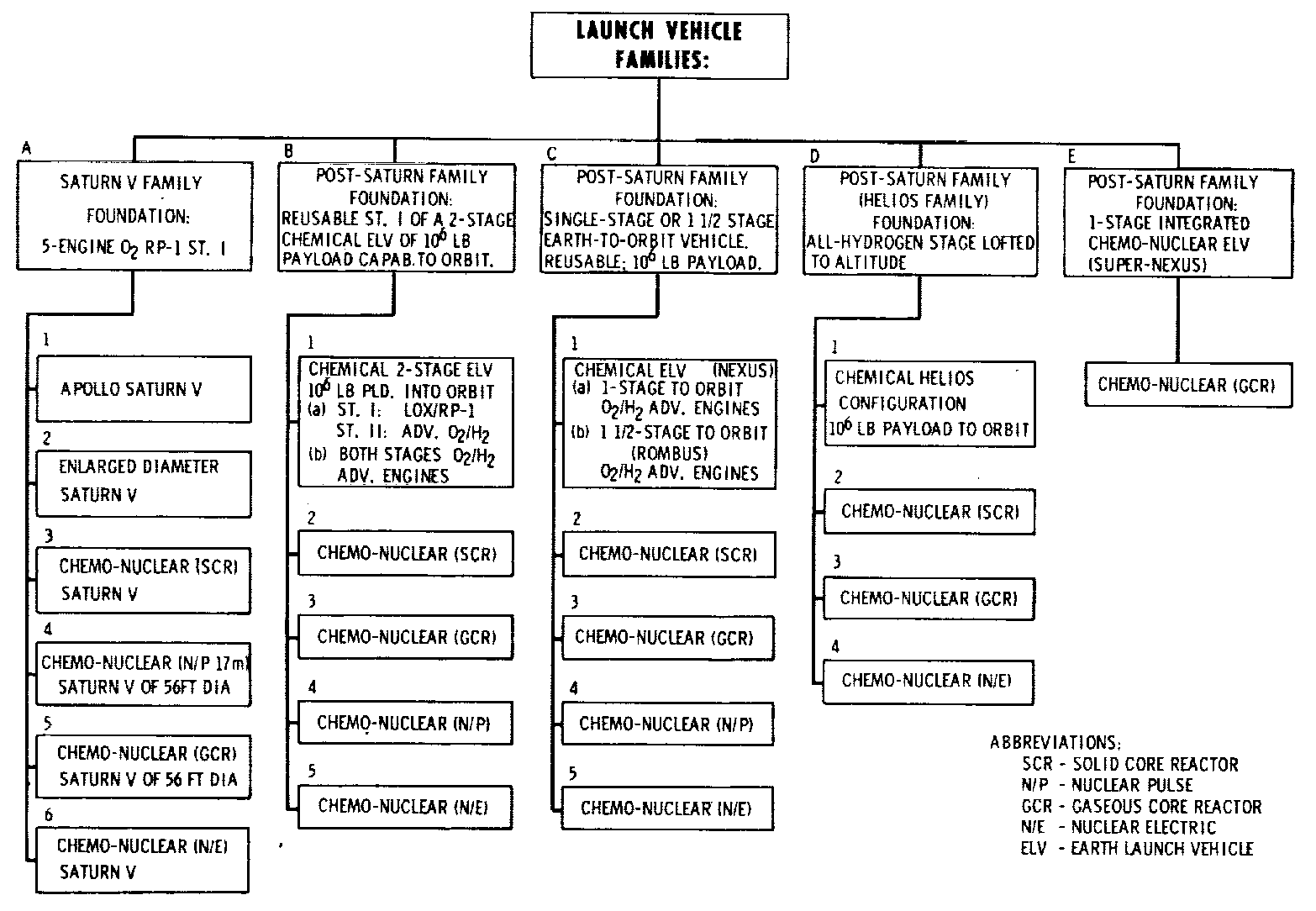
FIGURE 1. SURVEY OF VEHICLE TYPES CONSIDERED IN THIS STUDY
|
NASA TECHNICAL MEMORANDUM NASA TM X-53200 ADVANCED POST-SATURN EARTH LAUNCH
VEHICLE STUDY
|
TECHNICAL MEMORANDUM X-53200
ADVANCED POST-SATURN EARTH LAUNCH VEHICLE
STUDY
EXECUTIVE SUMMARY REPORT
By
J. L. Sanders
George C. Marshall Space Flight Center
Huntsville,
Alabama
ABSTRACT
The purpose of this report is to summarize the results of a study of advanced (chemo-nuclear) Post-Saturn launch vehicles. By investigating vehicles beyond the purely chemical systems, a safeguard is provided against the danger of being caught short relative to future extraterrestrial operational requirements.
A number of concepts were investigated from three points of view; design, vehicle-engine integration, and performance. After an extensive process of evaluation and selection, the most promising concepts were studied in greater detail.
The results indicate that gas core reactor and nuclear pulse engines are both attractive for the advanced Post-Saturn vehicle , and both should be investigated further. If emphasis is on Earth orbit and lunar delivery missions, the gas core reactor shows a slight advantage. The nuclear pulse concept is clearly preferable if emphasis is on lunar and planetary deliveries
NASA – GEORGE C. MARSHALL SPACE FLIGHT CENTER
– – – – – – – – – – – – – – – – – – – – – – – – – – – – – –
NASA – GEORGE C. MARSHALL SPACE FLIGHT CENTER
TECHNICAL MEMORANDUM X- 53200
ADVANCED POST-SATURN EARTH LAUNCH VEHICLE
STUDY
EXECUTIVE SUMMARY REPORT
By
J. L. Sanders
FUTURE PROJECTS OFFICE
RESEARCH AND DEVELOPMENT
OPERATIONS
– – – – – – – – – – – – – – – – – – – – – – – – – – – – – –
SUMMARY
SECTION I. INTRODUCTION
SECTION II. SCOPE AND
OBJECTIVES
SECTION III. METHOD OF APPROACH AND ASSUMPTIONS
A. General Approach
B. Evaluation Criteria
SECTION IV. BASIC DATA GENERATED AND CONCLUSIONS
A. Mission Analysis
B. Vehicle Design and Weight Analysis
C. Launch Systems
D. Conclusions: Summary
SECTION V. RECOMMENDED FUTURE ACTIVITIES
A. Propulsion
B. Manufacturing and Transportation
C. Ground Testing
D. Launch
E. Recovery
REFERENCES
– – – – – – – – – – – – – – – – – – – – – – – – – – – – – –
Figure 1. Survey of Vehicle Types Considered in This Study
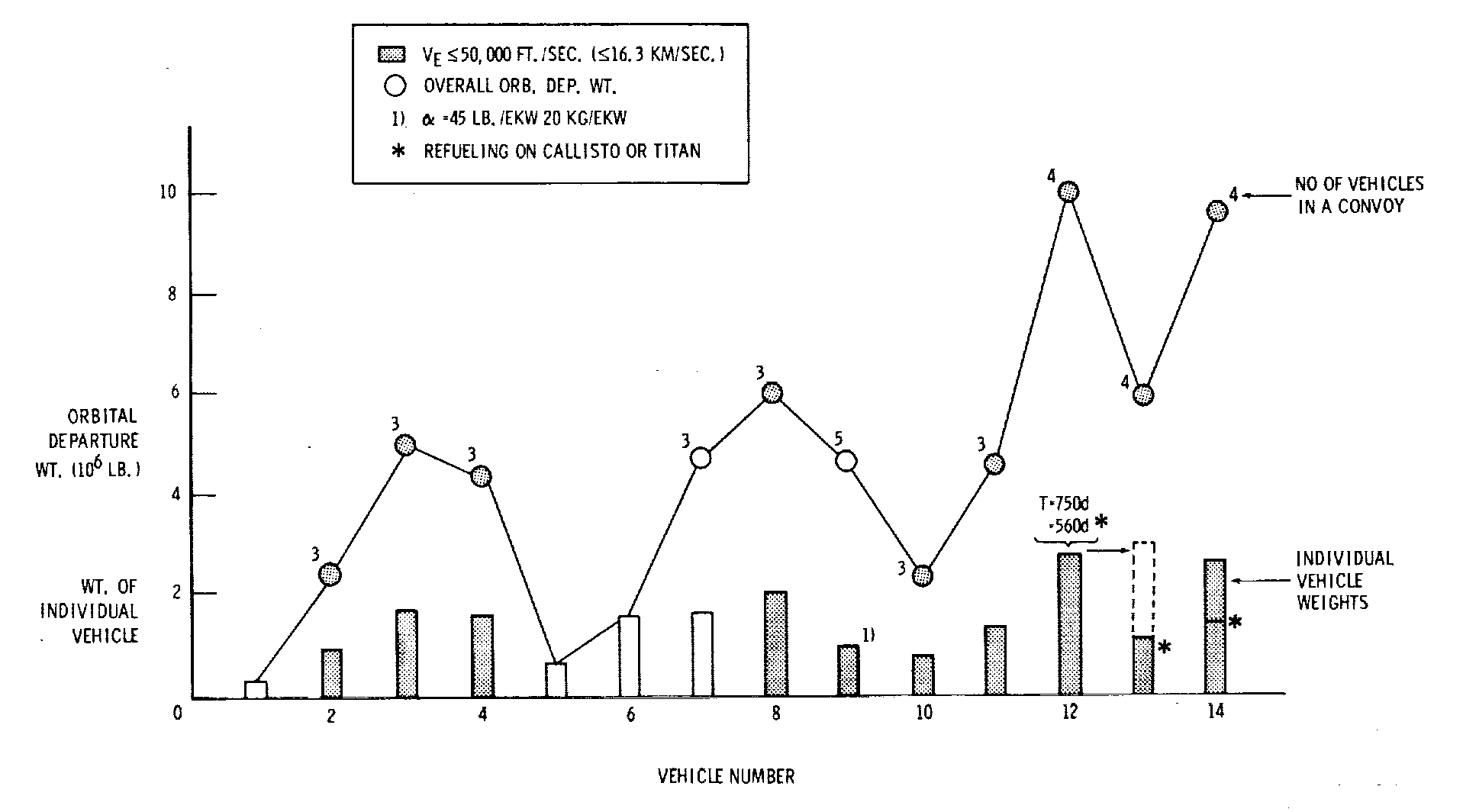
Figure 2. Weight of Interplanetary Vehicles and Overall Orbital Departure Weight
Figure 3. Post Saturn Class IV W/M Nuclear Stage on Baseline and Nexus Boosters (Eight 750 K Water Moderated Metal Core Engines)
Figure 4. Post Saturn Class IV Nuclear Stage (Eight 750 K Water Moderated Metal Core Engines)
Figure 5. Post Saturn Class IV GCR Nuclear Stage on Nexus Booster
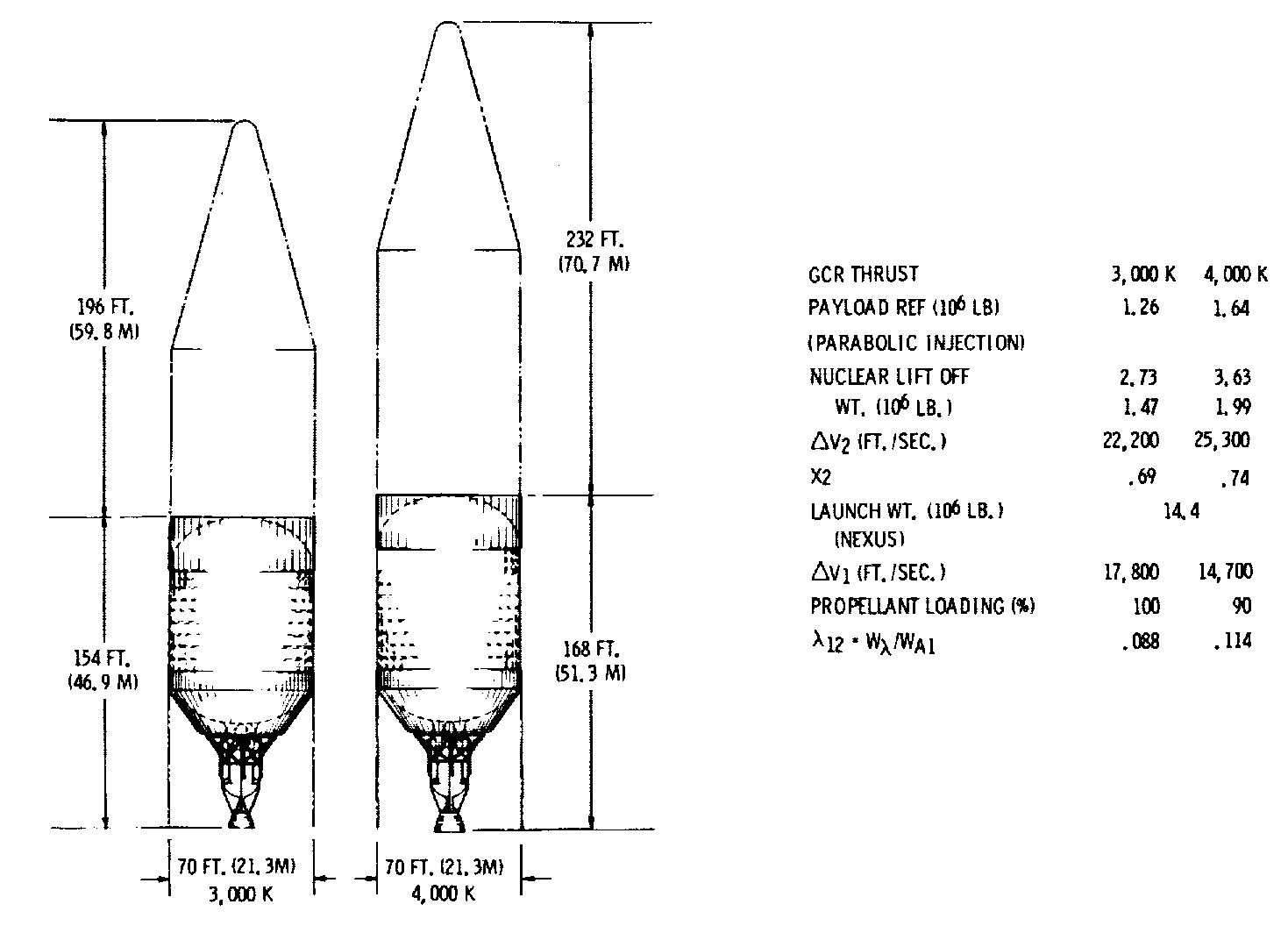
Figure 6. Post Saturn Class IV Nuclear Stages (3000 K and 4000 K GCR Engines)
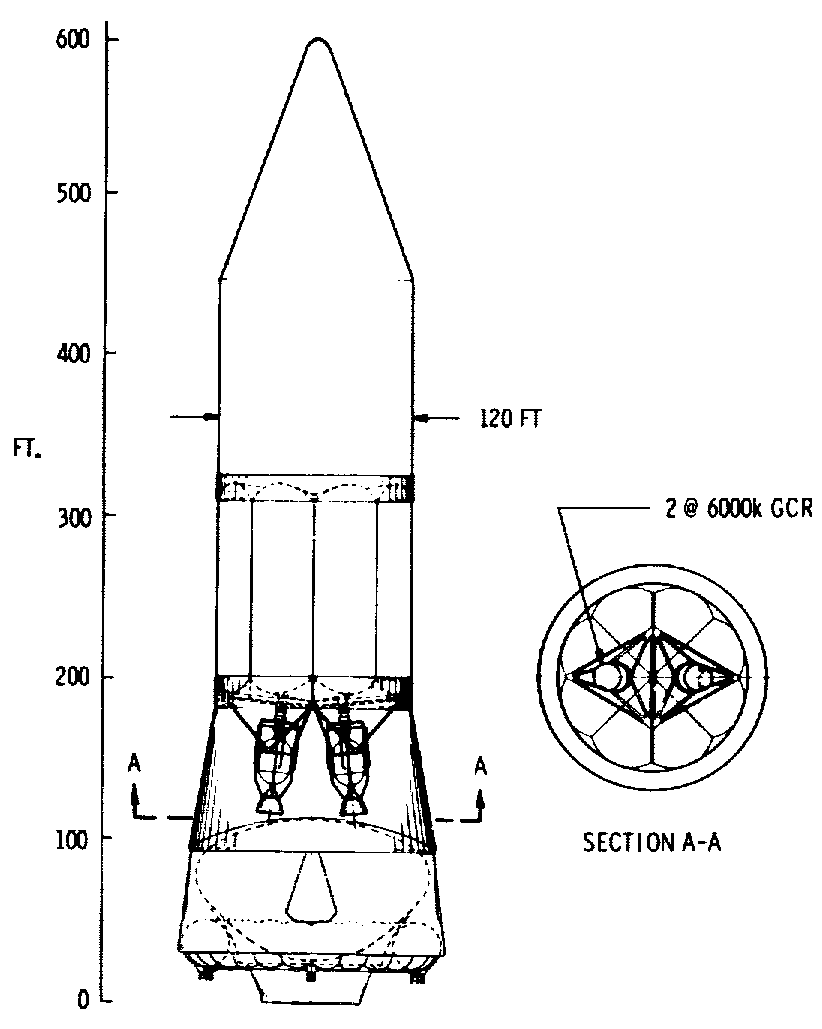
Figure 7. GCR (2 at 6000 K) Nuclear Stage on Uprated Nexus
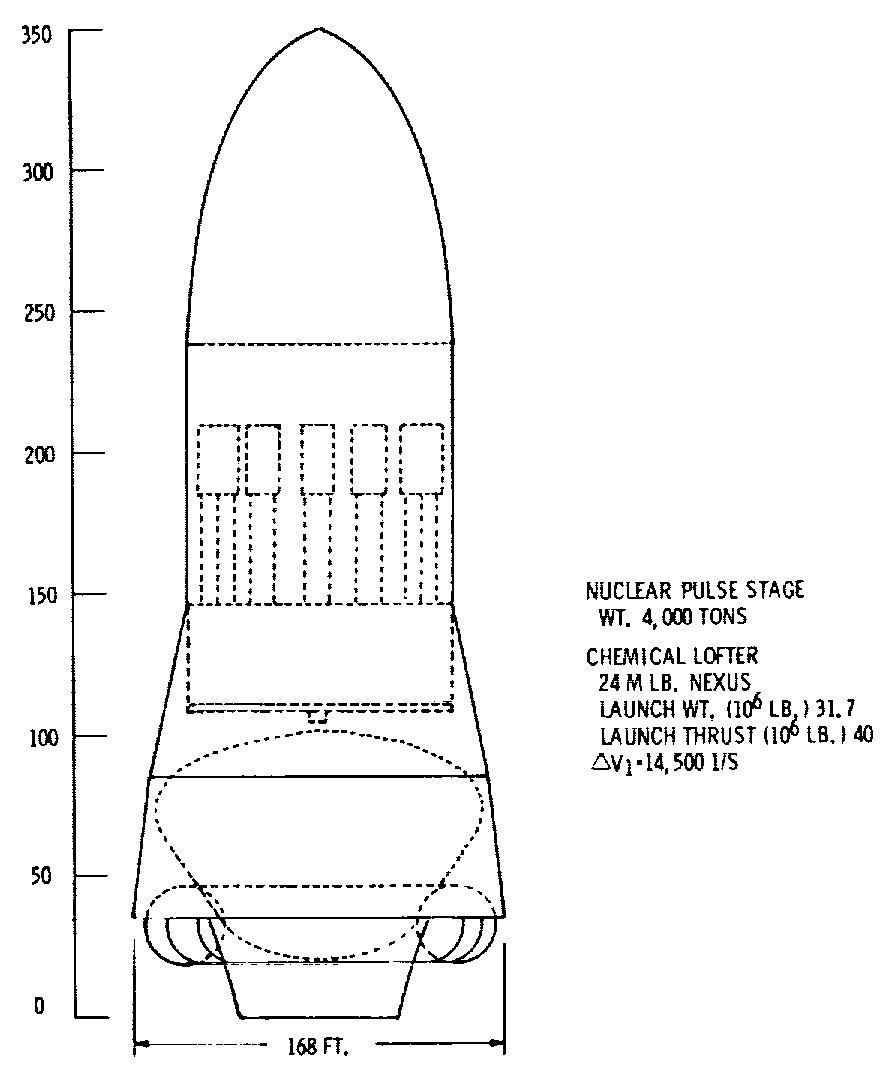
Figure 8. Nuclear Pulse Vehicle with Nexus Lofter
Figure 9. Launch Pad Comparison
– – – – – – – – – – – – – – – – – – – – – – – – – – – – – –
The purpose of this report is to summarize the results of a study of advanced (chemo-nuclear) Post-Saturn launch vehicles. By investigating vehicles beyond the purely chemical systems, a safeguard is provided against the danger of being caught short relative to future extraterrestrial operational requirements.
A number of concepts were investigated from three points of view: design, vehicle-engine integration, and performance. After an extensive process of evaluation and selection, the most promising concepts were studied in greater detail.
The results indicate that gas core reactor and nuclear pulse engines are both attractive for the advanced Post-Saturn vehicle, and both should be investigated further. If emphasis is on Earth orbit and lunar delivery missions, the gas core reactor shows a slight advantage. The nuclear pulse concept is clearly preferable if emphasis is on lunar and planetary deliveries.
In order to make adequate long range plans, it is necessary to study at this time various missions and their requirements because of the long leadtime associated with the development of advanced space transportation systems. The study summarized in this report is one of a series to assist in the selection and definition of the next large launch vehicle after Saturn V.
The key to extraterrestrial operations is the development of an adequate Earth to orbit logistics system, of which the Earth launch vehicle is the primary element. The largest of the present Earth launch vehicles under development, i. e. , Saturn V, opens Earth orbit to manned operations on a large scale, but is not economically satisfactory from a long term standpoint. It barely extends manned flight to the Moon for small crew excursions. With further improvements in payload capability, the Saturn V could be used to build-up and maintain a small (10 people) lunar base, but the cost would be high. It could also be used for minimum level manned interplanetary expeditions, such as Mars and Venus flybys, but would require extensive orbital operations.
If the national space program is going to continue at the present funding level for the next two decades, it is likely that new launch vehicles superior to Saturn V, in terms of payload capability and cost effectiveness, will be developed. This Post-Saturn Earth launch vehicle is the key to extended economical manned exploration and exploitation of the inner solar system. This study investigated the very advanced concepts of Post-Saturn launch vehicles and in particular their compatibility with advanced nuclear upper stages.
The study reported here was conducted on a parallel basis by the Douglas Aircraft Company (Contract NAS8-5021) and General Dynamics/Astronautics (NAS8-5022). The funding for the two contracts amounted to $449,000 for Douglas and $382,824 for General Dynamics/Astronautics.
The purpose of this report is to provide executive personnel with a condensed description of the study. The report describes the study objectives, discusses the approach, provides some results and conclusions, and recommends future work. If more details are desired, refer to References 1 and 2 listed at the end of this report. These documents can be obtained from the Scientific and Technical Information Division, Code ATSS-A, National Aeronautics and Space Administration, Washington, D. C. 20546.
The subject of this study is Advanced Post-Saturn (Class III and TV) Earth launch vehicles. Since the date of development initiation for the Post-Saturn is not known, it is necessary to study several classes of vehicles. In order to put this study (Class III and IV vehicles) in the proper perspective, the four classes of Post-Saturn launch vehicles are defined below:
1. Class I represents current technology, i.e., expendable stages using propulsion systems that are currently available or under development.
2. Class II represents advanced technology, i. e., a reusable first stage with advanced propulsion.
3. Class III represents very advanced technology, i.e., reusable single stage to orbit with advanced propulsion.
4. Class IV is a chemo-nuclear launch vehicle with very advanced technology in both the chemical and nuclear stages.
Thus, within the broad spectrum of Class III and IV vehicles, the objectives for this study were performance of the following tasks:
1. Identification of areas of greatest potential improvement through basic analysis and reviews of previous nuclear reactor technology and launch vehicle study programs.
2. Develop criteria for realistic comparison of concepts.
3. Develop summary descriptions of vehicle concepts considered along with estimated capabilities and characteristics peculiar to the concept.
4. Make comparisons leading to selection of concepts recommended for more detailed investigation.
5. Perform a conceptual design arid analysis of an attractive vehicle concept selected with MSFC approval.
6. Perform compatibility studies of recommended concepts with the Post-Saturn Class III booster, emphasizing lunar and planetary missions.
7. Analyze procedures, cost, and performance parameters influenced by the desire to recover and reuse the chemical boost stage of the chemo-nuclear launch vehicle under consideration.
This study was limited by the relatively small amount of factual information available on nuclear engines, particularly the gaseous core concept. Performance and weight information are only reasonable estimates. Also, a limitation in evaluating the vehicles is the present lack of plans regarding future extraterrestrial operations. Thus, the lack of factual information and planning were limitations in performing conclusive schedule and cost analyses.
This study concentrated on chemo-nuclear Earth launch vehicle concepts as outlined below:
1. Two-stage system with recoverable chemical first stage and solid core reactor nuclear second stage.
2. Two-stage system with recoverable chemical first stage and gaseous core nuclear second stage.
3. Two-stage system with recoverable chemical first stage and nuclear pulse second stage.
4. Modular chemical and nuclear propulsion.
5. Single-stage vehicle with separate chemical and nuclear engines structurally integrated.
6. Vehicle powered by nuclear engine with chemical afterburning for thrust augmentation and radiation level reduction in lower atmosphere.
Initially, a number of concepts (Fig. 1) were investigated from three points of view: design, vehicle-engine integration, and performance. An extensive system of evaluation criteria was developed, and vehicle configurations were analyzed as design points to provide a basis for parametric variation. The following parameters were varied on each vehicle type considered: velocity, thrust, propellant weight, ignition weight, structural configuration, and number and type of engines. Every attempt was made to keep the weight analysis realistic.
To avoid investigation of unfeasible configurations, particular emphasis was placed on constraints nuclear engines might pose because of clustering and operational characteristics. For sea retrieval operations, the system was defined as consisting of recoverable booster, ground support equipment, facilities, supporting personnel, and documentation.
A launch complex study was carried out for the most important configuration. Also, the schedules and cost aspects of development and operation were established and compared.
After an extensive process of evaluation and selection, the most promising vehicle types were selected and studied in greater detail.
A system of evaluation criteria (five groups) was established and is outlined below (see Reference 2 for evaluation results):
1. Mission Worth. This area integrates the effect of all important mission-related considerations such as: applications, performance sensitivity, mission versatility, operational cost effectiveness, reusability, growth potential, etc. A high mission worth rating signifies:
a. Satisfactory probability that original mission objectives can be carried out.
b. Satisfactory adaptability to limited modifications or extensions of original mission objectives.
c. Satisfactory operational life of the individual vehicle and economy.
d. Satisfactory operational life span of the "species."
2. Service Reliability. This area integrates all important indices that affect the reliability of the Earth launch vehicle system such.as: number of events required for mission success, vehicle mission reliability, sensitivity to launch and flight malfunction, flexibility of launch rate, etc. A high service reliability rating indicates:
a. Satisfactory vehicle reliability.
b. Satisfactory confidence level that a projected critical launch rate can be maintained if malfunctions occur.
c. Satisfactory confidence level that the launch rate can, readily and economically, be varied within given limits derived from uncertainties in present estimates of extraterrestrial supply and supply rate demands; and that the launch rate can be varied as projected from extraterrestrial activities and launch vehicle capability.
3. Operational Availability. This criterion integrates the effects of development aspects that can be programmed, and those which are difficult or impossible as yet to program because the component or process is still in the applied research phase. These aspects include: principal development milestones , schedule uncertainties, and growth potential availability. A high rating in this area signifies:
a. Vehicle operational capability matches desired time schedule of progress in those activities which have to rely upon the supply capability of the respective logistic system.
b. Schedule uncertainties are likely to be within the tolerance of the evolution of extraterrestrial supply requirements.
c. Satisfactory confidence level that both possibility and probability of growth potential state of the art matches the projected increase in space logistic requirements.
4. Operational Characteristics. This criterion integrates all significant indices of operational aspects which contribute to the evaluation of particular vehicles and logistic concepts. These are areas such as: noise; critical propellant characteristics; radiation; thrust vector control; engine-out sensitivity; launch facilities and operations; operations during ascent, descent and orbital coast; recovery; and refurbishing. A high rating in this category indicates:
a. No significant local nuisance aspects.
b. Satisfactory local safety aspects for surrounding areas.
c. Satisfactory global safety aspects.
d. Satisfactory vehicle control aspects.
e. Satisfactory routine operational aspects.
f. No excessive requirements on construction or location of launch sites or facilities.
5. Development Characteristics. This criterion integrates all significant aspects associated with development of the launch vehicle and associated logistics system. This includes: critical development items; state of the art continuity; value analysis; facility and GSE requirements; special test problems; development funding; and growth development problems. A high rating in this area signifies:
a. Satisfactorily low development risk.
b. Objective evaluation from the overall program standpoint of local improvements or marginal applications of the state of the art which may be attractive in a special area, but whose benefit to the overall program is not obvious.
c. Satisfactorily low development cost and absence of extreme funding rate requirements.
The following paragraphs will present only some of the highlights of the data generated in this study. If more details are desired, refer to the references at the end of this report.
The various mission modes involved in space transportation were defined because they represent one important input into the orbital, lunar, and interplanetary mission model analysis. These mission modes and the analysis are discussed in the subsequent paragraphs.
Delivery of payload to an extraterrestrial destination can be accomplished either by direct delivery to the departure orbit or a two-step mode via a waiting orbit. For the latter, the Earth launch vehicle may carry the entire interorbital space vehicle (and possibly a separate orbit launch vehicle as the upper stage to serve as orbital booster) into parking orbit. This is referred to as the direct flight mode (DFM). Alternately, the interplanetary space vehicle may have to be assembled in orbit, which is the orbital vehicle assembly mode (OVAM).
Post-Saturn Class IV type vehicles do not necessarily have to be restricted to Earth orbital delivery. First, there is the deep space injection mode, ranging from parabolic to hyperbolic injection of lunar and interplanetary interorbital space vehicles. With enough energy, recovery of the Earth launch vehicle for reuse from orbit or the surface is feasible but expensive. Hyperbolic rendezvous with a returning manned interplanetary vehicle is a risky but possible mission of this type. Secondly, the operational range of some Earth launch vehicles can be extended to the Moon and nearer planets.
For individual missions and for initiation of shuttle service, the direct flight mode is the most economical method in comparison to the orbital vehicle assembly mode. The direct flight mode displays the greatest mission sensitivity, because its requirements are such that the Earth launch vehicle is neither too small or too large for the majority of the interorbital space vehicle stages, which as part of the Earth launch vehicles are launched into parking orbit. Of course, the orbital vehicle assembly mode displays the least sensitivity in that respect.
Mission analysis led to the definition of energy plateaus, which can serve as guides for standardized Earth launch vehicle performance requirements. Orbital and planetary mission models were developed, from which lunar mission models were derived. A summary chart, which correlates ideal velocity, payload fraction, mass ratio, and energy plateaus, is presented in Volume I of Reference 2.
Because of the importance of the direct flight mode, a series of departure weights of the interplanetary vehicles was determined (Fig. 2). These vehicles use various advanced propulsion systems considered available during the operational life of the chemo-nuclear Post-Saturn launch vehicle, A total of 21 cases were considered, of which 19 are manned space vehicles and 3 are instrumented probes. It was found that with an orbital payload of 106 lb, 2 of the instrumental probes and 4 of the 19 manned vehicles considered (20 percent) could be delivered into orbit as complete, fueled vehicles. At 1.5 x 10⁶ lb orbital payload capability, the third instrumented probe and 13 out of 19 manned vehicles (68 percent) could be delivered in operational condition; at 2 x 10⁶ lb the number increased to 15 (79 percent). Although these numbers are not conclusive, they do indicate that an orbital payload capability of 1.5 to 2.0 x 10⁶ lb may reduce the obsolescence rate of the chemo-nuclear Post-Saturn vehicle as far as long range planetary mission capabilities are concerned.
Three manned planetary mission models were established and it was found that for the period 1981 to 2000, the minimum number of successful direct flight mode deliveries may range from 18 (conservative) , to 26 (intermediate) , to almost 76 (optimistic at present rate of progress). If direct flight mode is replaced by orbital vehicle assembly with two launches per orbital vehicle, the number would double. These figures refer to successful launches. Reliability analysis shows that if the probability of successful orbit delivery is 0. 75, it takes procurement of 3 sets (Earth launch vehicle and interorbital space vehicle) to accomplish 2 deliveries with 75 percent success, and of 4 sets (i. e. , potential launches) to accomplish 3 deliveries with 75 percent probability, provided the interorbital space vehicles are identical. If they are not identical, then 4 and 5 sets are required to deliver 2 and 3 vehicles with 75 percent probability. If the success probability of individual delivery is 85 percent and if the overall probability of success remains 75 percent, then 2 deliveries require 2 procurements, 3 deliveries require 4 sets procured if the interorbital space vehicles are identical; or 3 and 5 sets, respectively, if they are different. This shows that even for the direct flight mode throughout the entire period, at least 25 percent more than the minimum number of launches is needed, raising the total to at least’ 23, 33, and 94 launches in 20 years.
A graphic representation was developed of the relation between minimum number of launches and actual number (at least the number of procurements) as a function of probabilities for the cases of identical and different interorbital space vehicles. On the basis of these data, it was found that a suitable parametric range of planetary launches between 1981 and 2000 is 60 to 180, or, on the average, between 2 and 9 per year at an average delivery of 1. 5 x 10⁶ lb into orbit. Although the average number of flights does not appear to be high, the number is initially lower and, in the 1990's, considerably higher.
With respect to payload capabilities of the vehicle concepts investigated, the following figures are considered representative:
The payload soft-landed on the Moon is 30 and 50 percent of the orbital payload in the case of gas core reactor propulsion with 1500 sec specific impulse. The payload fraction is higher still with nuclear pulse stages (specific data are classified). Compared to this, the payload soft-landed by a 3-stage, O2/H2 Earth launch vehicle is 16 percent of orbital payload. For chemo-nuclear vehicles, therefore, the same number of launches delivers between 30 - 45 and 90 - 145 million pounds to the lunar surface. For lunar bases employing 10 to 100 persons, supply requirements of 100,000 to 250,000 lb per annum was derived for the base equipment, and 33,000 lb per man-year for the crew subsistence. Thus, even a 100-man base requires a supply of about 3.5 x 10⁶ lb per annum. For a chemo-nuclear vehicle of 1.5 x 10⁶ lb orbital payload and 600,000 lb lunar soft-landed payload per flight, this means 6 successful flights or 9 potential launchings per annum, if the delivery probability to the lunar surface is 85 percent, and the probability that 6 vehicles reach the Moon's surface is to be 90 percent. Therefore, by preparing the same number of launchings for the lunar base as for the planetary missions, we could establish and maintain a lunar base growing from 30 to 100 people in the 1981 to 2000 period if a chemo-nuclear (gas core reactor) Earth launch vehicle is used (1500 sec specific impulse). It is concluded that larger lunar bases can be established and maintained with the nuclear pulse vehicle efficiently.
Over 20 vehicles of the Post-Saturn family, with emphasis on nuclear upper stages, were investigated (Fig. 1). The more important configurations consist of the following vehicle groups:
1. Chemo-nuclear Earth launch vehicle using nuclear pulse engine in the upper stage.
2. Chemo-nuclear Earth launch vehicle using gas core reactor propulsion in the upper stage.
Solid core reactor systems show considerably less promise because of high sensitivity of payload weight to changes in mass fraction, ideal velocity, and specific impulse, and because of operational problems and the long cool-off periods required in orbit. Thus, solid core reactor vehicles are only discussed for comparison purposes. Also, nuclear pulse vehicles cannot be discussed in this summary because of security considerations.
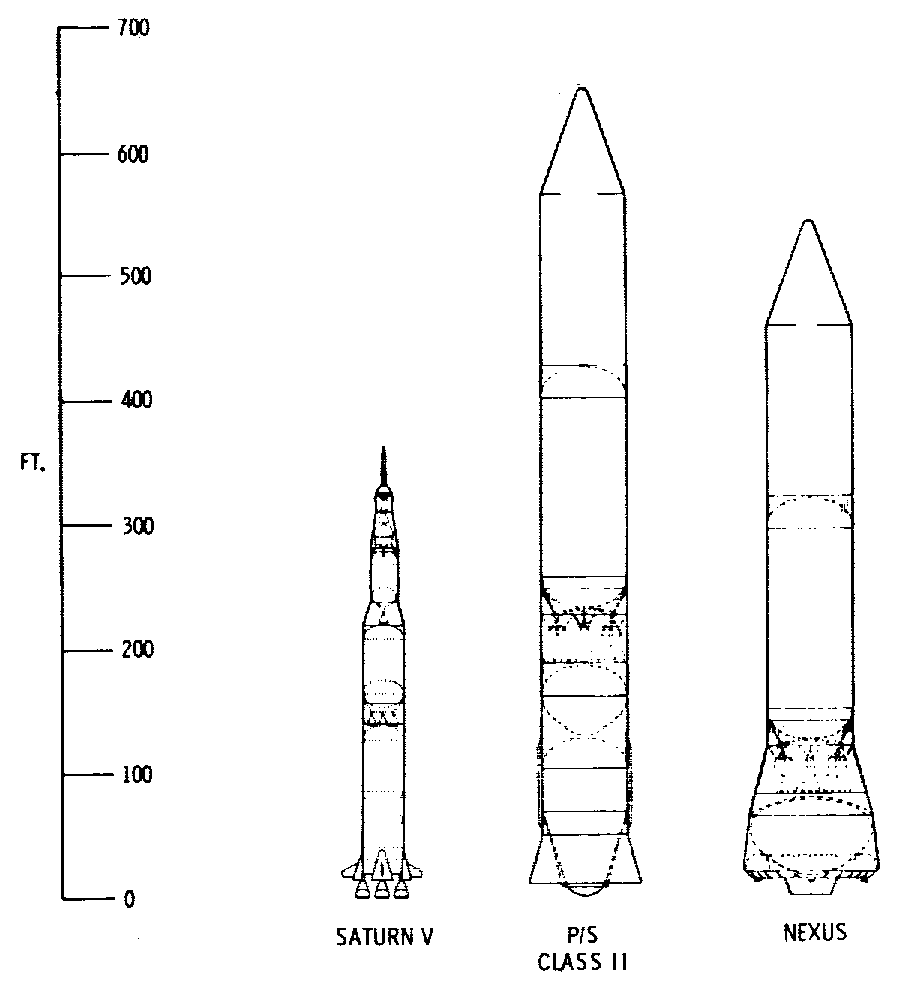
Figure 3 shows a solid core reactor (water moderated) nuclear stage mounted on a Post-Saturn Class II baseline vehicle, and on a tailored Nexus first stage. The vehicles are sized for orbital delivery, and the booster stages are off-loaded to about 75 percent capacity. This places staging velocity at approximately 10,000 ft/sec. The vehicles are all 70 ft (21.3 m) in diameter. The Nexus has a length/diameter ratio of about 7.8, whereas the Post-Saturn Class II vehicle length/diameter ratio is 9.3. The Post-Saturn Class II is 650 ft tall whereas the other two measure about 550 ft each. The nuclear stages of 5.45 million lb each place nearly 1.5 million lb into Earth orbit. The launch weights are approximately 14.4 million lb for all three versions. Payload fractions are 0.102.
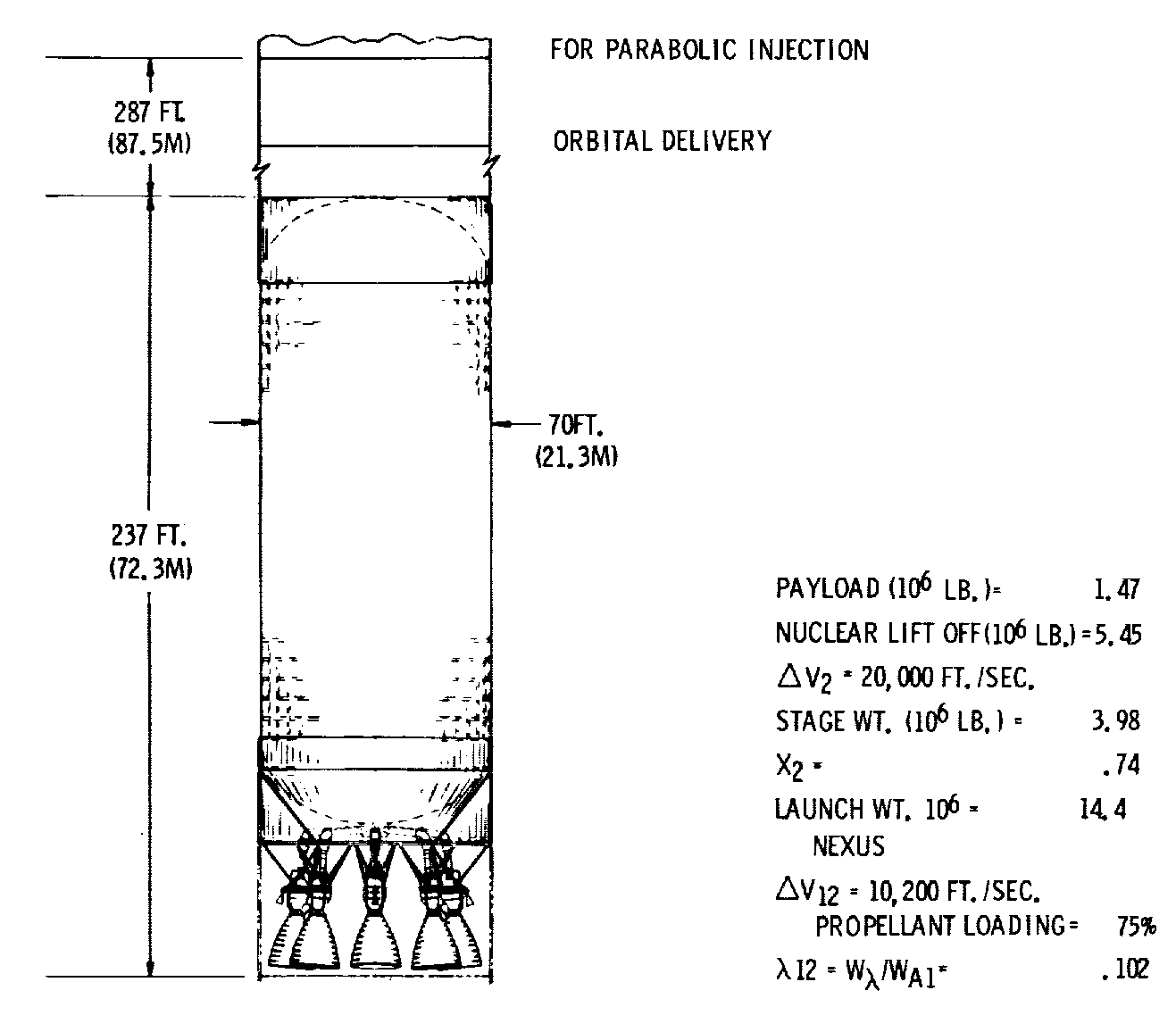
Some details of the solid core nuclear stage are shown in Figure 4. This type of stage has a great number of technical and operational problems, which are discussed in detail in the references.
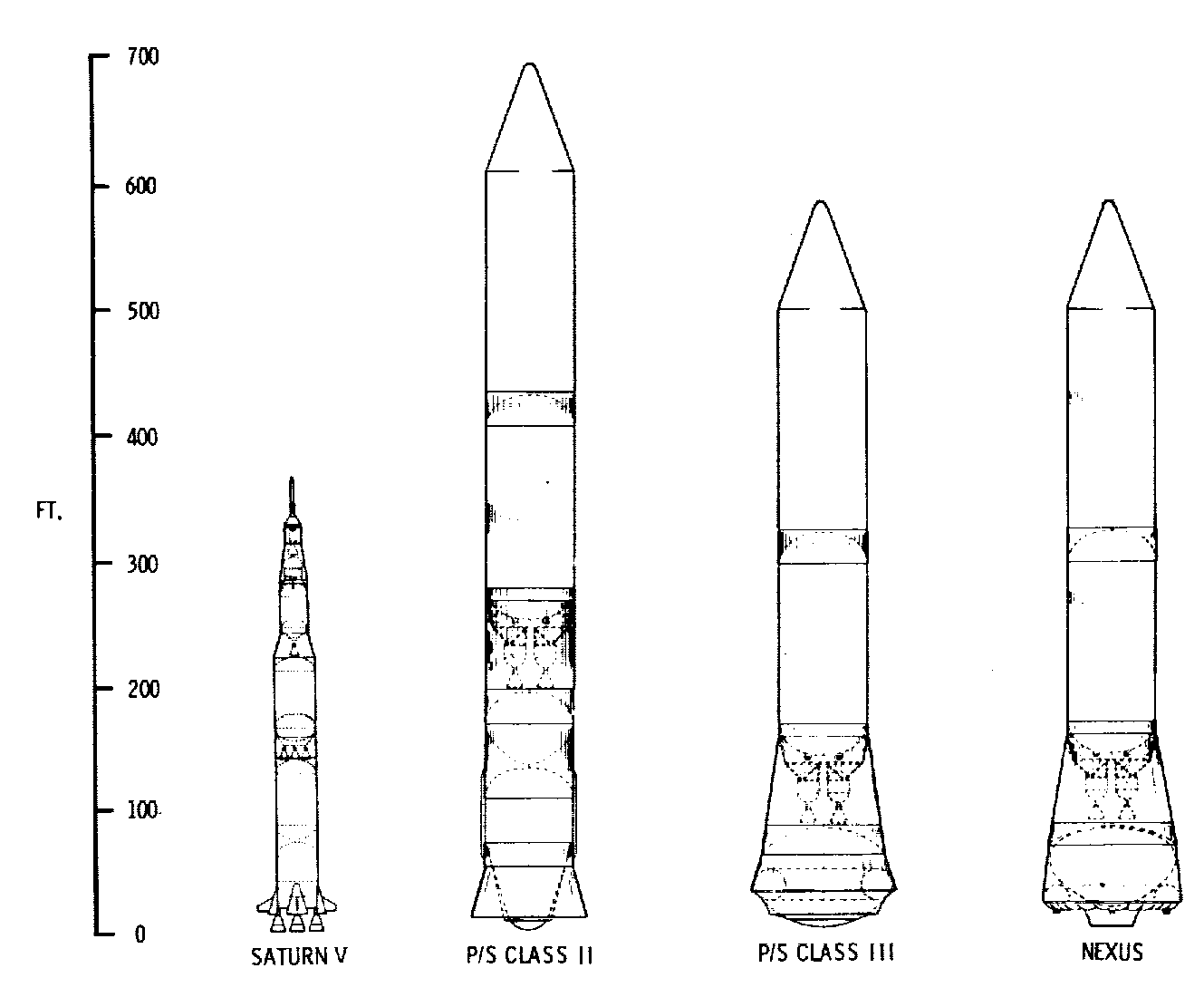
Figure 5 shows a gas core reactor installation on the Post-Saturn baseline vehicles. Represented is a nuclear stage with two 3000K gas core reactors. The baseline vehicles are staged at approximately 10,000 ft/sec and delivers 1.96 million lb to parabolic injection. Some details of gas core reactor stages are shown in Figure 6. The two 3000K engines are mounted with their lines of thrust passing through the vehicle center of gravity. This scheme allows variations in thrust between the two engines without having a penalty in the vector control system. This system operates from bleed from the main engine through small jets.
Figures 7 and 8 show Post-Saturn family vehicles derived from an initial chemical one-stage to orbit version. In these two cases, Nexus was used as the model because it offers a broader base for mounting the heavy upper stages.
Considerably emphasis was placed on the use of gas core reactor and nuclear pulse powered upper stages. This was done after an extensive study of solid core reactor engines of the graphite as well as the metal core type leading to a de-emphasis of this particular approach.
Briefly, the conclusions from the comparison of the propulsion systems are:
1. Solid core reactor systems (graphite) in the thrust range of 250 to 900K impose severe limitations on the Earth launch vehicle design if applied to vehicles with 106 lb or more orbital payload capability.
2. Solid core reactor (metal) engines (namely, the water-moderated slow to medium fast neutron spectrum engine) is distinctly superior to its graphite counterpart in the same thrust range.
3. All solid core reactor engines compare poorly with gas core reactor engines, even at the comparatively moderate specific impulse of 1500 sec, and even more so with the nuclear pulse engines, when applied to the very large payload Post-Saturn vehicles. Thus, all solid core reactor engines proposed so far are unsatisfactory for use as second stage propulsion systems for this size of launch vehicle.
4. In comparing nuclear pulse engines, one must remember that the mission spectrum of the Post-Saturn (Class IV) Earth launch vehicles combines orbital as well as lunar and planetary deliveries. This is a disadvantage to the nuclear pulse engine because its use for Earth orbit delivery may be unacceptable because of non-technical reasons (nuclear test limitations); particularly, since its superiority is not exercised at this limited energy level.
5. The principal disadvantage of the gas core reactor engine appears to be that its specific impulse growth potential appears to be limited to 2000 to 3000 sec, for thrust/weight ratio of one, required for sub-orbital start. Also, development problems appear to be considerably more severe than those associated with a similar increase in nuclear pulse specific impulse,
6. Slight preferences toward the gas core reactor or nuclear pulse may be expressed depending on the mission emphasis. Ratings of the two concepts for different mission emphasis are shown below:
a. Primary emphasis on Earth orbit delivery:
(1) First stage, chemical; second stage, gas core reactor (Saturn V Family or Helios).
(2) Main reasons - economy, reusability, mission versatility, highest launch facility rating.
b. Primary emphasis on lunar or planetary delivery:
(1) First stage, chemical; second stage, nuclear pulse (Saturn V Family or Post-Saturn Baseline).
(2) Main reasons - economy, reusability, mission versatility, performance growth potential,
7. Item 6 above is based on the assumption that either nuclear stage could and would eventually be used for direct delivery, i. e. , sub-orbital start. If this should become unacceptable for the nuclear pulse, then the ideal chemo-nuclear Earth launch vehicle would have the following characteristics:
a. Stage 1 would be chemical, reusable.
b. Stage 2 would be gas core reactor powered into Earth orbit; have alternate mission capability involving direct delivery to lunar destinations; stage 2 would be reusable from orbit and surface.
c. Stage 3 would have nuclear pulse power for delivery via direct flight mode; low thrust/weight orbital start-up for very heavy payload mission to the Moon, round trip missions to the planets (reusable from orbit) , and very high injection velocities for trans-Saturn and trans-Pluto probes (expendable).
Based on the mobile assembly method, a launch support facility can be used to support either the off-shore launch system or the Saturn type support system. This area would house all of the support operations needed to prepare a vehicle for launch. Individual stage receiving and checkout buildings would permit minimum requirements for the vertical assembly building as major rework, maintenance, and checkout operations are performed at the stage buildings. Assembly of the stages and payload and final vehicle checkout is performed in the vertical assembly building. Installation of retro-rockets, touchdown engines, and ordnance items would be made after leaving the vertical assembly building. After recovery, the stage would be purged, placed aboard a transporter, and transferred to its refurbishing bay.
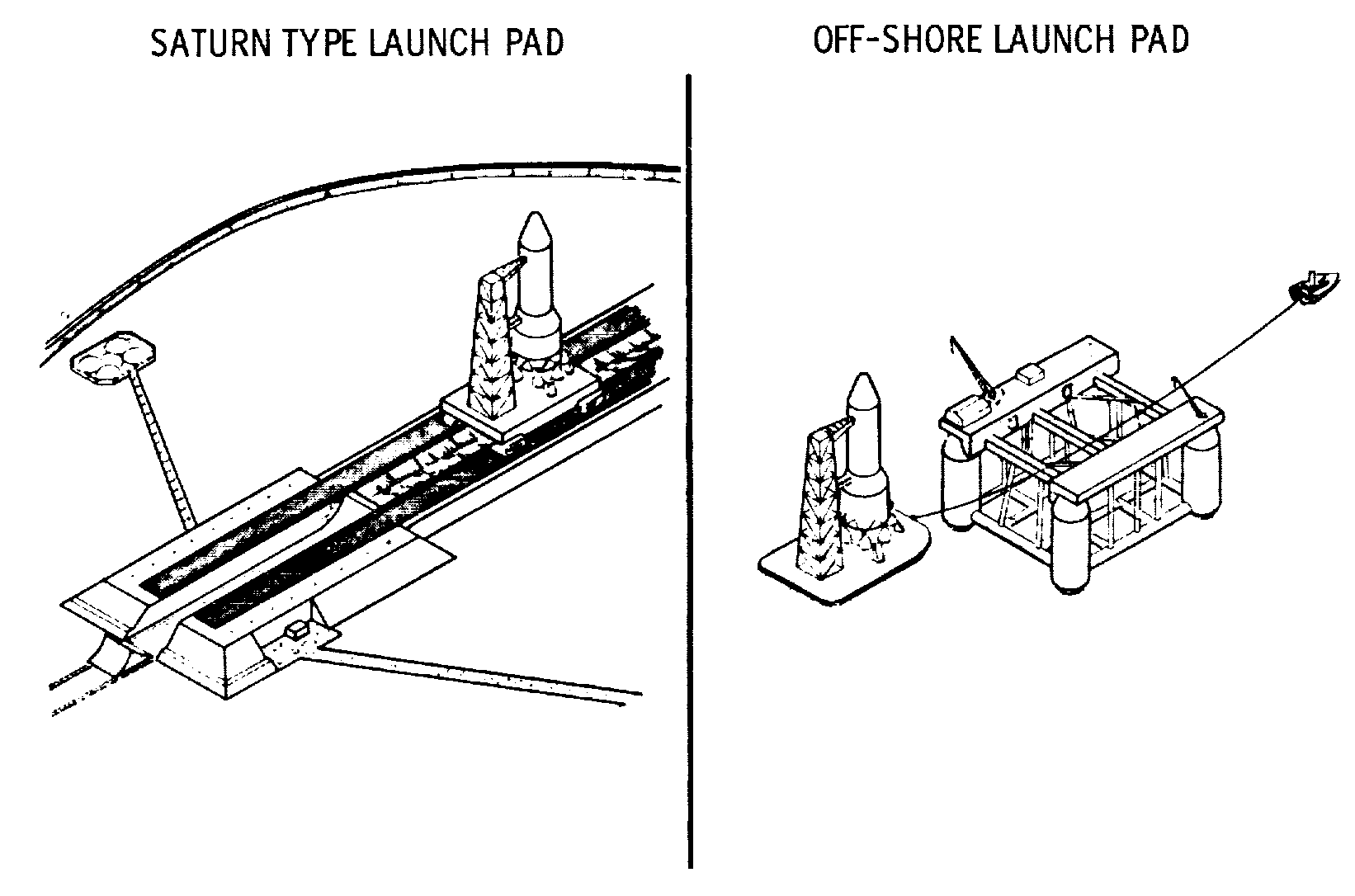
After completion of vehicle preparation operations at the assembly area, the vehicle would be transferred to the launch pad (Fig. 9). Depending on the system selected as most compatible with the vehicle, the pad could be either the off-shore floating launch pad or the land-based pad as used for Saturn V. The floating pad is similar to platforms now used in off-shore oil-drilling operations. The buoyant caissons at each corner of the platform and the low center of gravity provide stability. A desired elevation would be attained by means of ballast. Such a mobile launch pad could be used when the need for a remote site existed, as for single-stage nuclear, or when real estate needs became prohibitive as for the single stage chemical. For vehicles using gas core reactor engines with a launch weight of 7 x 10⁶ lb, the Saturn type launch system appears most attractive.
1. By investigating Earth launch vehicles beyond the purely chemical systems (chemo-nuclear) , a safeguard is provided against the danger of being caught short relative to future extraterrestrial operational requirements.
2. A 48 percent increase in gross payload for Earth orbit delivery can be obtained by replacing the second stage of a two-stage chemical (O2/H2) vehicle of 106 lb payload to orbit with a nuclear stage using solid core reactor engines of 825 sec specific impulse. However, this does not look attractive from the overall operational and program viewpoint.
3. Replacement of the second stage with a gas core reactor engine powered stage with a specific impulse of 1500 sec, increases the gross payload into Earth orbit by 140 to 200 percent. The reason for this spread is that the design performance of this vehicle is a parabolic injection type mission. The lower percentage represents orbit delivery at partially de-tanked condition.
4. Two basic mission concepts can be defined for the Post-Saturn Class IV vehicle (chemo-nuclear) for escape type mission. These concepts are: (a) A two-step delivery with the subgroups to the departure Earth orbit involving orbital vehicle assembly; or (b) The entire interorbital (lunar or planetary) vehicle may be carried into orbit in operational condition, which would permit direct flight out of the parking orbit. Comparison of orbital vehicle assembly mode, direct flight mode, and direct ascent delivery shows that the direct flight mode is preferable, assuming everything else is equal. This approach, however, favors larger than 106 lb payloads into orbit, i. e. , 1.5 to 2.0 times 106 lb.
5. Solid core reactor engines (graphite or metal base) compare poorly with gas core reactor and nuclear pulse on large vehicles considered in this study. They also do not show significant advantages with respect to cost effectiveness over advanced chemical (O2/H2) vehicles. In addition to this, operational disadvantages penalize solid core propulsion systems.
6. Gas core reactor engines and nuclear pulse engines are both attractive propulsion systems for the Post-Saturn Class IV vehicle, and both should be considered in future studies. Mission emphasis may affect their selection, that is, if emphasis is on Earth orbit and lunar delivery, the gas core reactor shows a slight advantage. If primary emphasis is on lunar and planetary deliveries, the nuclear pulse concept is clearly preferable.
Listed below are some key problem areas and recommended actions:
1. Accomplish test program for O2/H2 high pressure engines and feed system.
2. Perform test program on transpiration cooling of high temperature nozzles.
3. Strengthen R&D program to establish a basis for choice between graphite and water-moderated engines, and perform studies and test program on:
a. Neutron interaction between clustered nuclear engines.
b. Reactor and engine control aspects in nuclear engine clusters.
c. Thrust structure and propellant tanks for nuclear engine clusters.
d. Perform studies and test program regarding cool-down of nuclear engine clusters of stages to be recovered from orbit.
4. Initiate R&D programs to provide basic design and performance data for gas core reactor engines and establish a basis for choice between various schemes.
5. Continue propulsion system optimization and mission application studies for nuclear pulse system. Initiate a test program to verify the performance of this system.
A comprehensive evaluation is recommended of manufacturing aspects of very large tanks, tooling requirements (time and costs) , and transportation requirements for Post-Saturn vehicles.
It is recommended that test facilities or combinations of test and launch facilities for very large Earth launch vehicles be investigated.
1. Perform a detailed study of comparisons of land and off-shore launch schemes.
2. Study and evaluate (experimentally) malfunction detection systems and engine shut-down systems.
1. Perform detailed theoretical and laboratory studies of various orbit recovery schemes and parachute-retrorocket sea or land recovery concepts.
2. Test sea water effects on structures, engines, and transpiration cooling materials.
3. Investigate control problems and water surface modulation by retrorocket blast at touchdown.
1. "Post-Saturn Class III and IV Launch Vehicle Study (Phase III) Report No. SM-45804 (7 volumes) , Douglas Aircraft Company, March 1964, Contract NAS8-5021.
2. "Post-Saturn Launch Vehicles Study (Phase III) , Class IV Vehicles," Report No. GD/A OK-64-009 (5 volumes) , General Dynamics/Astronautics, May 1964, Contract NAS8-5022.
– – – – – – – – – – – – – – – – – – – – – – – – – – – – – –
NASA TM X-53200 APPROVAL February 3, 1965
ADVANCED POST-SATURN EARTH LAUNCH VEHICLE
STUDY
EXECUTIVE SUMMARY REPORT
By J. L. Sanders
The information in this report has been reviewed for security classification. Review of any information concerning Department of Defense or Atomic Energy Commission programs has been made by the MSFC Security Classification Officer. This report, in its entirety, has been determined to be unclassified. This document has also been reviewed and approved for technical accuracy.
/s/
H. H. KOELLE
Director, Future Projects Office