|
|
The Death Star and Alderaan's
Planetary Shield
|
|
|
The Death Star and Alderaan's
Planetary Shield
|
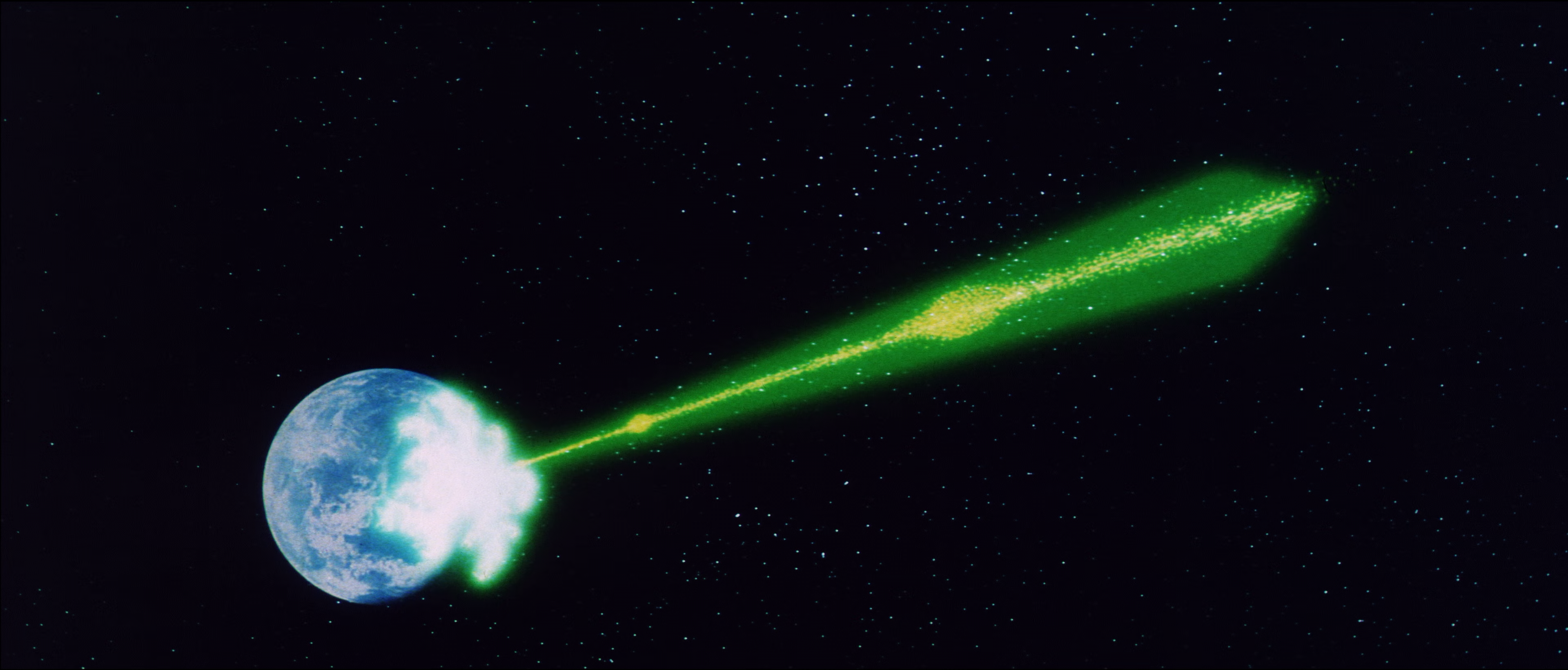
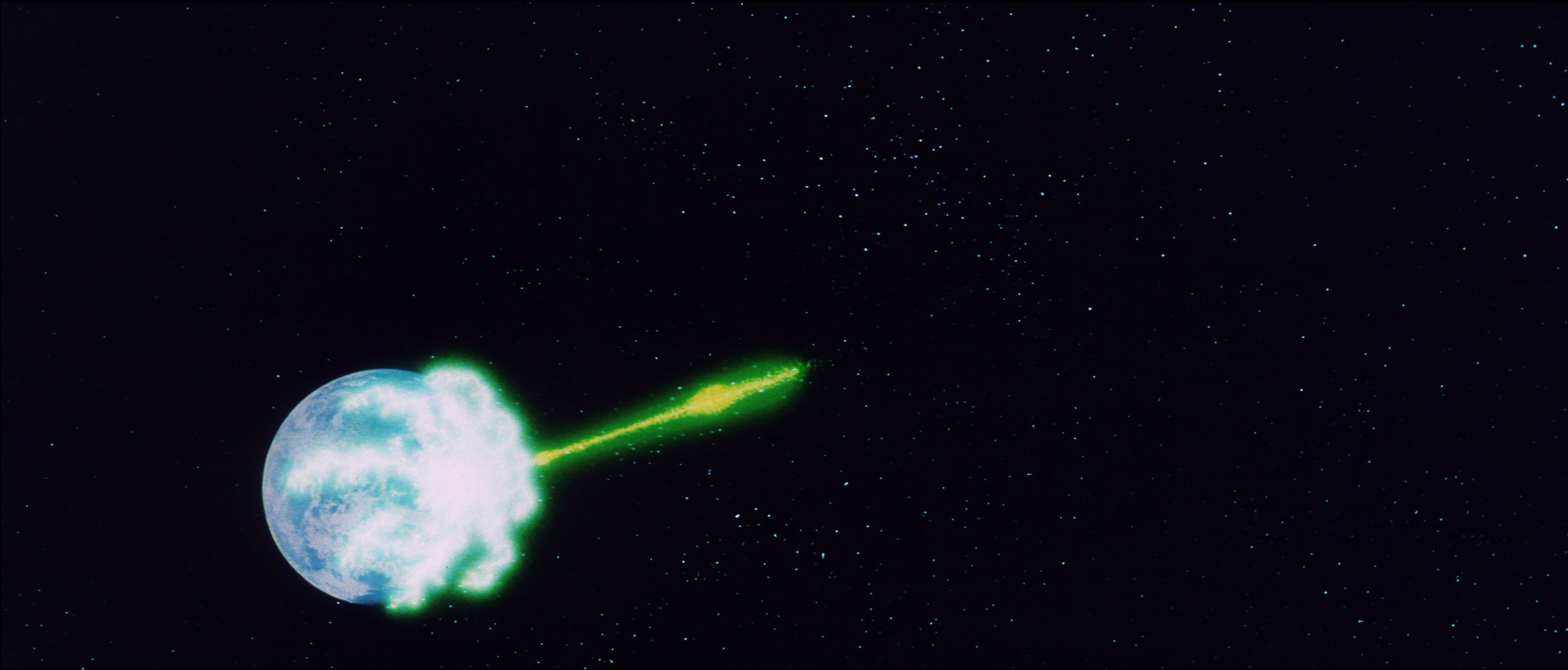
Over 20 years ago, Michael Wong (of www.stardestroyer.net) pointed out with visual evidence (circa July 2001 page) that Alderaan despite it's claims to be a peaceful planet; had a quite significant defensive capability in it's planetary shield.
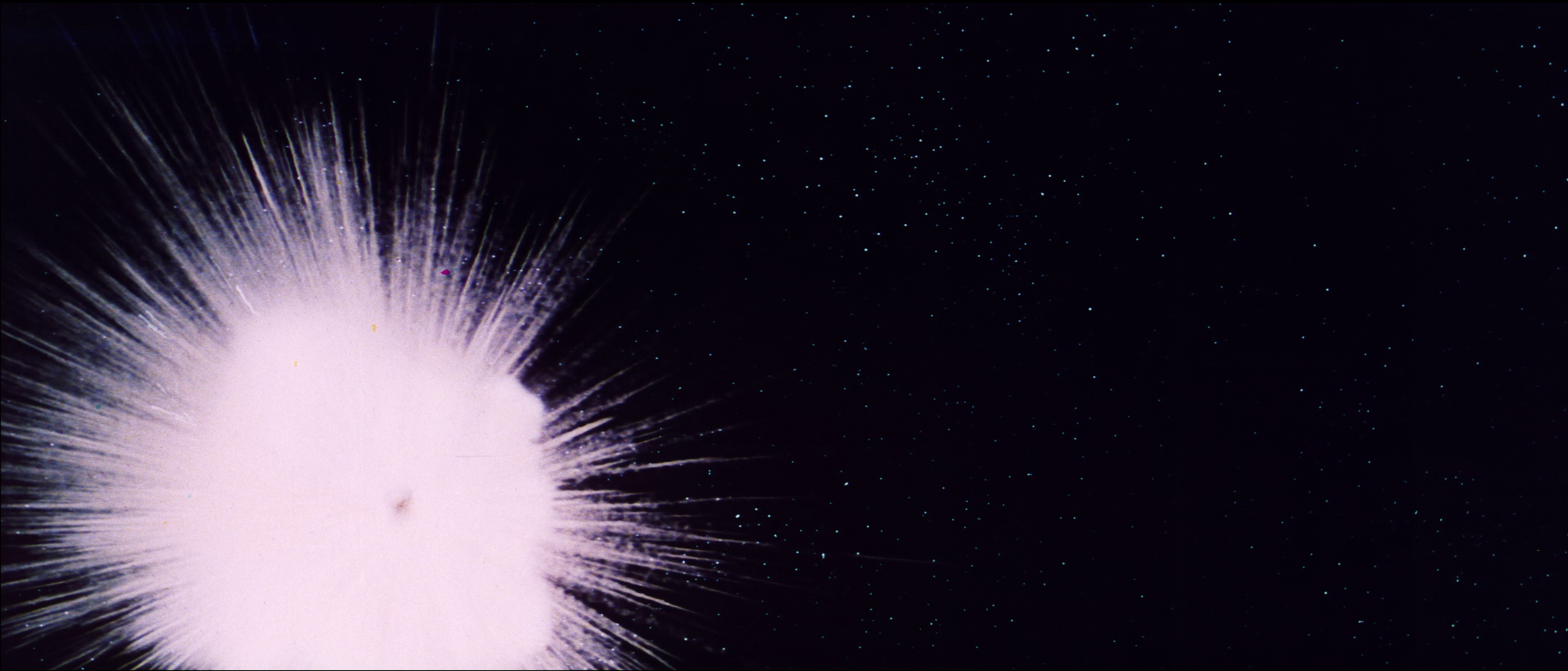
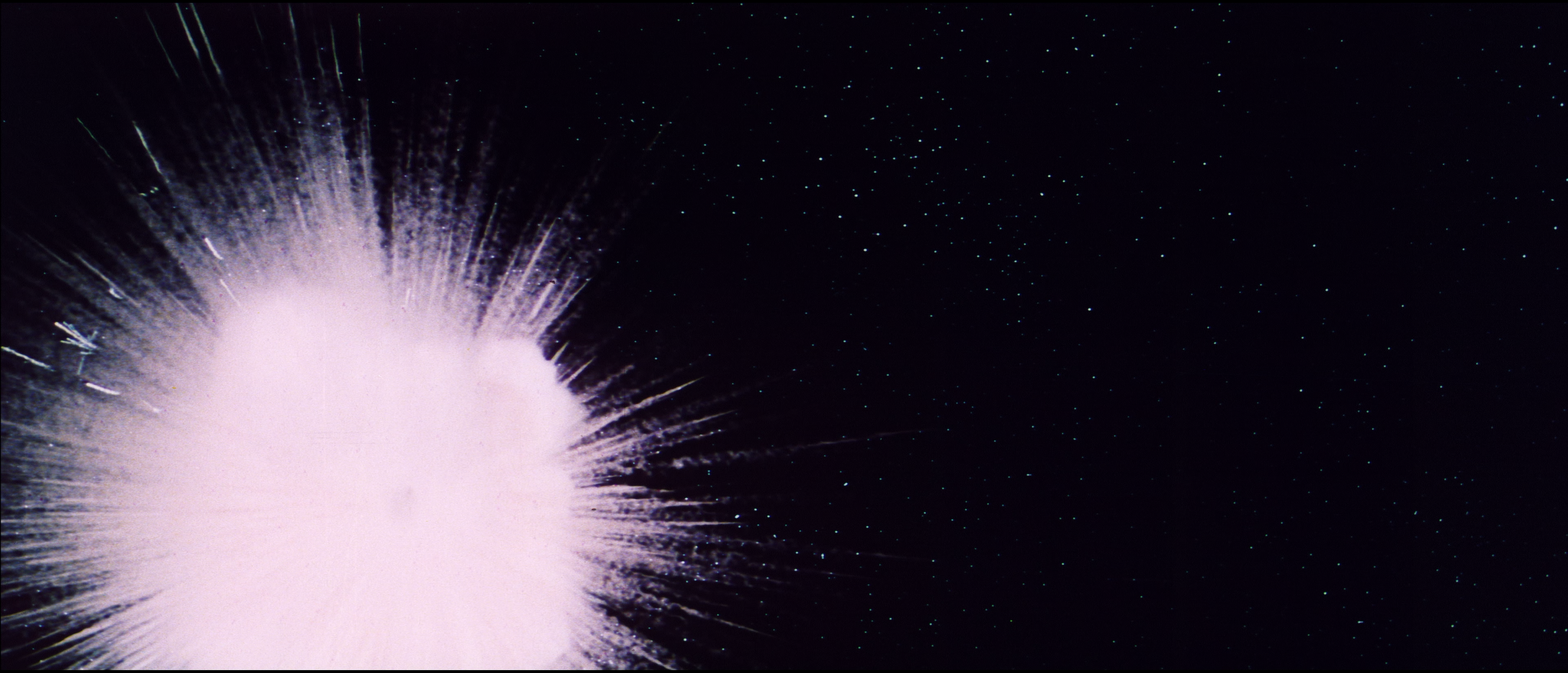
I recently went back and re-captured the same frames he did some thirty years later with the new(ish) 4K77 35mm scan. They're a significant improvement over the old CAV (Constant Angular Velocity) Laserdisc screen captures Mr. Wong did almost thirty years ago.
For those of you just joining us, the bulletpointed energy requirements for the Death Star derived by Mr. Wong thirty years ago (LINK to c.2001 page) were:
2.2E32 Joule lower limit of energy required to overcome the gravitational binding energy of an Earth-like planet.
1E38 Joules rough figure to destroy the planet and accelerate the fragments to 2% of lightspeed. The velocity of the fragments can be measured from the visual evidence since we know the rough diameter of Alderaan (an Earthlike planet) as well as the fact that the camera doesn't move in between frames, along with the rough time in seconds due to the framecount.
To put these numbers into context, Earth's sun puts out about 3.8E26 Joules per second, which is:
6.7 days continuous solar output at the 2.2E32J minimum lower limit.
8,339~ years continuous solar output at the 1E38J rough figure taking into account debris acceleration to 2% of lightspeed.
Even if we knock the exponential value down by one to take into account “sci-fi” technobabble – i.e. Alderaan's planetary shield generators' heat management mechanism consisted of Mohorovic shafts drilled some 40+ km below the surface in an attempt to use the planetary mantle as a giant heat sink; and it was through this mechanism that the Death Star's superlaser was able to destabilize the planetary surface...we still end up with 1E37J, or 833~ years continuous solar output.
In Rogue One there's this line: “Target Jedha City. Prepare single reactor ignition.” followed by continental / hemispherical devastation of the Death Star's target.
There are two possible interpretations of the power levels:
If we assume that a “single reactor” powers each of the eight tributary beams of the superlaser; then the lowest energy output of the Death Star I's big gun is from 1.25E36 Joules (Sci fi Technobabble Destabilizes Planet) to 1.25E37 Joules (No Technobabble)
If we assume the destruction of Jedha City and the Imperial Archives at Scarif as shown on screen are comparable to the Chicxulub asteroid impact that ended the dinosaurs, then we get about 3E23 Joules as an approximate figure.
Given that the lower binding energy of an Earth-like planet is ~2.2E32 Joules, I'm more inclined to go towards something approximately around Chicxulub's 3E23J, because our heroes in Rogue One survive “relatively” close to the impact sites for at least several minutes.
Detailed examination of the visual evidence from the destruction of Jedha City for power estimation will come later.
Per WEG sources (and general on-screen evidence), the Death Star I was able to recharge the Superlaser over an interval of between 24 to 48 hours.
With “sci-fi technobabble tricks” figures of 1E37 for the big gun, those recharge times indicate that the Death Star I's main reactor was outputting somewhere between 150,000 to 300,000 times the output of Earth's sun every second.
If we go for the “no tricks” figure of 1E38, the Death Star I's reactor output is about 1.5 million times that of Earth's sun for a 48 hour period and 3~ million times Earth's sun for a 24-hour period.
It gets worse when you consider the fact that the Death Star I was capable of both moving and shooting – i.e. travelling through hyperspace and then firing the big gun within minutes of dropping from hyperspace.
Why is this important? Because WEG's Star Wars Sourcebook, 2nd Edition says on page 35:
“There are whole nations which, throughout their entire history, do not use as much energy as a Star Destroyer expends to make a single hyperspace jump.”
An ISD's volume is about 6.95E7 cubic meters; while the Death Star I (assuming a 500 km diameter – we know the Second Death Star was about 900 km~ from visual evidence in ROTJ; and the novelization of ROTJ says that the DS2 was “almost twice as big” as the DS1) has a volume of 6.54E16 m3; or about 941 million times the volume of an ISD. Moving all that volume through hyperspace has to cost a tremendous amount of energy.
In short, the Death Stars represent the upper end of what is conceivable by the human mind in terms of energy release. A low-end supernova (1E44 J) is about 1 to 10 million times more powerful than the Death Star I.
|
Wong's 1998-2002 Captures |
Description |
4K77 35mm Scan |
|
|
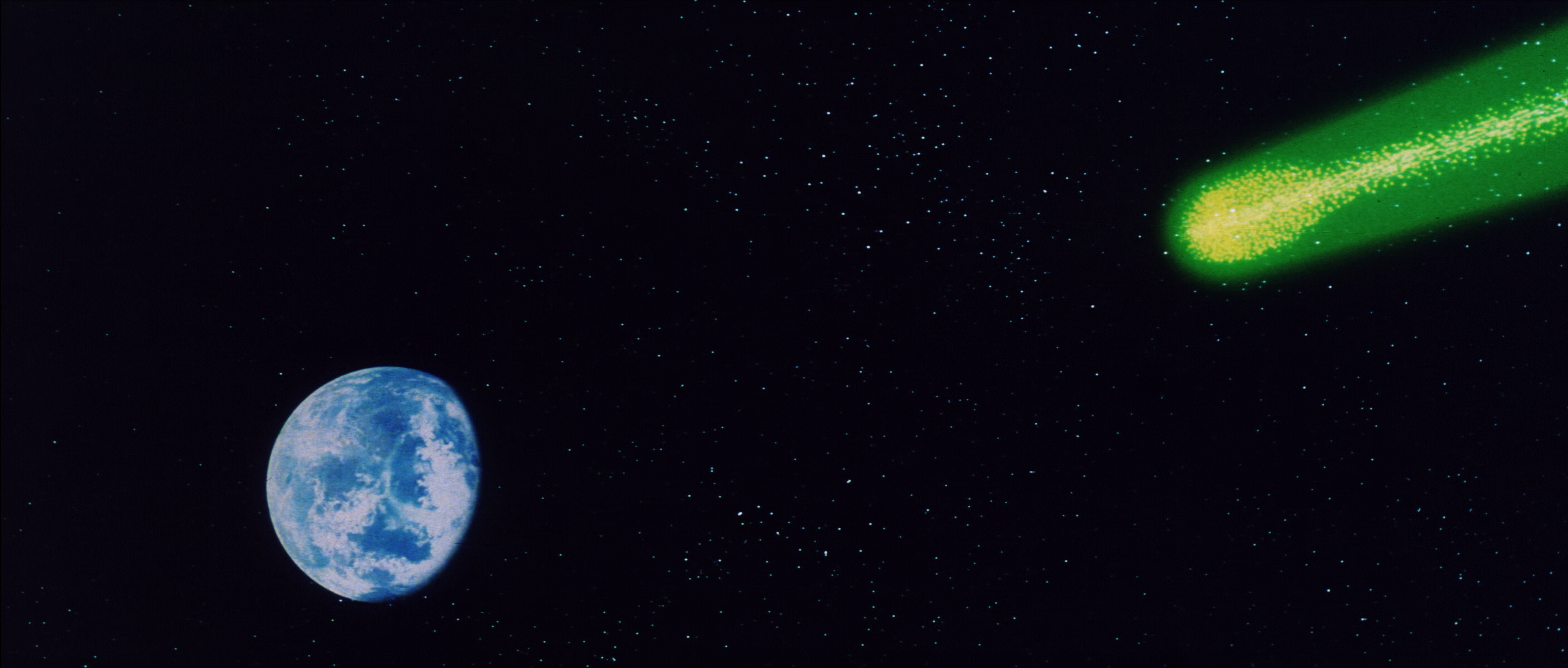
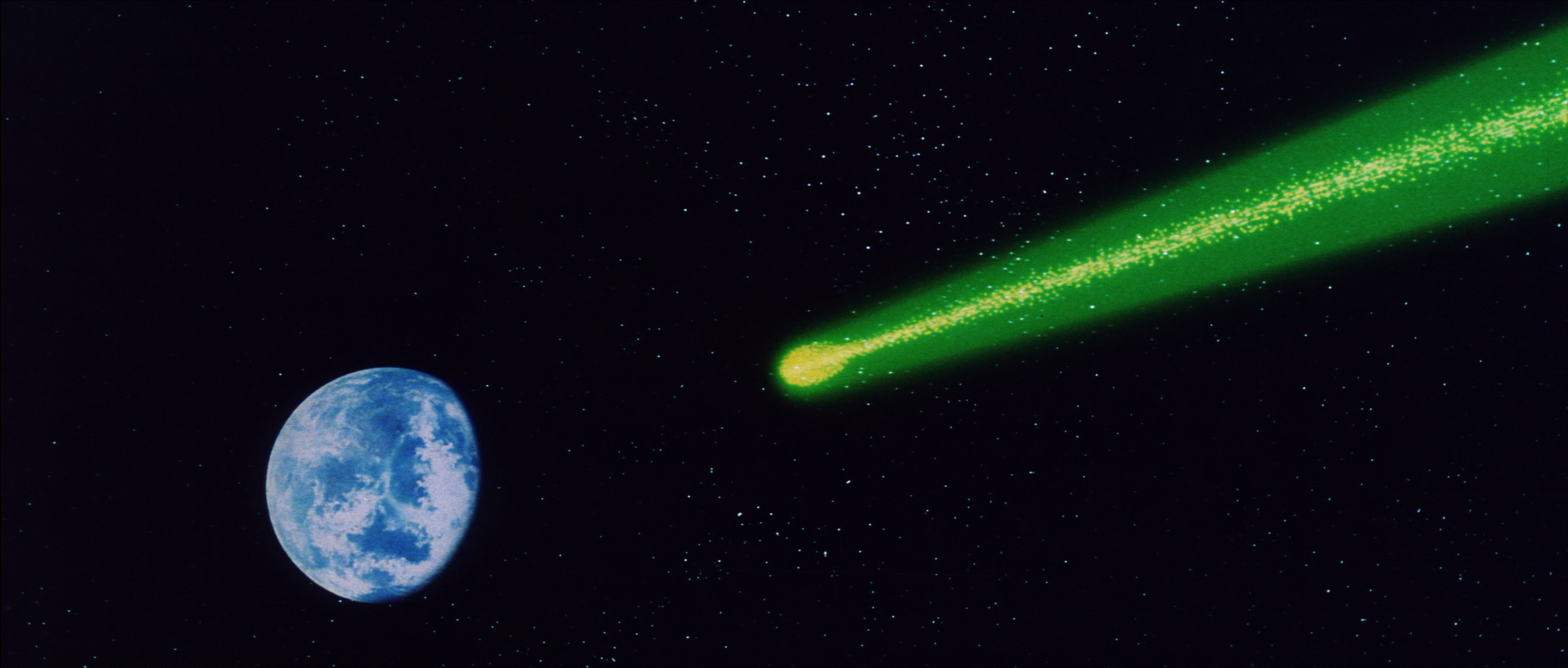
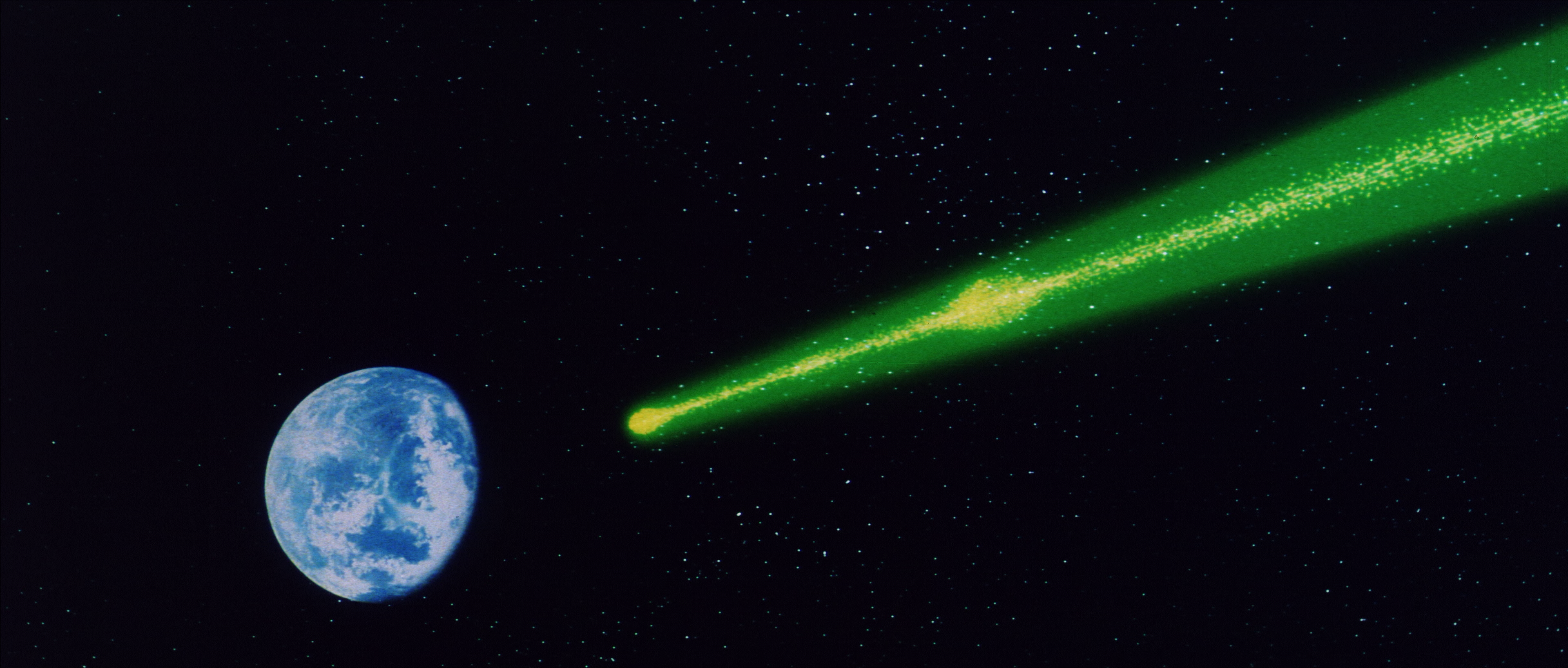
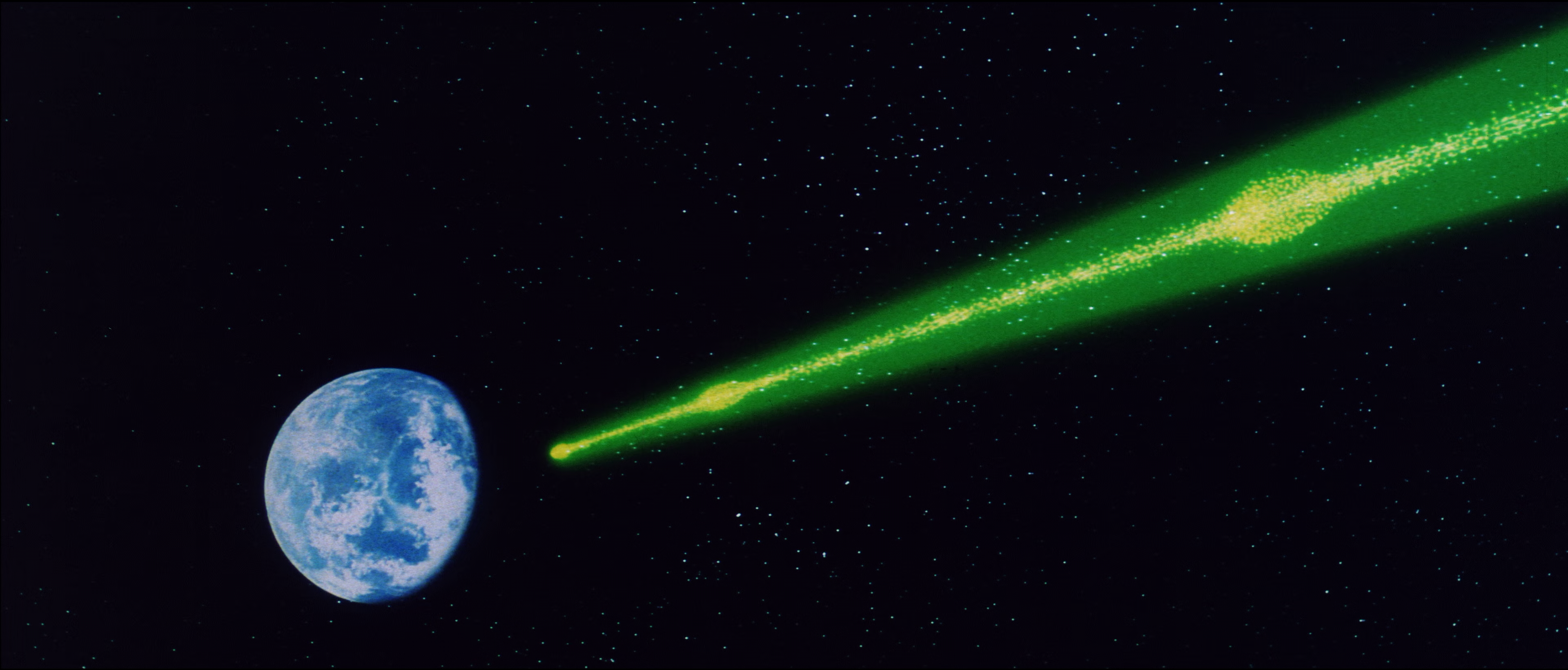
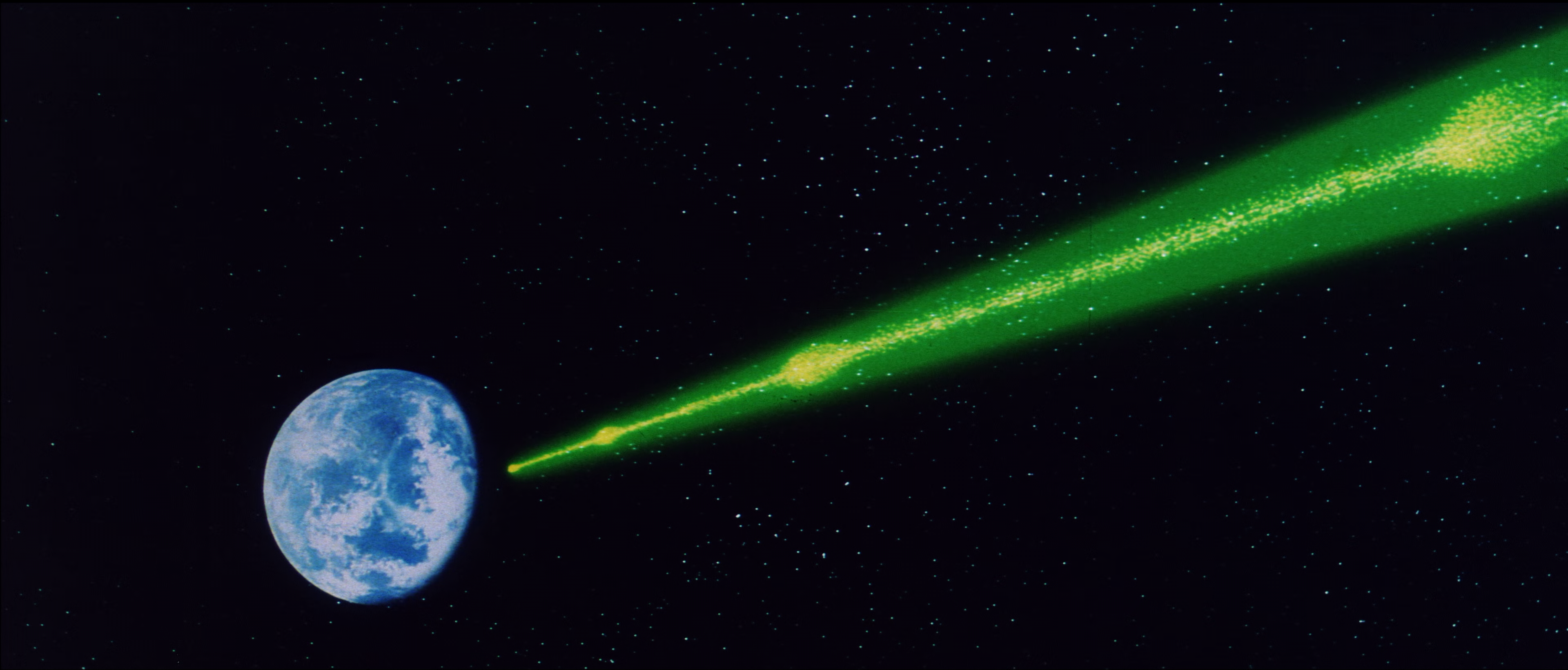
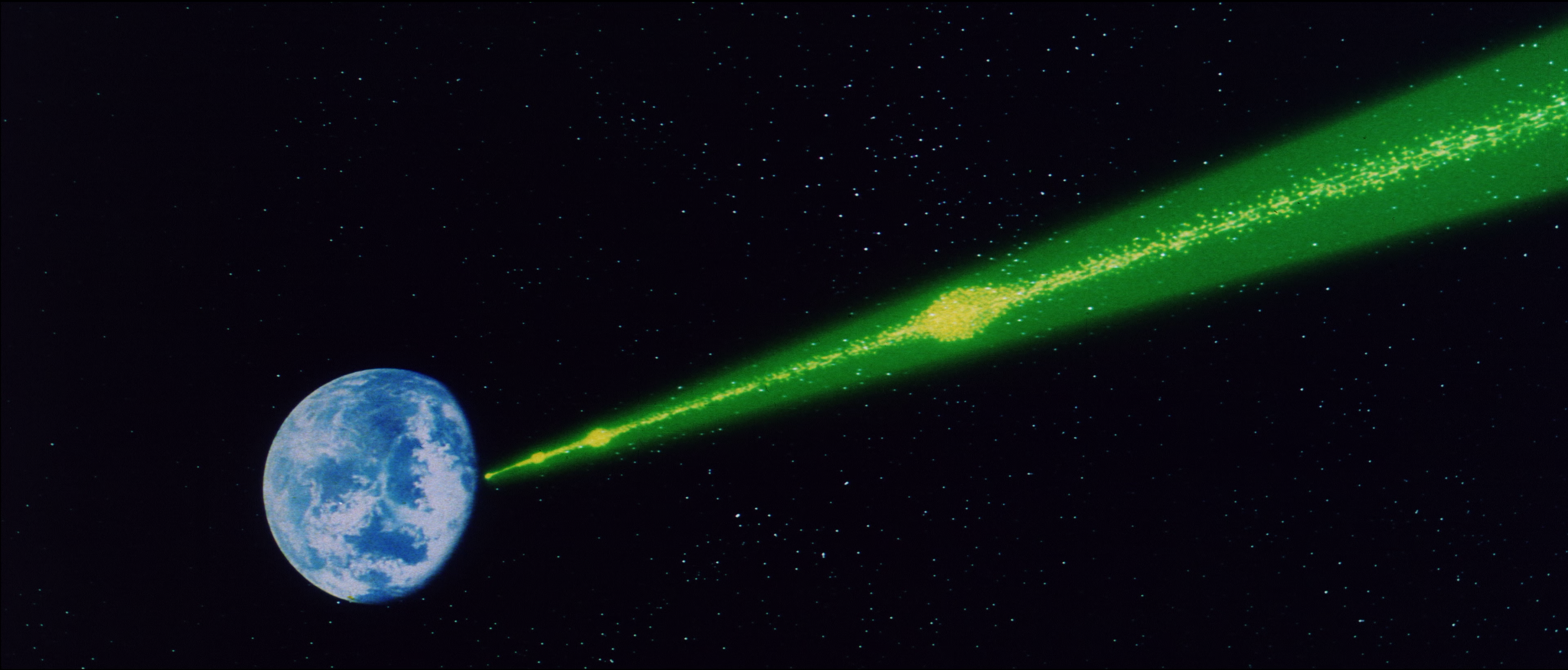
Frame 1: Beam Headed to Alderaan |
|
|
|
Frame 2: Beam Headed to Alderaan |
|
|
|
Frame 3: Beam Headed to Alderaan |
|
|
|
Frame 4: Beam Headed to Alderaan |
|
|
|
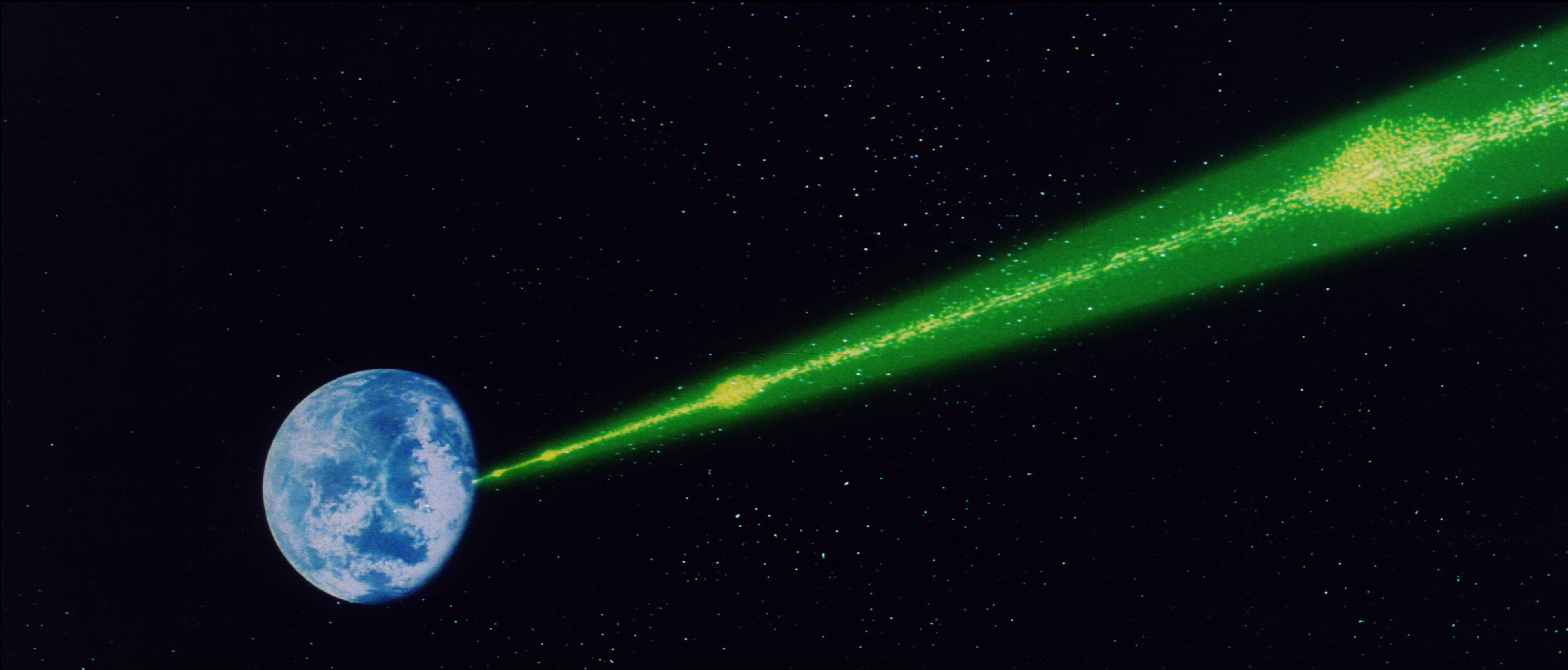
Frame 5: Beam Headed to Alderaan |
|
|
|
Frame 6: Beam Impact Imminent |
|
|
|
Frame 7: Moment of Impact Moment of impact of the Death Star's Superlaser on Alderaan's planetary shield. |
|
|
|
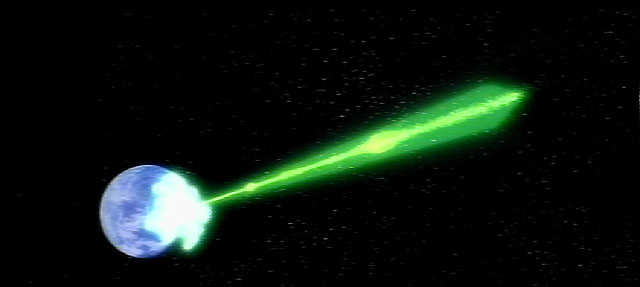
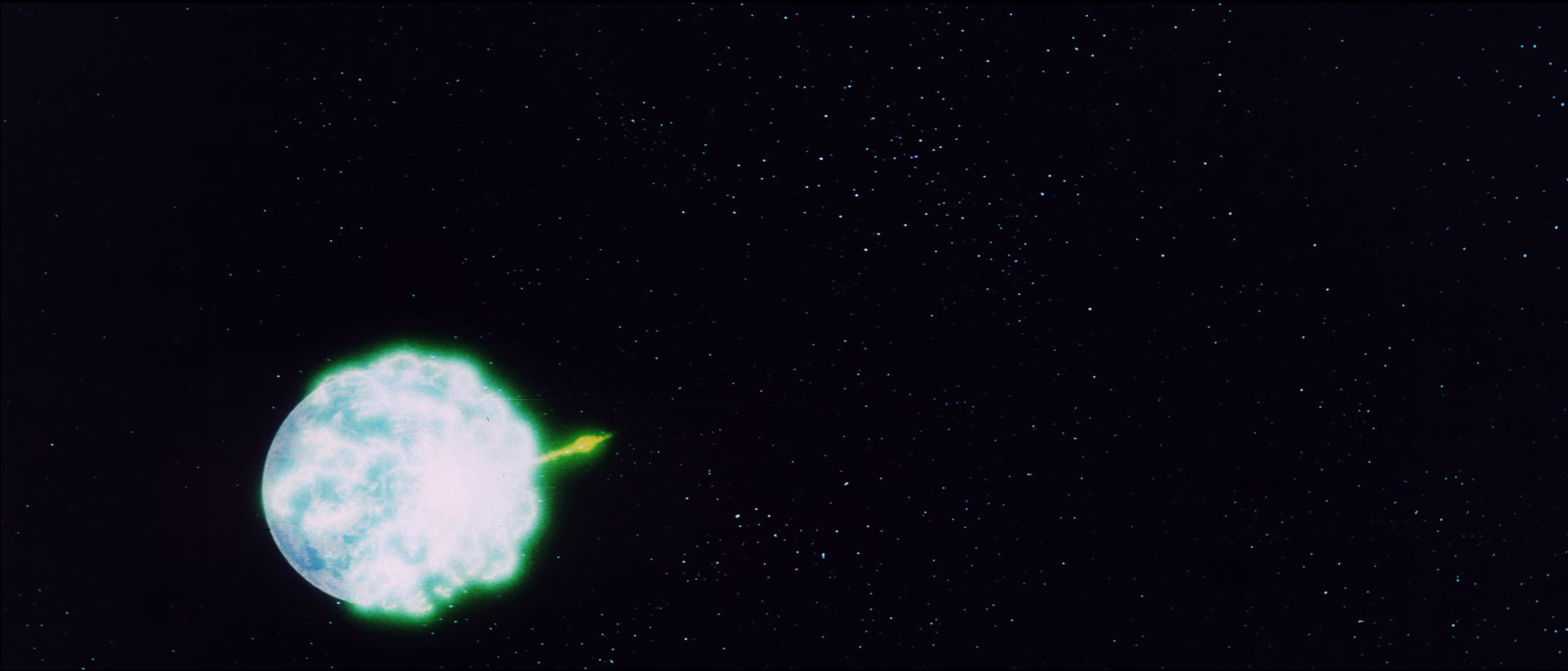
Frame 8: Shield Flare I Alderaan's planetary shield responds to the impact of 1E38 joules of energy (or 8,000 years worth of energy from our Sun) |
|
|
|
Frame 9: Shield Flare II Alderaan's planetary shield continues to respond to 1E38 joules of energy by trying to disperse it across the surface of the shield. |
|
|
|
Frame 10: Shield Flare III At this point, Alderaan's planetary shield has resisted 1E38 joules of energy for approximately 12.48 milliseconds, spreading it across almost the entire shield surface. |
|
|
|
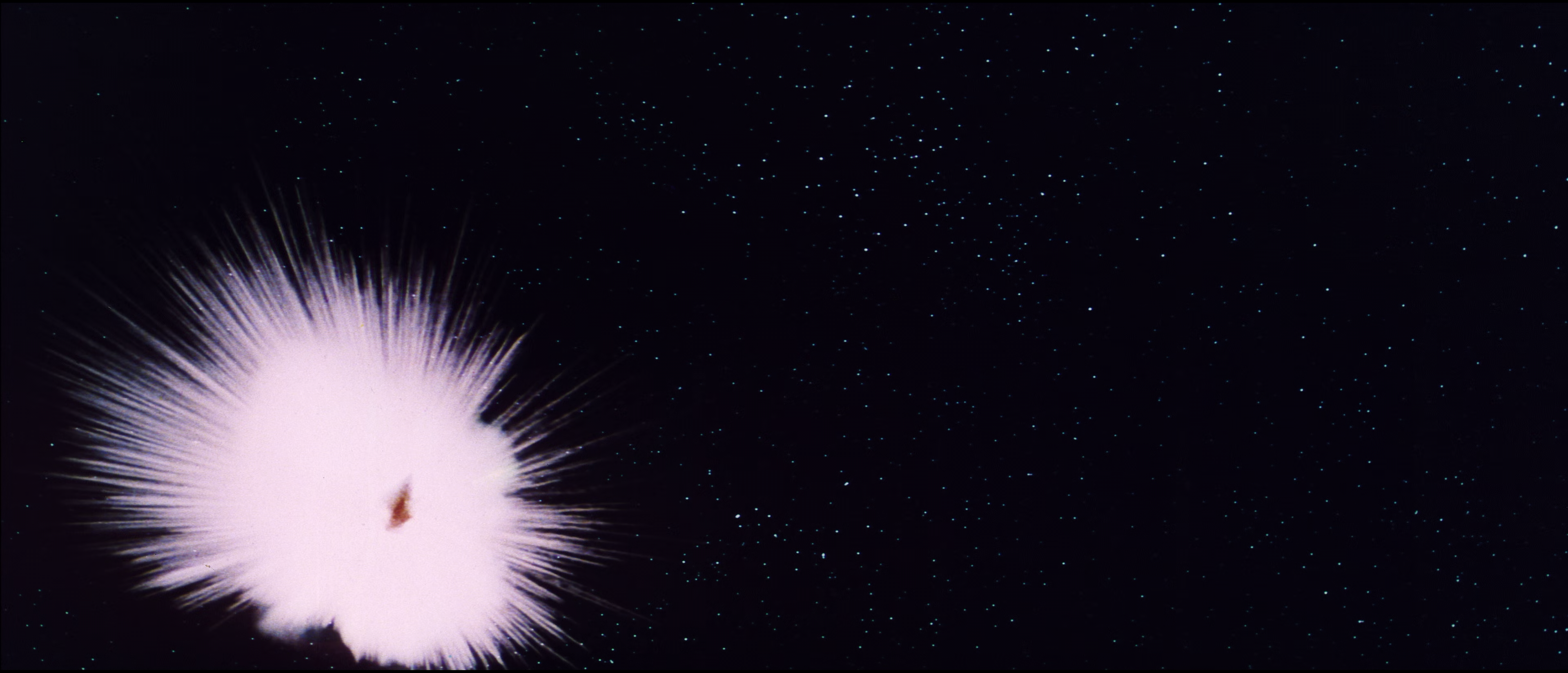
Frame 11: Planetary Destruction The planetary shield collapses sometime inbetween frames and Alderaan is destroyed in approximately 20 to 40 milliseconds. |
|
|
|
Frame 12: Planetary Mass Dispersal I |
|
|
|
Frame 13: Planetary Mass Dispersal
II The former planetary mass of Alderaan continues to spread. From the time of superlaser impact to dispersal, only a quarter of second has passed. |
|